IPO Price Band and Lot Size Explained for Beginners
23 September 2026 · Sachin Gadekar
A simple guide explaining how IPO price bands and lot sizes work, why they matter for retail investors and what to check before applying for an IPO.
Quick Overview
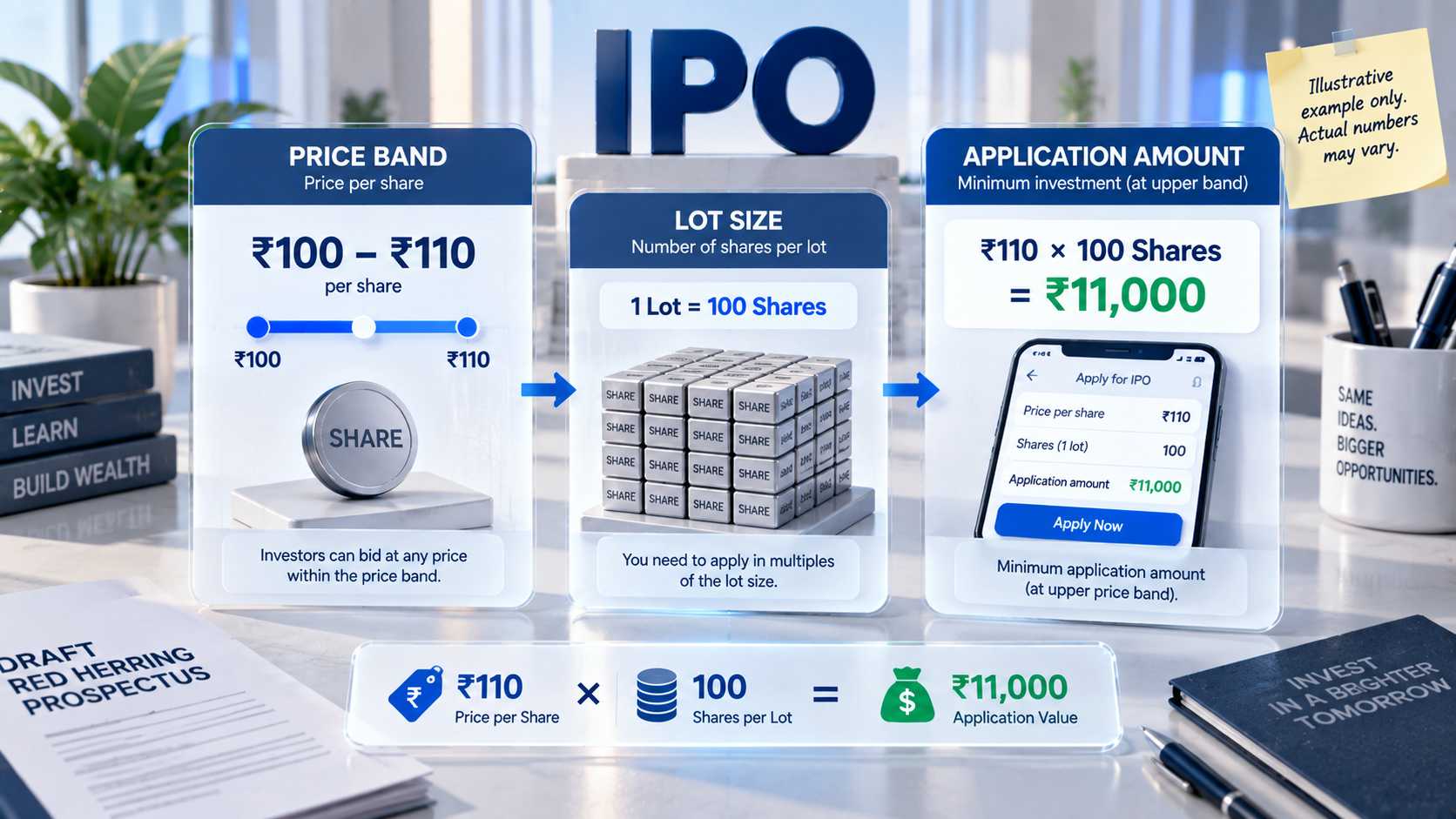
An IPO price band is the price range within which investors can bid for shares in a book-built IPO. For example, if the price band is ₹100 to ₹110, investors can place bids within this range.
An IPO lot size is the minimum number of shares an investor must apply for. For example, if the lot size is 100 shares and the upper price band is ₹110, the minimum application amount becomes ₹11,000.
For retail investors, understanding price band and lot size is important because it helps calculate the minimum investment, maximum application amount and the number of shares applied for.
IPO Price Band and Lot Size Overview
Before applying for an IPO, investors often check the company name, GMP, subscription status and listing date. But two basic details matter just as much: price band and lot size.
These two numbers decide how much money an investor needs to apply for the IPO.
The price band tells investors the price range of each share. The lot size tells investors the minimum number of shares they must apply for.
Together, they help calculate the application amount.
| Term | Meaning |
|---|---|
| Price Band | The price range within which investors can bid for IPO shares |
| Lot Size | The minimum number of shares an investor must apply for |
| Application Amount | Lot size multiplied by bid price |
| Cut-Off Price | Final issue price decided after the book-building process |
What Is IPO Price Band?
An IPO price band is the range of prices at which investors can bid for shares in a book-built IPO.
For example, if the price band is ₹100 to ₹110, the lower price is called the floor price and the higher price is called the cap price.
Investors can bid at any price within this range. Retail investors often select the cut-off price option to stay eligible for allotment at the final discovered price.
| Particulars | Example |
|---|---|
| Lower Price Band | ₹100 |
| Upper Price Band | ₹110 |
| Allowed Bid Range | ₹100 to ₹110 |
| Final Issue Price | Decided after book-building |
The final issue price may be set at the upper price band, lower price band or somewhere within the range, depending on demand during the IPO.
What Is IPO Lot Size?
An IPO lot size is the minimum number of shares an investor must apply for.
Investors cannot usually apply for any random number of shares. They must apply in lots.
For example, if the lot size is 100 shares, investors can apply for:
1 lot = 100 shares
2 lots = 200 shares
3 lots = 300 shares
The lot size is fixed before the IPO opens and is mentioned in the IPO details.
How to Calculate IPO Application Amount
The application amount is calculated by multiplying the number of shares by the bid price.
Formula:
IPO Application Amount = Lot Size × Bid Price
For retail investors, the upper price band is usually used to calculate the maximum possible blocked amount.
| Particulars | Example |
|---|---|
| Lot Size | 100 shares |
| Upper Price Band | ₹110 |
| Minimum Application | 100 × ₹110 |
| Amount Required | ₹11,000 |
What Is Cut-Off Price in IPO?
The cut-off price is the final price at which IPO shares are allotted to investors after the book-building process.
Retail investors often choose the cut-off option because it means they are willing to apply at the final discovered issue price.
For example, if the price band is ₹100 to ₹110 and the final issue price is ₹108, investors who selected cut-off are considered willing to pay ₹108.
| Point | Explanation |
|---|---|
| Meaning | Final issue price decided after book-building |
| Used By | Commonly selected by retail investors |
| Why It Matters | Helps investors stay eligible at the final discovered price |
| Is It Fixed Before IPO? | No, it is finalised after the bidding process |
Retail Minimum and Maximum Application
Retail investors must apply for at least 1 lot. The maximum retail application amount is generally kept within the retail category limit.
The exact number of lots depends on the IPO price band and lot size.
| Application | Lots | Shares | Amount |
|---|---|---|---|
| Retail Minimum | 1 | 100 | ₹11,000 |
| Retail Maximum | 18 | 1,800 | ₹1,98,000 |
Why Price Band and Lot Size Matter
Price band and lot size matter because they affect how much money is blocked when an investor applies.
They also help investors compare IPO affordability.
For example, two IPOs may have very different share prices, but the minimum application amount may still be similar because lot size is adjusted accordingly.
Investors should check:
minimum investment required
maximum retail application amount
number of shares per lot
final issue price
category-wise limits
whether the application fits their risk appetite
Common Mistakes Investors Make
1. Looking Only at Share Price
A low share price does not automatically mean the IPO is cheap. Valuation depends on earnings, revenue, growth, margins, debt and peer comparison.
2. Ignoring Lot Size
The lot size decides the actual minimum investment. A share price may look small, but a large lot size can increase the application amount.
3. Assuming Cut-Off Means Guaranteed Allotment
Cut-off only makes the bid valid at the final issue price. Allotment depends on demand and category-wise subscription.
4. Confusing IPO Price with Listing Price
The IPO price is the issue price. The listing price is discovered on the stock exchange on listing day.
5. Applying Only Because GMP Is High
GMP is unofficial and does not guarantee listing gains. Investors should read the RHP and review fundamentals.
What Investors Should Check Before Applying
| What to Check | Why It Matters |
|---|---|
| Price Band | Shows the range within which shares are offered |
| Lot Size | Decides the minimum number of shares required |
| Minimum Investment | Helps plan application amount |
| Issue Size | Shows the total size of the public issue |
| Fresh Issue and OFS Split | Shows whether money goes to the company or selling shareholders |
| Financials | Helps evaluate revenue, profit, margins and debt |
| Valuation | Helps compare IPO pricing with peers |
| Risk Factors | Highlights business and market risks |
Investors can also read Ultra’s guide on Fresh Issue vs OFS in IPO to understand how IPO proceeds are used.
Final Thoughts
IPO price band and lot size are two of the most important details for retail investors.
The price band shows the per-share price range, while the lot size shows the minimum number of shares required for an application. Together, they decide the minimum investment amount.
Before applying for an IPO, investors should check the price band, lot size, cut-off price option, issue structure, financials, valuation and risk factors.
These details help investors move beyond headlines and make a more informed IPO decision.
Disclaimer: This article is for educational and informational purposes only. It is not investment advice, IPO recommendation or a suggestion to apply for any IPO. IPO investments are subject to market risk, business risk, valuation risk and listing risk. Investors should read the RHP carefully and consult a qualified financial advisor before making any investment decision.
FAQs
1. What is IPO price band?
IPO price band is the price range within which investors can bid for shares in a book-built IPO.
2. What is IPO lot size?
IPO lot size is the minimum number of shares an investor must apply for in an IPO.
3. How is IPO application amount calculated?
IPO application amount is calculated by multiplying lot size by bid price.
4. What is cut-off price in IPO?
Cut-off price is the final issue price discovered after the book-building process.
5. Should retail investors select cut-off price?
Retail investors often select cut-off price because it keeps the bid valid at the final issue price, subject to allotment rules.
6. Does selecting cut-off guarantee allotment?
No. Selecting cut-off does not guarantee allotment. Allotment depends on demand and subscription levels.
7. Can investors apply for less than one lot?
No. Investors must apply for at least one lot.
8. Why do IPOs have different lot sizes?
Lot sizes are set based on the IPO price and category limits so that application amounts fit within regulatory and offer requirements.
9. Is a low IPO price always better?
No. A low share price does not automatically mean better value. Investors should check valuation, earnings, growth and risks.
10. What should investors check before applying for an IPO?
Investors should check price band, lot size, issue size, financials, valuation, fresh issue and OFS split, risk factors and RHP disclosures.
Recent articles
View all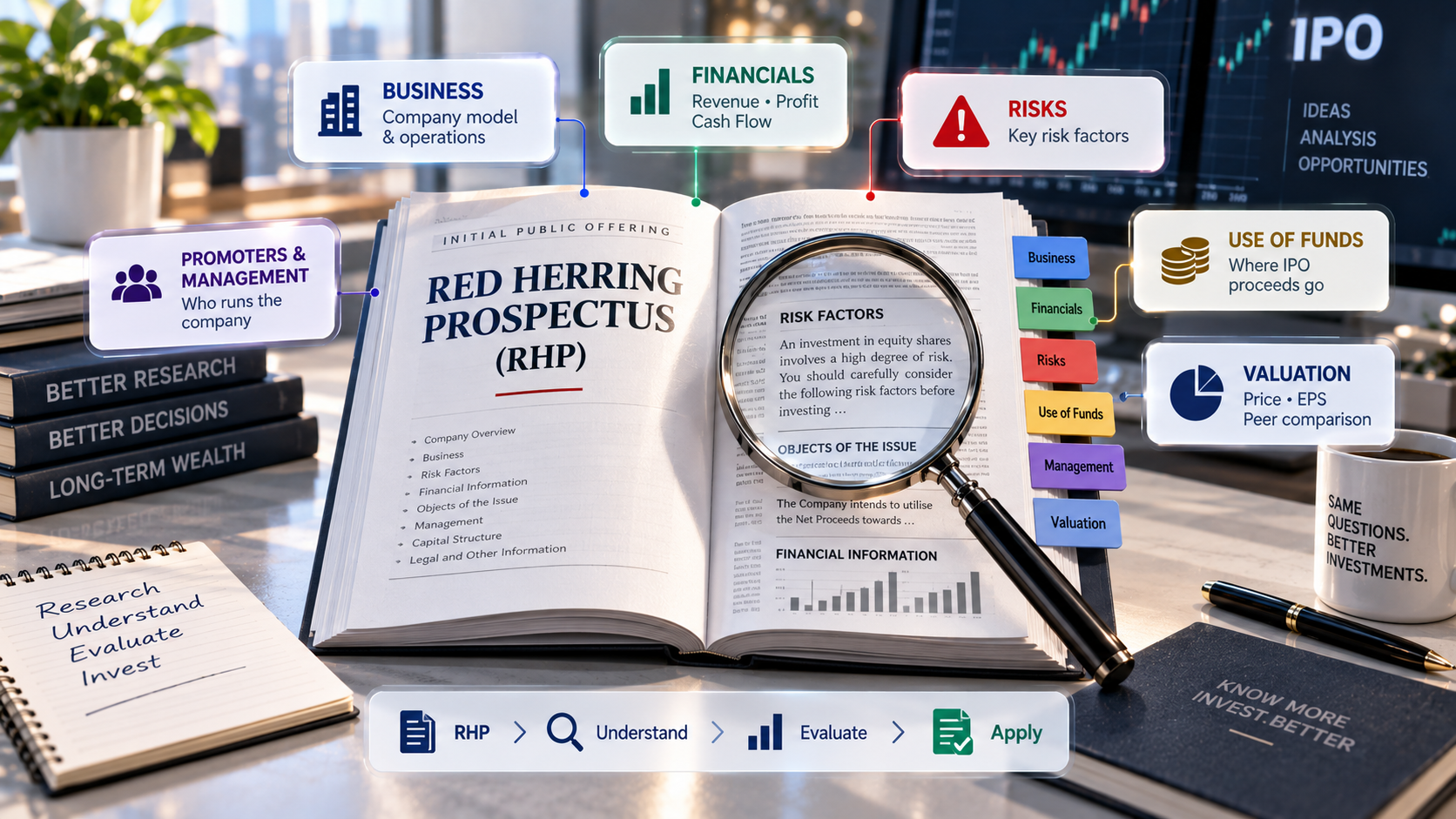
IPO
How to Read an IPO RHP Before Applying
A beginner-friendly guide to reading an IPO Red Herring Prospectus and understanding the key sections investors should review before applying.
Sachin Gadekar
·
24 Sep 2026
IPO
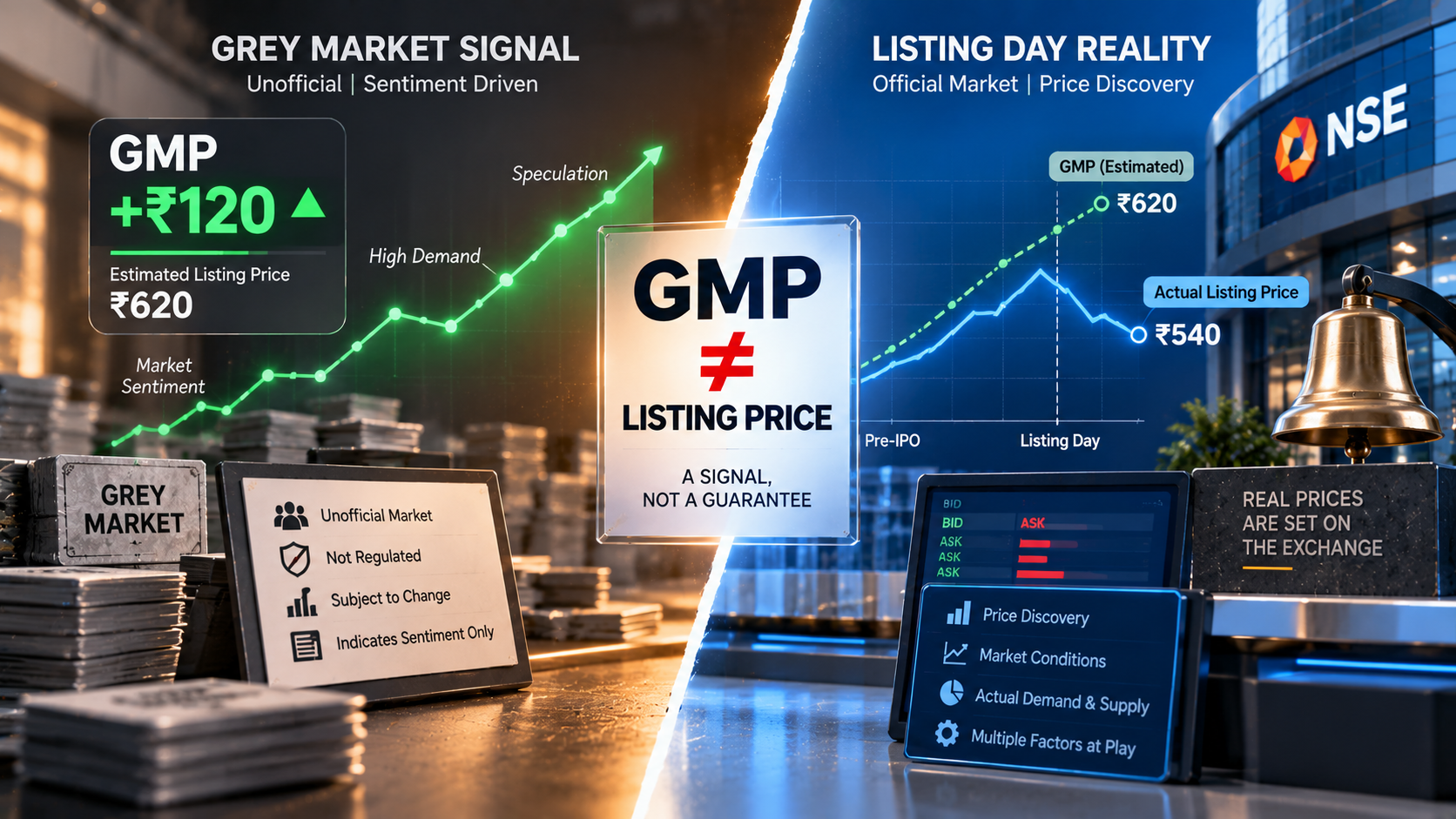
What Is IPO GMP and Why It Can Be Misleading?
A simple guide explaining IPO GMP, grey market premium, expected listing price, common misconceptions, risks and what investors should check before applying for an IPO.
Sachin Gadekar
·
22 Sep 2026

IPO
Fresh Issue vs OFS in IPO: What Investors Should Know
A simple guide explaining fresh issue, offer for sale, IPO proceeds, dilution, promoter selling and what retail investors should review before investing in an IPO.
Sachin Gadekar
·
21 Sep 2026
Jindal Supreme India IPO Details: Date, Price Band, Review & How to Apply
A complete guide to Jindal Supreme India IPO 2026, covering issue size, price band, lot size, important dates, company profile, financials, risks and application process.
17 Sep 2026