How to Invest in Bonds Online in India: A Step-by-Step Guide (2026)
22 April 2026 · Sankarshan B
A practical, end-to-end guide to investing in bonds online in India from opening your demat account to choosing the right bond, placing your first order, and what to expect after you invest.

Introduction
Bonds are no longer the exclusive territory of banks, institutional investors, and the very wealthy. In 2026, any retail investor with a PAN card, a demat account, and ₹10,000 can buy a corporate bond or a government security online in minutes, from their phone or laptop.
The mechanics, however, are less well understood than equity investing. Unlike buying shares where the process is standardised across all brokers, bond investing in India has four distinct routes each with different steps, minimum investments, available instruments, and user experiences. Choosing the wrong route means either missing better options or going through unnecessary complexity.
This guide walks you through the complete process from setting up your account to placing your first bond order and understanding exactly what happens next.
Before You Start: 4 Things to Decide
Before choosing a route or platform, clarify these four things they determine everything that follows.
1. What type of bond are you buying?
Government securities (G-Secs, T-Bills, SDLs) are best accessed via RBI Retail Direct or your broker's G-Sec section. Corporate bonds and NCDs are best accessed via SEBI-registered OBPPs or broker bond sections. The type of bond largely dictates the route.
2. Primary market or secondary market?
Primary market = buying a new bond issue directly from the issuer (like an IPO for bonds). Secondary market = buying an already-issued bond from another investor on an exchange. OBPPs offer both; brokers primarily offer secondary; RBI Retail Direct offers primary for G-Secs.
3. What is your minimum investment?
Most corporate NCDs have a minimum of ₹10,000. Government bonds on RBI Retail Direct start at ₹10,000. Some secondary market bonds may require larger minimum purchases depending on the lot size.
4. Do you have a demat account?
A demat account is mandatory for almost all bond investments in India bonds are held electronically in your demat just like shares. If you do not have one, you will need to open one before investing. Many OBPPs will help you open a demat account as part of their onboarding.
The 4 Routes to Buy Bonds Online in India
| Route | Best For | Bond Types Available | Minimum Investment | Steps Required | Ease of Use |
|---|---|---|---|---|---|
| SEBI-Registered OBPP (Ultra, GoldenPi, Jiraaf, Wint Wealth) | Most retail and HNI investors widest selection | Corporate bonds, PSU bonds, NCDs, SDIs | ₹10,000 | Sign up → KYC → browse → buy | Very High purpose-built for bonds |
| RBI Retail Direct | Investors who want purely sovereign bonds at zero cost | G-Secs, T-Bills, SDLs, SGBs, RBI Bonds | ₹10,000 | Register → open RDG account → e-KYC → bid/buy | Moderate government portal, functional but not polished |
| Stock Broker (Zerodha, Groww, HDFC Securities, ICICI Direct) | Investors already using a broker for equity convenience | Listed corporate bonds (secondary), some G-Secs | 1 bond unit (varies) | Use existing account → search bond section → buy | High familiar interface if you already use the broker |
| Primary Market NCD Application (ASBA/UPI) | Investors wanting new NCD issues at launch price | Newly issued corporate NCDs only | As per offer document (typically ₹10,000) | Check NCD IPO schedule → apply via bank/broker → allotment | Moderate similar to applying for an IPO |
Route 1: SEBI-Registered Online Bond Platforms (OBPPs) Best for Most Investors
Online Bond Platform Providers (OBPPs) are SEBI-registered marketplaces that specialise exclusively in bonds. They aggregate corporate bonds, PSU bonds, NCDs, and structured debt instruments from multiple issuers with full transparency on ratings, yields, tenures, coupon frequencies, and security structures.
Platforms in this category: BondScanner, GoldenPi, Jiraaf, Wint Wealth, IndiaBonds, TheFixedIncome.
Step-by-Step: Buying on an OBPP
Step 1 Create your account Visit the platform's website or app. Click "Sign Up" or "Get Started." Provide your name, mobile number, and email address. You will receive an OTP to verify your mobile number.
Step 2 Complete KYC (Know Your Customer) KYC is mandatory for all bond investments. Most OBPPs offer fully paperless, digital KYC. You will need:
PAN card number
Aadhaar number (for e-KYC via OTP or biometric)
Bank account details (account number + IFSC)
Demat account details (DP ID + Client ID from your demat statement)
Most KYC processes take 5–15 minutes online. Some platforms complete verification within hours; others may take 1–2 business days for manual verification.
Step 3 Link your demat account Your demat account is where bonds will be credited after purchase. Provide your DP (Depository Participant) ID and Client ID these are found on your demat account statement or on your broker's platform. The OBPP will verify this against CDSL or NSDL records.
Step 4 Browse available bonds Once onboarded, you can browse the bond inventory. Use filters to sort by:
Credit rating (AAA, AA, A, BBB)
Yield or coupon rate
Tenure (short-term, medium-term, long-term)
Coupon frequency (monthly, quarterly, annual)
Issuer type (NBFC, PSU, infrastructure, manufacturing)
Minimum investment amount
Each bond listing shows key details: ISIN, issuer name, rating, coupon rate, YTM, maturity date, security (secured/unsecured), and minimum lot size.
Step 5 Analyse the bond Before buying, review:
The credit rating and rating agency (CRISIL, ICRA, CARE, India Ratings)
The issuer's financial health (most platforms link to offer documents)
Coupon frequency confirm it matches what you need (monthly/quarterly)
Security structure secured bonds have asset backing; unsecured bonds do not
Liquidity is it listed on BSE/NSE for potential early exit?
Step 6 Place your order Select the bond → enter the number of units or the investment amount → review order summary (coupon, maturity date, total investment, expected income) → confirm order.
Step 7 Make payment Payment is typically via:
UPI for investments up to ₹5 lakhs (most common and fastest)
Net banking for larger amounts
RTGS/NEFT for very large transactions
Payment is made to a nodal/escrow account managed by the platform. Funds are blocked/transferred and the bond purchase is processed.
Step 8 Bond credited to your demat account After payment confirmation and trade execution, the bonds are credited to your demat account typically within T+1 or T+2 days (T = transaction day). You will receive a contract note and a confirmation of the bond holdings in your demat statement.
Route 2: RBI Retail Direct Best for Government Bonds
The RBI Retail Direct platform (rbiretaildirect.org.in) allows retail investors to buy government securities directly from the RBI no broker, no commission, no fees.
Step-by-Step: RBI Retail Direct
Step 1 Register on rbiretaildirect.org.in Visit the RBI Retail Direct website. Click "Open Account." You will need your PAN, Aadhaar, bank account details, and a mobile number registered with Aadhaar.
Step 2 Complete e-KYC e-KYC is done via Aadhaar OTP authentication. This is fully paperless. After KYC, a Retail Direct Gilt (RDG) account is opened for you this is your dedicated account for holding government securities.
Step 3 Link your bank account Your RDG account is linked to your savings bank account. All coupon payments and principal repayments from G-Secs are credited directly to this bank account.
Step 4 Browse and bid for G-Secs The platform shows upcoming government security auctions and available instruments:
Dated G-Secs long-term government bonds (5–40 years)
T-Bills short-term (91, 182, 364 days)
State Development Loans (SDLs) state government bonds
Sovereign Gold Bonds (SGBs) when available
RBI Floating Rate Savings Bonds available on tap
Step 5 Place a non-competitive bid Retail investors participate via non-competitive bidding you specify the amount you want to invest but not the price. You receive the weighted average price from the auction, ensuring you always get the bonds you want.
Step 6 Payment via linked bank account Payment is auto-debited from your linked bank account on the auction settlement date. Bonds are credited to your RDG account.
Key advantage: Zero fees, zero commission, direct from the RBI. Key limitation: Only government securities no corporate bonds available.
Route 3: Stock Broker Platform Best for Secondary Market
If you already have a demat and trading account with a broker (Zerodha, HDFC Securities, ICICI Direct, Angel One, Kotak Securities), you can buy listed bonds directly from the secondary market just like buying shares.
Step-by-Step: Buying Bonds via a Broker
Step 1 Log into your existing trading account No new account needed if you already have a broker relationship.
Step 2 Navigate to the bond/debt section Look for "Bonds," "NCDs," or "Debt Securities" in your broker's navigation. Not all brokers have equally developed bond sections HDFC Securities, ICICI Direct, and Kotak have the most comprehensive bond sections among major brokers.
Step 3 Search for the bond by name or ISIN Enter the company name or ISIN (International Securities Identification Number) of the bond you want to buy. Each bond has a unique 12-character ISIN beginning with "IN" for example, INE296A08847 for a Bajaj Finance bond.
Step 4 Check the price and yield Secondary market bonds trade at dirty price the quoted price includes accrued interest. The clean price is the bond price excluding accrued interest. Your broker's platform typically shows both.
Step 5 Place a buy order Enter the number of bond units → select order type (market or limit) → confirm. Most secondary market bond trades on NSE/BSE settle on a T+1 basis.
Step 6 Bonds credited to demat Bonds appear in your demat holdings after settlement.
Key advantage: No new account, no separate KYC, immediate access if you already use a broker. Key limitation: Bond inventory may be limited; less curated than OBPPs; pricing transparency varies.
Route 4: Primary Market NCD Application (ASBA/UPI) Best for New Issues
When companies launch public NCD (Non-Convertible Debenture) issues, you can apply during the subscription window similar to applying for an IPO.
Step-by-Step: Applying for a Primary Market NCD
Step 1 Monitor NCD IPO schedules Check BSE (bseindia.com), NSE (nseindia.com), or bond platform websites for upcoming NCD public issues. Large issuers like IIFL Finance, Muthoot Finance, and Shriram Finance regularly launch public NCD issues.
Step 2 Read the offer document (prospectus) Download and review the Shelf Prospectus and Tranche Prospectus from SEBI's website or the issuer's website. Key sections to review: credit rating, use of proceeds, coupon series (I, II, III different tenures and frequencies), and risk factors.
Step 3 Choose your series and option Most NCD issues offer multiple series for example:
Series I: 24 months, monthly coupon at 9%
Series II: 36 months, annual coupon at 9.5%
Series III: 60 months, cumulative at higher effective yield
Choose the series that matches your income and tenure preferences.
Step 4 Apply via ASBA or UPI Apply through your bank's net banking portal (ASBA Applications Supported by Blocked Amount) or your broker's UPI-based application. Your funds are blocked (not debited) until allotment.
Step 5 Allotment and credit After the subscription closes, allotment is done on a First Come First Served (FCFS) basis subject to subscription levels. If allotted, bonds are credited to your demat account and blocked funds are debited. If not allotted, the blocked amount is released.
Which Route Is Right for You?
| Your Situation | Recommended Route | Why |
|---|---|---|
| First-time bond investor, want guidance and curated selection | SEBI-Registered OBPP (Ultra, GoldenPi, Jiraaf) | Purpose-built for bonds; curated inventory; full disclosure; easy KYC; educational content |
| Want purely sovereign bonds with zero fees | RBI Retail Direct | Direct access to G-Secs, T-Bills, SDLs, SGBs no intermediary, no cost |
| Already have a broker account, want convenience | Stock Broker (Zerodha/HDFC/ICICI) | No new account needed; familiar interface; access to secondary market |
| Want a specific new NCD issue at launch price | Primary Market NCD Application via Bank/Broker | Buy at face value directly from issuer; good selection of coupon frequencies |
| HNI wanting wide selection, high-yield options, and curated research | SEBI-Registered OBPP | Widest inventory; both primary and secondary; curated credit research; SEBI oversight |
| Want diversified bond exposure without picking individual bonds | Debt Mutual Funds / Bond ETFs | Professional management, automatic diversification, daily liquidity though returns are not fixed |
Step-by-Step: How to Evaluate a Bond Before Buying
Once you have selected your route and are browsing available bonds, here is how to evaluate any bond before committing:
Step 1 Check the credit rating The rating (AAA, AA+, AA, A, BBB) is assigned by CRISIL, ICRA, CARE, or India Ratings. Always verify the rating is current ratings can be revised. Also check the outlook (Stable, Positive, or Negative Watch). A Negative Watch on an AA bond is a red flag.
Step 2 Understand the coupon rate vs YTM The coupon rate tells you your actual monthly/quarterly cash flow. The YTM tells you your total effective return if held to maturity. For income investors, focus on coupon rate. For total return comparison, use YTM.
Step 3 Review the security structure Secured bonds have a charge on specific assets if the issuer defaults, assets can be liquidated to recover investor money. Unsecured bonds have only the company's promise. Prefer secured over unsecured, especially for lower-rated issuers.
Step 4 Check the issuer's financials For corporate bonds, look at: revenue trend (growing or declining?), debt-to-equity ratio (is the company over-leveraged?), interest coverage ratio (can it easily service its coupon obligations?), and recent credit event history.
Step 5 Assess liquidity Is the bond listed on BSE or NSE? If you need to exit before maturity, can you sell it? Check recent trading volumes for the specific ISIN. Low or zero traded volumes indicate very illiquid bonds plan to hold to maturity.
Step 6 Calculate your post-tax return At a 30% tax bracket, every ₹1 of coupon income becomes ₹0.70 post-tax. Factor your tax rate into the effective return calculation before comparing with alternative instruments.
For a deeper understanding of how different bond types compare on risk and return, read: Government Bonds vs Corporate Bonds in India.
What Happens After You Buy: The Post-Purchase Experience Drag
This is what most guides skip but it is important to know what to expect once you have bought your first bond.
Day 1–2 (T+1 or T+2): The bond units are credited to your demat account. You will receive a contract note from your broker or OBPP. Your demat statement will show the bond holding with its ISIN, face value, and quantity.
Coupon payment cycle begins: The issuer's registrar (Link Intime, KFin Technologies, Bigshare Services) tracks your holding as of each coupon record date. On the payment date, the coupon amount is credited directly to your bank account the one linked to your demat account.
TDS deduction: If your annual interest from a single issuer exceeds ₹5,000, the registrar deducts TDS at 10% before crediting the coupon to your account. You will receive a TDS certificate (Form 16A) from the issuer annually, which you use to claim credit when filing your income tax return.
Monitoring your investment: Track your bond holdings in your demat statement (downloadable from CDSL/NSDL). Most OBPPs also provide a dashboard showing your portfolio, upcoming coupon dates, and maturity timeline.
At maturity: On the maturity date, the principal (face value) is credited to your bank account via the registrar. The bond units are extinguished from your demat account simultaneously.
If you want to exit before maturity: For listed bonds: place a sell order through your broker on BSE/NSE. You will receive the market price (which may be above or below face value depending on current interest rates). Settlement is T+1. For unlisted bonds: early exit is generally not possible plan your investments around the maturity date.
Pre-Investment Checklist: 10 Things to Verify Before Every Bond Purchase
| Check | What to Look For | Red Flag |
|---|---|---|
| 1. Credit rating | Rating by CRISIL, ICRA, CARE, or India Ratings AA or above for core portfolio | Below A rating, Negative Watch, or rating recently downgraded |
| 2. Rating outlook | Stable or Positive | Negative Watch or Rating Under Review |
| 3. Issuer financial health | Growing revenue, manageable debt levels, adequate interest coverage | Declining revenue, very high D/E ratio, NPA-heavy NBFC |
| 4. Security structure | Secured NCD with specific asset charge | Unsecured bonds from lower-rated or unknown issuers |
| 5. Coupon rate and frequency | Matches your income needs confirm monthly/quarterly option | Only annual or cumulative option when you need regular income |
| 6. Tenure vs your investment horizon | Maturity date aligns with when you may need the money | 5-year bond when you may need funds in 2 years |
| 7. Liquidity | Listed on BSE/NSE with reasonable trading volume | Unlisted or near-zero traded volume (trapped capital) |
| 8. YTM vs similar-rated bonds | YTM is competitive with similar-rated bonds of similar tenure | YTM much lower than peers buying at a premium for no reason |
| 9. Minimum investment vs your diversification plan | Minimum investment allows you to spread across 5–8 issuers | Single bond minimum of ₹5 lakhs forcing over-concentration |
| 10. Platform/broker SEBI registration | Platform is SEBI-registered OBPP with disclosed registration number | Unregistered platform, no SEBI number visible, promise of guaranteed returns |
Common Mistakes First-Time Bond Investors Make
Mistake 1: Confusing YTM with monthly cash flow YTM tells you your total effective return not your monthly deposit. Your monthly coupon is calculated on face value using the coupon rate. A bond with 7% YTM bought at a discount still pays the same monthly coupon as when issued at face value. Always use coupon rate for income planning.
Mistake 2: Buying unlisted bonds without planning to hold to maturity If a bond is not listed on BSE/NSE, you cannot exit before maturity. Many investors discover this too late. Always check listing status before buying if you may need liquidity, stick to listed bonds.
Mistake 3: Chasing the highest yield without checking the rating A 15% yield from an unknown NBFC with a BBB- rating is not a better deal than 10.5% from a AA-rated issuer. The yield differential exists for a reason higher credit risk. IL&FS and DHFL taught this lesson painfully. Do not chase yield without reading the credit profile.
Mistake 4: Ignoring the record date when buying in the secondary market If you buy a bond one day after its record date, you miss the upcoming coupon payment it goes to the previous holder. Your next coupon will be at the following payment date. Factor this into your income planning when buying secondary market bonds.
Mistake 5: Not linking the right bank account to demat Coupon payments and principal repayments go to the bank account linked to your demat account. If you have an old account linked, you may miss payments. Verify and update your bank account details with your DP (depository participant) before investing.
Mistake 6: Buying bonds without checking if they are secured or unsecured Secured bonds have an asset charge if the issuer defaults, assets back your claim. Unsecured bonds have only a contractual promise. For lower-rated issuers, always prefer secured. For AAA-rated issuers, the distinction matters less.
Mistake 7: Over-concentrating in one issuer or one sector Never put more than 10–15% of your bond portfolio into a single issuer. Diversify across issuers, sectors (NBFCs, infrastructure, manufacturing), and maturities (short, medium, long-term). Even high-rated issuers can face unexpected stress.
For more on building a diversified fixed income portfolio, read: Best Fixed Income Investments in India 2026.
FAQs
Q1. Do I need a demat account to invest in bonds in India?
Yes for almost all bond investments. Corporate bonds, NCDs, and listed G-Secs are held in demat form. The only exception is RBI Retail Direct, where bonds are held in a separate Retail Direct Gilt (RDG) account, not a standard demat. For everything else open a demat account first.
Q2. What is the minimum investment to buy bonds online in India?
Most corporate NCD primary issues have a minimum of ₹10,000 (10 units at ₹1,000 face value). On the secondary market, you can sometimes buy 1 bond unit at the prevailing market price. RBI Retail Direct allows investments from ₹10,000.
Q3. Is investing in bonds online safe in India?
Yes, when using SEBI-registered OBPPs or the RBI Retail Direct platform. The bond itself carries the credit risk of the issuer this varies from near-zero (sovereign bonds) to moderate (BBB-rated corporate bonds). The platform risk is minimised by using only SEBI-registered, regulated platforms.
Q4. Which is the best platform to invest in bonds online in India?
It depends on your need. For the widest corporate bond selection: SEBI-registered OBPPs like Ultra (getultra.club), GoldenPi, Jiraaf, or Wint Wealth. For government bonds at zero cost: RBI Retail Direct. For secondary market convenience: your existing broker's bond section.
Q5. How long does it take to start investing in bonds online?
On most OBPPs, the onboarding process (sign up + KYC + demat linking) takes 15–30 minutes online. Your first purchase can be completed within 24–48 hours of completing KYC verification.
Q6. How is bond income taxed?
Coupon income from corporate bonds is taxed as interest income at your applicable slab rate. TDS at 10% is deducted if annual interest from a single issuer exceeds ₹5,000. G-Sec coupon income is also taxable at slab rate. Tax-free bonds (NHAI, PFC old series secondary market) are the only exception their coupon income is fully tax-exempt.
Q7. Can I invest in bonds through a mobile app?
Yes most OBPPs have mobile apps. Zerodha's Kite, Groww, and ICICI Direct mobile apps also support secondary market bond purchases. RBI Retail Direct has a mobile-friendly web interface.
Q8. What documents do I need to invest in bonds online?
PAN card, Aadhaar card (for e-KYC), bank account details, and demat account details (DP ID + Client ID). All documents are submitted digitally on most platforms no physical submission required.
Recent articles
View all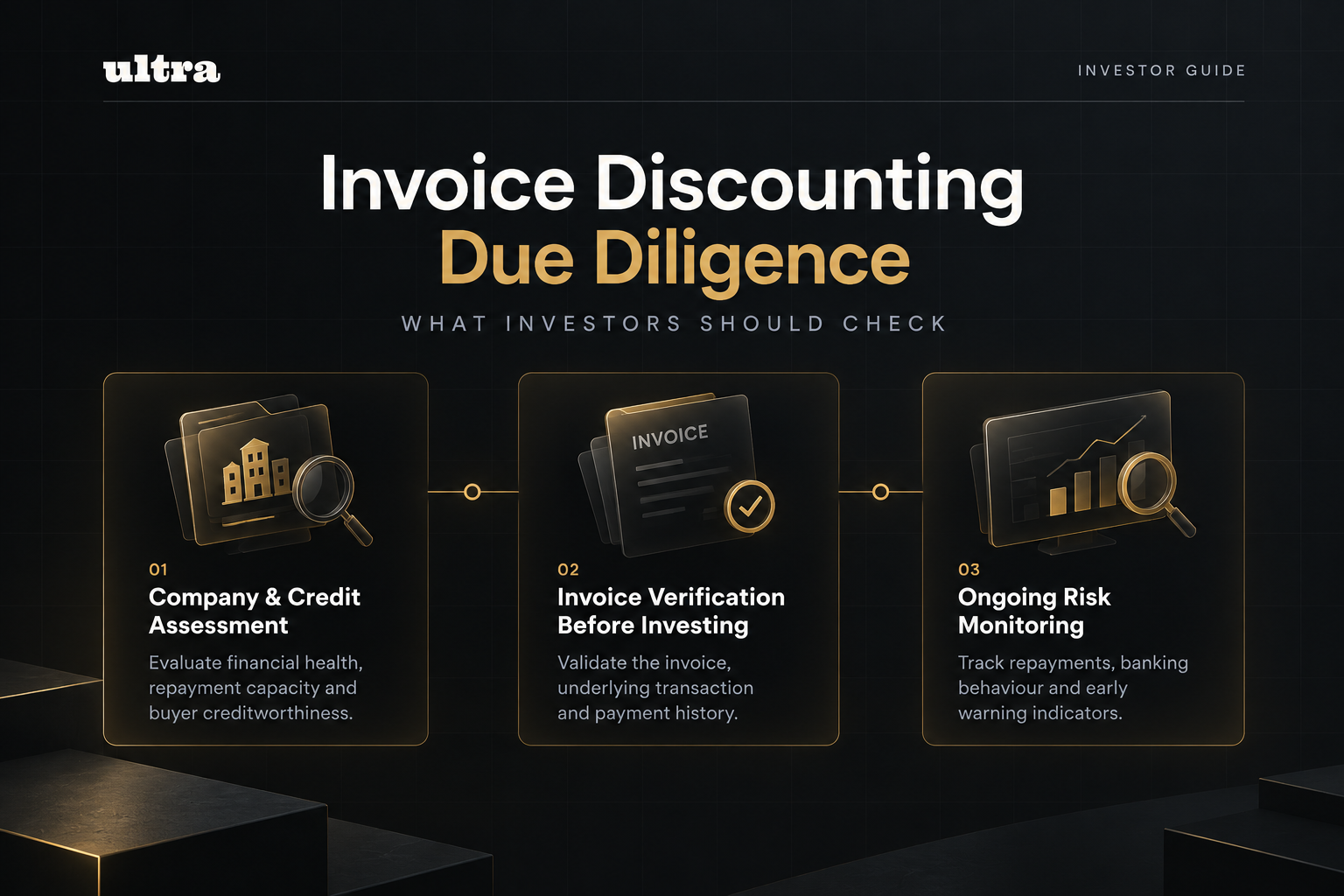
invoice discounting
Invoice Discounting Due Diligence: What Investors Should Check Before Investing
A complete guide to invoice discounting due diligence, covering what to check before you invest and how ultra reviews every business before listing its invoices
Prerna Bhardwaj
·
26 Oct 2026
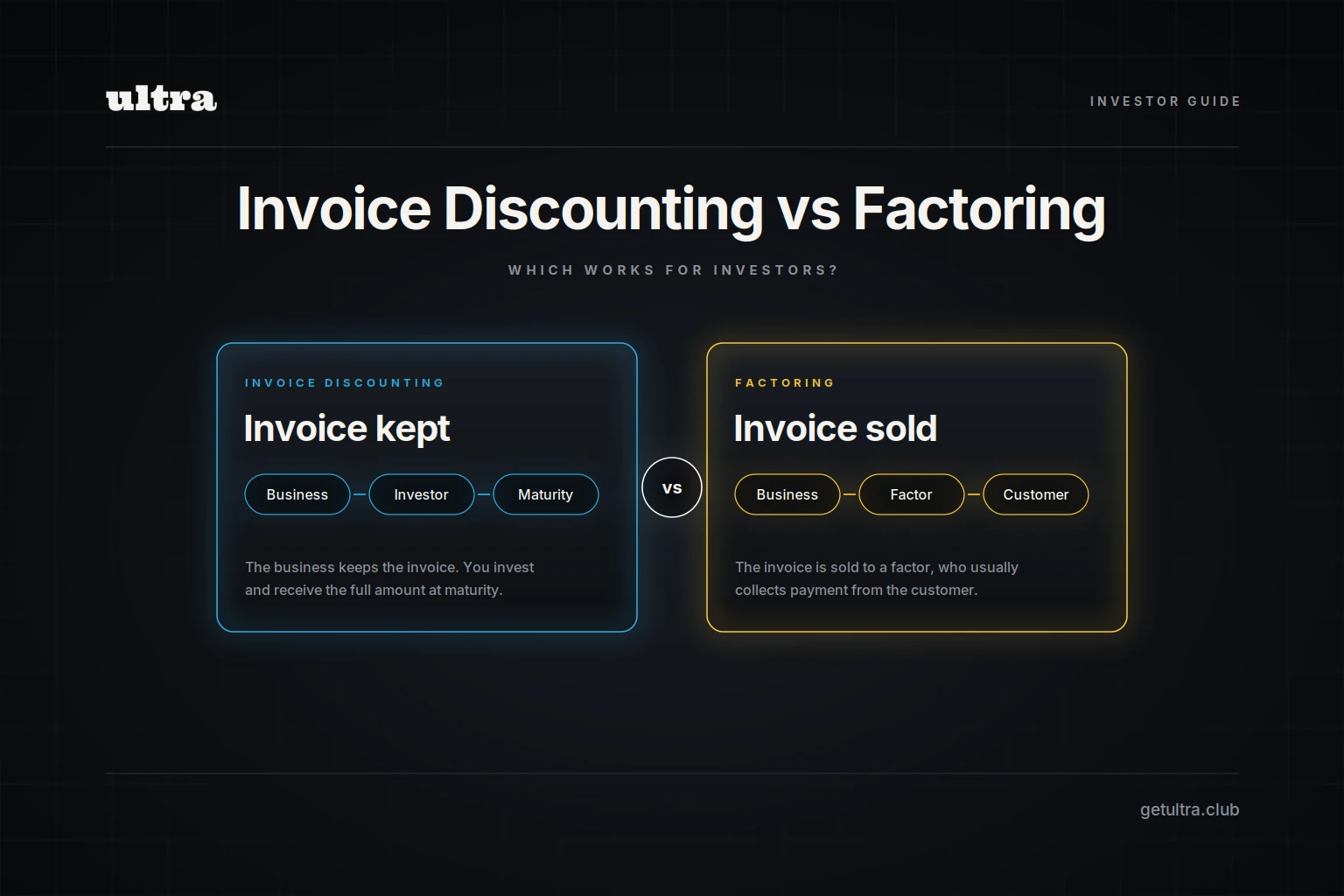
invoice discounting
Invoice Discounting vs Factoring: Which Works for Investors?
A complete guide to invoice discounting vs factoring, covering how each works, the key differences between them and why investors choose invoice discounting on ultra.
Prerna Bhardwaj
·
22 Oct 2026
invoice discounting
Invoice Discounting Investment in India: How It Works
A complete guide to invoice discounting investment in India, covering how it works, why experienced investors consider it, where it fits in a portfolio and how to invest with ultra.
Prerna Bhardwaj
·
21 Oct 2026

IPO
Reliance Jio IPO: Date, Price, GMP, Valuation, Review & Details
A complete guide to Reliance Jio IPO 2026, covering Jio Platforms IPO details, issue size, expected date, price band status, GMP context, shareholder quota, company profile, financials, valuation and risks.
Sachin Gadekar
·
19 Oct 2026