What Are AIFs? A Complete Guide to Alternative Investment Funds in India (2026)
27 April 2026 · Saurabh Mukherjee
A complete, investor-first guide to Alternative Investment Funds (AIFs) in India covering AIF full form, all three SEBI categories, minimum investment, taxation, fee structures, 2026 regulatory updates, and a clear framework for deciding whether AIFs belong in your portfolio.

AIF Full Form and Definition
AIF full form: Alternative Investment Fund.
Under Indian law, an Alternative Investment Fund is defined under Regulation 2(1)(b) of the SEBI (Alternative Investment Funds) Regulations, 2012 as:
"Any fund established or incorporated in India in the form of a trust or a company or a limited liability partnership or a body corporate which is a privately pooled investment vehicle that collects funds from sophisticated investors, whether Indian or foreign, for investing in accordance with a defined investment policy for the benefit of its investors."
In plain language: an AIF is a pooled investment vehicle like a mutual fund but designed exclusively for sophisticated, high-net-worth investors, investing in asset classes and strategies that go well beyond what a standard mutual fund can access.
What makes an investment "alternative"? Alternative investments are everything that falls outside the three traditional asset classes listed equity (stocks), listed debt (bonds), and cash. Private equity, venture capital, hedge funds, private credit, real estate funds, infrastructure funds, commodities, and complex derivatives strategies all qualify as alternative investments.
What AIFs are not: AIFs are expressly excluded from being mutual funds, collective investment schemes registered with SEBI, family trusts, employee benefit funds, or holding companies. These exclusions ensure that AIF regulation is distinct from the mutual fund regulatory framework under which retail investors operate.
How AIFs Work: The Basic Structure
A typical AIF in India operates through a trust structure the most common legal form used by fund managers. Here is how the key participants fit together:
Sponsor: The entity or individual who sets up the AIF and contributes the mandatory "continuing interest" a minimum stake of 2.5% of the fund corpus (or ₹5 crore, whichever is lower) that the manager must hold throughout the fund's life. This skin-in-the-game requirement aligns the manager's interests with investors.
Investment Manager: The entity that makes all investment decisions which companies to invest in, when to enter and exit, how to structure deals. The investment manager must have at least one key team member holding the NISM Series-XIX-C: Alternative Investment Fund Managers Certification.
Trustee: An independent entity responsible for overall administration and oversight of the trust. The trustee cannot be an associate of the sponsor or manager ensuring independence.
Investors (Contributors): HNIs, family offices, institutions, and corporates who commit a minimum of ₹1 crore to the fund. Capital is typically drawn down in tranches as investment opportunities are identified not paid upfront in one lump sum.
Custodian: Mandatory for all Category III AIFs and for Category I and II AIFs with corpus exceeding ₹500 crore. Effective April 2026, all AIF investments must be held in dematerialized form.
How capital flows: Investors commit capital → the manager identifies investments → capital is drawn down from investors as needed → investments are made → returns are generated → capital and profits are distributed to investors according to the fund's distribution waterfall → the fund winds down at the end of its tenure.
The 3 SEBI Categories of AIFs in India
| Parameter | Category I | Category II | Category III |
|---|---|---|---|
| Focus | Start-ups, SMEs, social ventures, infrastructure | Private equity, private credit, real estate | Hedge funds, complex trading, leverage strategies |
| Investment in | Early-stage, unlisted companies and social enterprises | Unlisted companies, private debt, real assets | Listed and unlisted securities; derivatives; short-selling |
| Leverage | Not permitted (except temp borrowing up to 30 days) | Not permitted (except temp borrowing up to 30 days) | Permitted capped at 2x NAV (2026 SEBI update) |
| Tax treatment | Pass-through investors taxed individually | Pass-through investors taxed individually | Fund-level taxation taxed before distribution |
| Typical tenure | 7–12 years (VC/PE-like horizon) | 5–8 years | Open-ended or 3–5 years |
| Liquidity | Very low illiquid until exit | Low to moderate depends on structure | Moderate some funds allow periodic redemptions |
| Government concessions | Yes SEBI and government provide certain incentives | No special concessions | No special concessions |
Category I AIFs: Venture Capital, Angel Funds, Infrastructure and Social Ventures
Category I AIFs invest in sectors that the government considers economically or socially desirable start-ups, early-stage businesses, SMEs, social enterprises, and infrastructure. SEBI and the government provide certain incentives and concessions to these funds to encourage capital flow into these high-growth, high-impact areas.
Venture Capital Funds (VCFs): The most prominent Category I sub-type. VCFs invest in early to growth-stage start-ups with high return potential. Think early investments in companies like Zepto, Meesho, or the next generation of Indian unicorns. Returns are typically in the form of capital gains at exit IPO, acquisition, or secondary sale with a 7–12 year horizon. Risk is very high and early-stage default rates can be significant, but outlier successes generate outsized returns.
Angel Funds: A specialized sub-category that invests in very early-stage start-ups typically pre-Series A. Angel investors pool capital at a minimum of ₹25 lakh per investor (reduced from ₹2 lakh for certain social impact fund investors by SEBI in April 2026). Angel funds typically invest small cheques (₹50 lakh to ₹5 crore) in companies that are too early even for VCFs.
Infrastructure Funds: Invest in infrastructure development companies roads, ports, power plants, railways, and urban infrastructure. These funds often benefit from government-backed revenues (toll collections, power purchase agreements), making return profiles more predictable than pure venture investments.
Social Venture Funds: Invest in businesses that generate both financial returns and positive social impact affordable healthcare, rural education, clean energy access. SEBI recently reduced the minimum investment in social impact funds on the Social Stock Exchange (SSE) to ₹1,000, significantly opening retail participation in this sub-category.
SME Funds: Provide growth capital to Small and Medium Enterprises that are too small for traditional PE but too large for angel investing. A critical capital supply bridge for India's MSME ecosystem.
Category II AIFs: Private Equity, Private Credit and Real Estate
Category II is the largest and most established AIF category in India by committed capital. These funds invest in companies that are not listed on stock exchanges accessing private markets where returns are often higher but liquidity is lower.
Private Equity (PE) Funds: Invest equity capital in unlisted companies at growth or buyout stage. Lock-in periods of 5–7 years are standard. Returns come from capital appreciation at exit strategic sale, secondary sale, or IPO. India's PE industry has consistently delivered strong returns over 10-year periods.
Private Credit / Debt Funds: This is the most relevant Category II sub-type for HNIs looking for fixed income alternatives. Private credit funds lend directly to mid-market companies at 12–18% interest rates charging a premium for providing capital that banks will not or cannot provide. Returns are primarily income-based (interest payments) rather than capital gains. For more on why private credit is increasingly popular with HNIs, read: High Yield Investments for HNIs in India.
Real Estate Funds: Invest in commercial or residential real estate projects typically as structured debt or equity to developers. Returns come from development profits, rental yields, or asset appreciation.
Fund of Funds (FoF): Invest in other AIFs rather than directly in companies. Provide automatic diversification across multiple fund managers and strategies. Minimum ticket of ₹1 crore gives access to a diversified portfolio of underlying funds that individually may require ₹3–5 crore.
Key 2026 regulation: SEBI clarified that no Category II AIF can invest more than 10% of its investable funds in a single company the "10% concentration limit" with extensions only permitted with explicit investor consent.
Category III AIFs: Hedge Funds and Complex Strategies
Category III AIFs use sophisticated, often leverage-based strategies to generate returns both long (buying) and short (selling) positions across listed and unlisted securities, derivatives, and complex instruments. This is the only AIF category permitted to use leverage beyond day-to-day operational needs.
Hedge Funds: The most common Category III vehicle. Pool capital from accredited investors and trade across domestic and international equity, debt, and derivatives markets using active, often directional strategies. Some hedge funds are long-only equity funds with concentrated portfolios; others use market-neutral strategies.
Long-Short Equity Funds: Take long positions in undervalued stocks and short positions in overvalued ones, targeting positive returns regardless of market direction.
PIPE Funds (Private Investment in Public Equity): Invest in shares of publicly listed companies at a negotiated discount to market price typically during a company's capital raise or restructuring.
2026 leverage update: SEBI capped Category III AIF leverage at 2x net asset value in 2026, with mandatory daily reporting of leverage positions to SEBI. This significantly tightens the risk framework for hedge fund-style vehicles.
Important tax consideration: Category III AIFs are taxed at the fund level before distributions to investors unlike Category I and II which pass through income and gains to investors. This creates a meaningful tax drag for high-bracket investors compared to direct investing.
Key AIF Regulations: What Every Investor Must Know
| Parameter | Requirement | Notes |
|---|---|---|
| Minimum investor commitment | ₹1 crore per AIF scheme | ₹25 lakh for employees/directors of the fund; ₹25 lakh for angel fund investors |
| Minimum fund corpus | ₹20 crore per scheme | ₹10 crore for angel funds; corpus need not be collected upfront |
| Maximum investors per scheme | 1,000 investors | Angel funds capped at 200 investors per scheme |
| Manager continuing interest | 2.5% of corpus or ₹5 crore (whichever is lower) for Cat I & II | 5% of corpus or ₹10 crore for Cat III; ensures manager skin-in-the-game |
| Fund structure | Trust, company, LLP, or body corporate | Trust is the most common form in India |
| Dematerialisation | All AIF units must be held in demat form | Effective April 1, 2026 enables secondary market transfers |
| Fundraising | Private placement only no public advertisements | AIFs raise capital through PPM (Private Placement Memorandum) |
| Valuation | Independent valuation semi-annually | 2026 update previously annual for Cat I & II |
| Reporting | Quarterly Activity Reports + Annual Activity Report (new 2026 format) | Filed on SEBI's SI Portal; standardised formats via IVCA Standards Forum |
AIF vs Mutual Fund vs PMS: How They Compare
| Parameter | Mutual Fund | PMS (Portfolio Management Service) | AIF |
|---|---|---|---|
| Regulator | SEBI | SEBI | SEBI |
| Minimum investment | ₹500 (SIP) / ₹5,000 (lump sum) | ₹50 lakhs | ₹1 crore |
| Investor type | Retail to HNI | HNI | HNI / UHNI / Institutions |
| Asset classes | Listed equity, listed debt, gold | Listed equity and debt | Unlisted equity, private credit, hedge strategies, real assets, and more |
| Liquidity | Daily (open-ended) / maturity (close-ended) | Generally liquid (listed securities) | Low to very low lock-ins of 3–12 years typical |
| Transparency | High daily NAV, monthly portfolio disclosure | High direct portfolio visibility | Moderate quarterly reporting; PPM-level disclosure |
| Customisation | None pooled fund strategy | High can customise for individual investor | None pooled fund strategy |
| Tax efficiency | High (pass-through; LTCG, STCG rates apply) | High (direct investor owns securities) | Cat I & II: pass-through (efficient); Cat III: fund-level tax (less efficient) |
| Typical return target | Market-linked (8–15% long term equity) | Market-linked + alpha (12–20% long term) | Wide range: 12–18% (private credit) to 25%+ (VC/PE, over full cycle) |
AIF Fee Structure: What You Actually Pay
This is the dimension most AIF articles skip and the one that most significantly affects your actual returns. AIFs charge two layers of fees:
Management Fee: An annual fee charged on committed or invested capital typically 1.5–2.5% per year. On a ₹1 crore commitment at 2% management fee, you pay ₹2 lakhs annually whether the fund performs or not.
Carried Interest (Carry): A performance fee charged on profits above a hurdle rate typically 20% of profits above an 8–10% hurdle rate. This means the fund manager takes 20% of every rupee of profit earned above the hurdle. On a fund generating 18% returns with a 10% hurdle and 20% carry, the investor earns approximately 14.4% net of carry still strong, but meaningfully different from the gross number.
AIF Fee Impact on Investor Returns Illustrative Example
| Scenario | Gross Fund Return | Management Fee (2% p.a.) | Carried Interest (20% above 10% hurdle) | Net Return to Investor |
|---|---|---|---|---|
| Private credit AIF (good year) | 16% | −2% | −1.2% (20% of 6%) | ~12.8% |
| Private equity AIF (strong year) | 25% | −2% | −3% (20% of 15%) | ~20% |
| Hedge fund AIF (moderate year) | 14% | −2% | −0.8% (20% of 4%) | ~11.2% |
| Any AIF (poor year below hurdle) | 7% | −2% | ₹0 (below hurdle) | ~5% |
Key insight: Always ask for the net IRR (internal rate of return) the return after all fees not the gross return. Some fund managers prominently quote gross returns in marketing materials. The net number is what matters for your wealth creation.
How AIFs Are Taxed in India (2026)
Tax treatment is one of the most important and most misunderstood dimensions of AIF investing. The key distinction is pass-through vs fund-level taxation.
Category I and II AIFs Pass-Through Taxation: Income and gains from Category I and II AIFs pass through to investors and are taxed in the investors' hands at their applicable rates as if the investor had directly earned those returns. This means:
Long-term capital gains from equity holdings held 12+ months: taxed at 12.5% (above ₹1.25 lakh threshold)
Short-term capital gains: taxed at 20%
Interest income from private credit: taxed as interest income at slab rate (up to 42.74% for HNIs at highest surcharge)
Business income: taxed at applicable business income rates
Category III AIFs Fund-Level Taxation: Category III AIFs are taxed at the fund level before distributing returns to investors. The fund pays tax on its income and gains, and investors receive post-tax distributions. This creates a tax drag particularly painful for HNIs in the highest surcharge bracket, where the fund-level tax rate can effectively be higher than the investor's individual rate on some income types.
| AIF Category | Taxation Approach | LTCG (equity) | STCG (equity) | Interest / Dividend Income | Key Consideration |
|---|---|---|---|---|---|
| Category I | Pass-through to investor | 12.5% (above ₹1.25L threshold) | 20% | Investor's slab rate | Tax efficient; investor controls tax timing through holding period |
| Category II | Pass-through to investor | 12.5% (above ₹1.25L threshold) | 20% | Investor's slab rate | Same as Cat I; private credit income taxed at slab rate significant for HNIs |
| Category III | Fund-level taxation | Fund pays tax; investor receives post-tax distribution | Fund pays tax; investor receives post-tax distribution | Fund pays tax; investor receives post-tax distribution | Tax drag fund-level tax may exceed investor's individual rate; less efficient for high-bracket HNIs |
For a deeper understanding of how alternative investments fit into an HNI's overall tax and investment strategy, read: Best Fixed Income Investments in India 2026.
2026 SEBI Updates: What Has Changed for AIF Investors
SEBI has introduced several material changes to the AIF framework in 2025–26, driven by the sector's explosive growth and the need for tighter oversight:
1. Dematerialisation of AIF units (effective April 1, 2026) All AIF units must now be held in dematerialised form either in CDSL or NSDL. This is a significant operational change that enables secondary market transfers of AIF units, improving liquidity for investors who need to exit before fund maturity.
2. Category III leverage cap SEBI capped leverage for Category III AIFs at 2x net asset value, with mandatory daily reporting of leverage positions. This tightens risk controls on hedge fund-style strategies and reduces the potential for outsized losses from excessive borrowing.
3. Revised reporting framework (March 2026) SEBI replaced the heavy quarterly reporting requirement for the March quarter with a comprehensive Annual Activity Report (AAR). Lighter Quarterly Activity Reports (QARs) apply to the other three quarters. This reduces administrative burden while improving annual disclosure depth through auditor-linked reconciliation.
4. Semi-annual independent valuation (2026 update) Category I and II AIFs must now obtain independent portfolio valuations semi-annually (previously annual). This provides investors with more frequent, independently verified portfolio values.
5. Concentration limit clarification for Category II SEBI formally codified the 10% concentration limit no Category II AIF can invest more than 10% of investable funds in a single company with extensions requiring explicit investor consent and enhanced disclosure.
6. Social Impact Fund investor threshold SEBI reduced the minimum investment in social impact funds (a Category I sub-type) on the Social Stock Exchange to ₹1,000 opening meaningful retail participation in impact investing for the first time.
Who Should Invest in AIFs and Who Should Not
| Profile | Suitable AIF Type | Why It Works | Key Risk |
|---|---|---|---|
| HNI seeking 12–18% fixed income with ₹1 crore+ to allocate | Category II Private Credit / Debt Fund | Provides institutional-quality senior secured lending returns with defined tenure and regular distributions | Illiquidity (3–5 year lock-in); credit risk on borrower companies |
| Entrepreneur / startup founder with startup ecosystem knowledge | Category I Venture Capital or Angel Fund | Leverages sector knowledge; high return potential; meaningful portfolio diversification | Very high illiquidity (7–12 years); high default rate at early stage; J-curve effect |
| Family office seeking portfolio diversification beyond listed markets | Category II PE / Real Estate; Category III Hedge Fund | Non-correlated returns; access to private market returns unavailable in public markets | Manager selection risk; fee drag; liquidity risk across a large illiquid allocation |
| Sophisticated investor seeking absolute returns with active management | Category III Hedge Fund / Long-Short | Potential for positive returns in all market conditions; active risk management | Fund-level taxation (tax drag); leverage risk; higher fee load |
| Conservative HNI seeking capital protection above all else | Not recommended for core AIF allocation | N/A liquidity and capital protection needs conflict with AIF structure | Misalignment AIFs are illiquid, higher-risk vehicles; better suited to FDs, bonds, and liquid MFs |
Who should NOT invest in AIFs
Investors who may need access to their capital within 3–5 years AIF lock-ins make early exit very difficult
Investors whose investable surplus is below ₹3–5 crore a single ₹1 crore AIF commitment would represent too high a concentration in one fund
Investors who have not diversified their traditional portfolio first AIFs are a supplement to, not a replacement for, core equity and fixed income exposure
Investors who cannot afford the time to conduct due diligence on fund managers manager selection in AIFs is the single most important driver of outcome
For a comprehensive view of how alternative fixed income investments fit alongside AIFs in an HNI portfolio, read: HNI Diversification with Alternative Fixed Income Assets.
FAQs
Q1. What is the AIF full form?
AIF stands for Alternative Investment Fund. It is a privately pooled investment vehicle registered with SEBI under the SEBI (Alternative Investment Funds) Regulations, 2012, designed to collect funds from sophisticated investors and invest in alternative asset classes beyond traditional stocks, bonds, and mutual funds.
Q2. What is the minimum investment in an AIF in India?
The SEBI-mandated minimum investment is ₹1 crore per investor per AIF scheme. For employees and directors of the fund, the minimum is ₹25 lakh. For angel fund investors, the minimum is ₹25 lakh. These thresholds restrict AIF participation to financially sophisticated investors only.
Q3. What are the 3 categories of AIFs in India?
SEBI classifies AIFs into three categories. Category I covers venture capital, angel funds, infrastructure funds, and social venture funds. Category II covers private equity, private credit, real estate, and fund of funds. Category III covers hedge funds, long-short strategies, and other complex, leverage-based approaches.
Q4. How are AIFs different from mutual funds?
Mutual funds are regulated for retail investors, with minimum investments as low as ₹500, daily liquidity, and investment in listed securities only. AIFs are for HNIs only (minimum ₹1 crore), have lock-ins of 3–12 years, and can invest in unlisted companies, private credit, hedge strategies, and a much broader range of assets that mutual funds cannot access.
Q5. Are AIFs safe investments?
AIFs carry higher risk than traditional investments. Category I VC/angel funds carry very high risk with long timelines. Category II private credit funds carry credit and illiquidity risk but offer more predictable income. Category III hedge funds carry market, leverage, and strategy risk. All AIF categories are illiquid not suitable as a replacement for liquid savings. However, within a well-diversified HNI portfolio, certain AIF categories particularly Category II private credit offer compelling risk-adjusted returns.
Q6. How are AIFs taxed in India?
Category I and II AIFs use pass-through taxation income and gains flow to investors and are taxed in their hands at applicable rates (12.5% LTCG for long-term equity, slab rate for interest income). Category III AIFs pay tax at the fund level before distributing returns, creating a tax drag compared to direct investing. This makes Category III less tax-efficient for HNIs in high surcharge brackets.
Q7. Can NRIs invest in AIFs in India?
Yes. NRIs, OCIs, and Foreign Portfolio Investors (FPIs) can invest in Indian AIFs, subject to SEBI and FEMA compliance requirements. The investment is typically made through the NRI route under FEMA regulations, and repatriation of returns is permitted subject to applicable RBI guidelines.
Q8. What is the difference between AIF and PMS?
PMS (Portfolio Management Service) has a lower minimum investment of ₹50 lakhs, invests in listed securities (stocks and bonds), and offers daily liquidity and high transparency. AIFs have a higher minimum of ₹1 crore, invest in a much broader range of assets including private markets, and are significantly less liquid. PMS is a more accessible starting point for HNIs; AIFs add exposure to private market return streams that PMS cannot provide.
Disclaimer
This article is for informational and educational purposes only and does not constitute investment advice. AIF investments carry significant risk including illiquidity, credit risk, and loss of capital. Returns mentioned are indicative based on current market conditions and past performance is not a guarantee of future results. All investments in AIFs are subject to SEBI regulations and should be made after thorough due diligence. Please consult a SEBI-registered investment advisor and a qualified financial planner before investing.
Recent articles
View all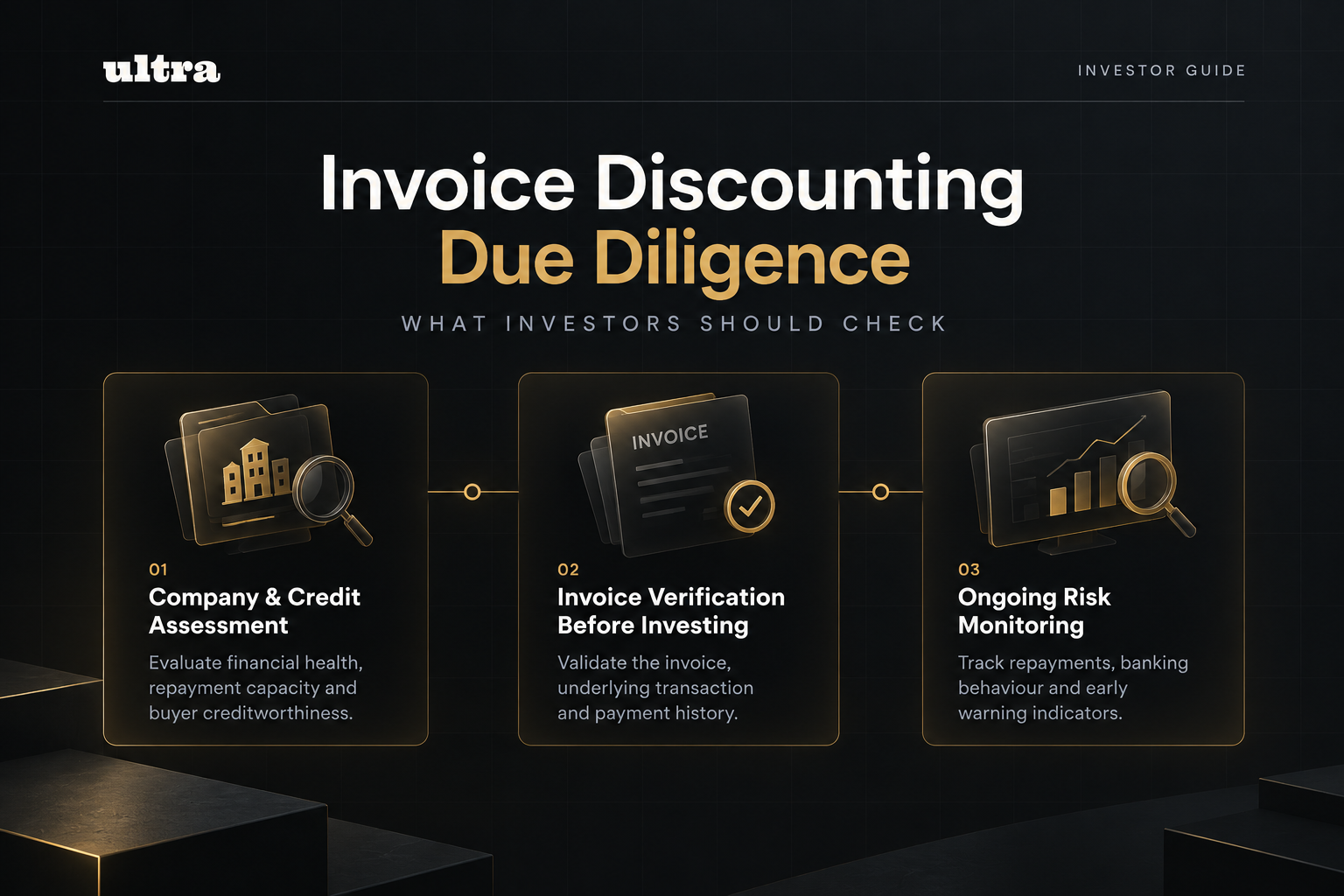
invoice discounting
Invoice Discounting Due Diligence: What Investors Should Check Before Investing
A complete guide to invoice discounting due diligence, covering what to check before you invest and how ultra reviews every business before listing its invoices
Prerna Bhardwaj
·
26 Oct 2026
invoice discounting
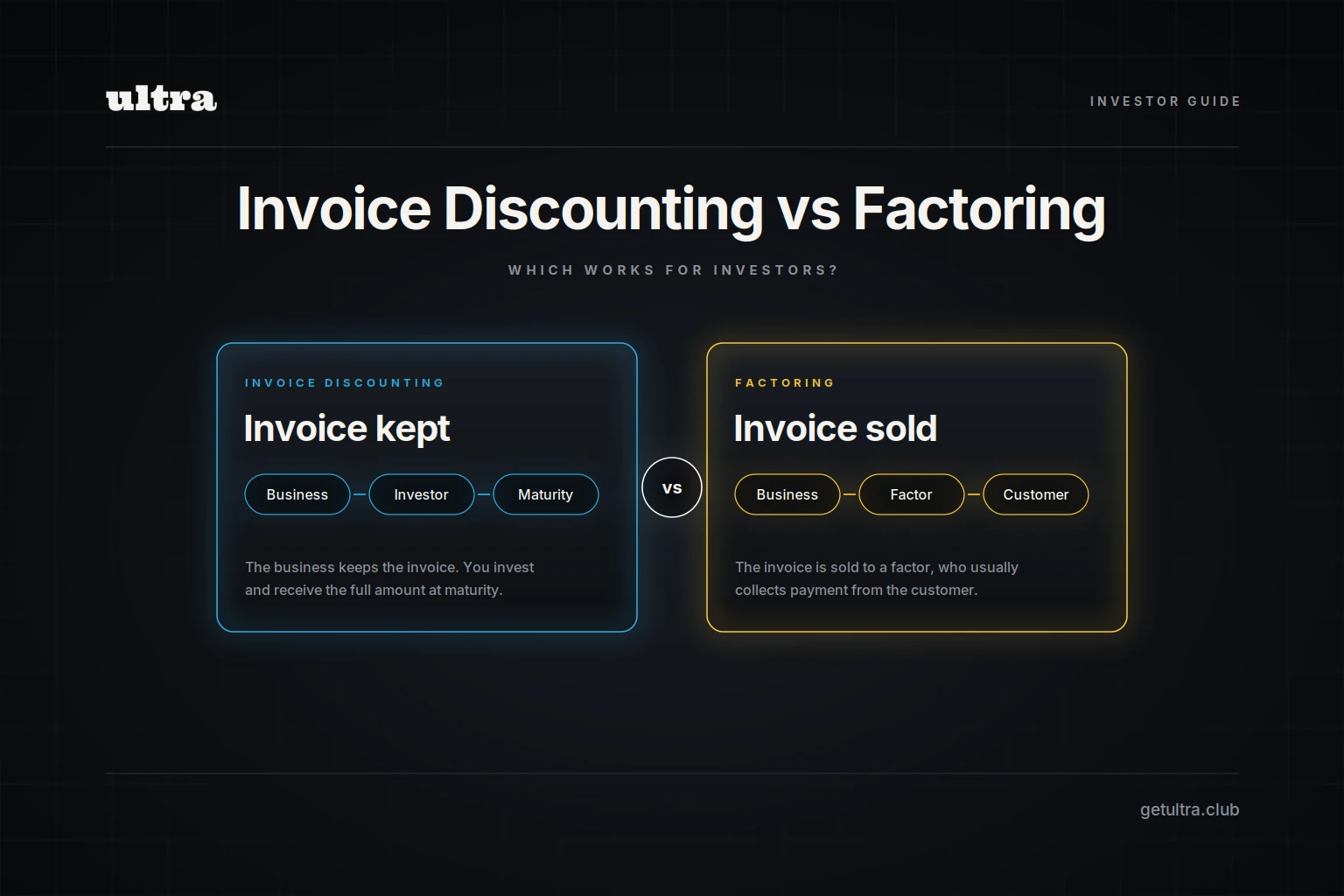
Invoice Discounting vs Factoring: Which Works for Investors?
A complete guide to invoice discounting vs factoring, covering how each works, the key differences between them and why investors choose invoice discounting on ultra.
Prerna Bhardwaj
·
22 Oct 2026
invoice discounting
Invoice Discounting Investment in India: How It Works
A complete guide to invoice discounting investment in India, covering how it works, why experienced investors consider it, where it fits in a portfolio and how to invest with ultra.
Prerna Bhardwaj
·
21 Oct 2026

IPO
Reliance Jio IPO: Date, Price, GMP, Valuation, Review & Details
A complete guide to Reliance Jio IPO 2026, covering Jio Platforms IPO details, issue size, expected date, price band status, GMP context, shareholder quota, company profile, financials, valuation and risks.
Sachin Gadekar
·
19 Oct 2026