Family Office Investment Strategy in India: Allocating to Alternatives (2026)
06 May 2026 · Sachin Gadekar
A practitioner-level guide to alternative asset allocation for Indian family offices in 2026 covering the shift from real estate and FDs to structured alternatives, the operating business concentration problem, three-generation allocation frameworks, instrument-by-instrument return data, and Ultra's specific recommendations for family office fixed income.

India's family offices are in the middle of the most significant portfolio transformation in a generation. The wealth that first-generation entrepreneurs built through concentrated business ownership is moving slowly, then quickly toward diversified, professionally managed investment portfolios.
AIF commitments in India crossed ₹15 lakh crore as of September 2025. Indian family office alternative allocations grew from 18% in 2018 to over 40% by 2024, one of the highest growth rates in Asia-Pacific, according to Campden Wealth. India now has an estimated 300+ family offices managing over $30 billion in assets and the sophistication of how they deploy capital is evolving rapidly.
But most writing about this transition stays at the level of trends and generalities. This guide goes deeper into the specific allocation decisions, return data, instrument trade-offs, and the concentration risk problem that most Indian family offices have not fully solved.
What Is a Family Office? The Indian Context
A family office is a private wealth management structure that serves the investment, tax, legal, and administrative needs of a wealthy family. Unlike a wealth management firm or private bank that serves hundreds of clients, a family office exists exclusively to manage the affairs of one family (single family office, SFO) or a small group of families with aligned interests (multi-family office, MFO).
In India specifically, family offices typically emerge at one of three trigger points:
Liquidity event: A promoter family sells a business, receives significant IPO proceeds, or undertakes a secondary transaction generating large liquid capital that needs structured deployment beyond the operating business.
Generational transition: Wealth passing from G1 (founder generation) to G2 creates the need for governance structures, formalised investment policies, and professional oversight that informal individual investing cannot provide.
Scale of complexity: When a family's investable assets cross approximately ₹100 crore, the number of entities, tax structures, investment accounts, and compliance requirements exceeds what any individual or accountant can manage efficiently without dedicated infrastructure.
India's family office landscape in 2026:
Estimated 300+ family offices in India
Combined AUM estimated at $30 billion and growing
New family offices forming at an accelerating pace driven by India's startup ecosystem exits, pharma and manufacturing business sales, and real estate monetisation
Median family office in India has ₹200–500 crore in investable assets; top-end family offices manage ₹1,000–5,000+ crore
The Problem Every Indian Family Office Must Solve First
Before discussing how to allocate to alternatives, every Indian family office must confront an uncomfortable truth that most allocation frameworks ignore:
The operating business is already the dominant "investment" in the portfolio often 60–90% of total net worth and almost nobody counts it.
A promoter family with ₹50 crore in financial assets and a business worth ₹300 crore has 85% of their total net worth in a single, illiquid, private equity position in one industry, in one country, often dependent on one key person. When this family's wealth manager allocates their ₹50 crore in financial assets, they are not allocating 50 crores of independent investment they are adding to the balance sheet of a portfolio that is already massively concentrated in one private company.
The implication for alternative allocation: Traditional "diversification" into equity mutual funds or even PMS does not solve this. If the operating business is in manufacturing, then Indian equity mutual funds with significant manufacturing exposure actually increases correlation. What genuinely diversifies a promoter family's wealth is:
Non-correlated, non-business-linked income streams (private credit, invoice discounting on other companies' receivables, real estate income)
Private equity or AIF exposure in sectors different from the operating business
International assets that are uncorrelated with Indian equity market cycles
Liquid instruments that provide instant access if the business faces a cash flow crisis
This concentration analysis should be the first exercise any family office undertakes not after the investment policy statement, but before it.
The Shift: Why Indian Family Offices Are Moving to Alternatives
The data on this transition is unambiguous. Three structural forces are driving it:
Force 1: Real estate has peaked as a primary allocation. For decades, Indian family wealth was predominantly held in physical real estate residential, commercial, land. It offered tangibility, appreciation, and inflation protection. But the drawbacks have become increasingly clear: illiquidity, management intensity, regulatory complexity (RERA, rental disputes, legal title issues), and concentration within India. Family offices that built wealth through real estate are now actively diversifying out of direct property into financial alternatives.
Force 2: Public market returns have normalised. The 2020–24 equity bull run delivered exceptional returns, but at the cost of elevated valuations. Large-cap PMS strategies that returned 18–22% annually during the bull market are now operating in an environment where index earnings growth of 10–12% is the more realistic baseline. Family offices are seeking genuinely differentiated, non-public-market return streams.
Force 3: Alternative access has democratised. The AIF framework, SEBI's OBPP regulations, TReDS expansion, and GIFT City FIF structures have collectively made institutional-quality alternative investments accessible to family offices without the need to build internal fund management capabilities. The access barrier that once limited alternatives to the very largest family offices has largely disappeared.
| Asset Class | Typical Allocation 2018 | Typical Allocation 2024 | Direction 2026 |
|---|---|---|---|
| Physical Real Estate | 40%–50% | 20%–30% | Declining shifting to REITs and structured real estate |
| Listed Equity (Direct + MF + PMS) | 30%–35% | 30%–35% | Stable PMS increasingly preferred over DIY equity |
| Traditional Fixed Income (FD, Bonds, G-Secs) | 15%–20% | 10%–15% | Declining in FDs; shifting toward high-yield alternatives |
| Alternative Investments (AIFs, PE, Private Credit, SCF) | 5%–10% | 20%–25% | Strongly growing target 30–40% for sophisticated FOs |
| International Assets | 2%–5% | 8%–12% | Growing GIFT City FIF, LRS, international equity MFs |
| Startup / Venture | 1%–3% | 5%–8% | Stable to growing G2 leadership often drives this |
The Alternative Investment Universe for Indian Family Offices
| Alternative Category | Sub-Types | Return Range | Min Commitment | Liquidity | Best Role in Portfolio |
|---|---|---|---|---|---|
| Private Credit | Category II AIFs, direct lending, venture debt | 12%–18% p.a. | ₹1 crore (AIF); ₹25L (direct platforms) | Low 3–5 year lock-in for AIFs | Core yield generator regular income, defined tenure |
| Invoice Discounting / SCF | Invoice discounting, reverse factoring, asset leasing | 10%–15% p.a. | ₹10,000 per deal | Low locked for invoice tenure (30–90 days) | Liquid alternative high yield, short tenure, continuous recycling |
| Private Equity | Growth equity, buyouts, PIPE, Category II PE AIFs | 18%–30%+ IRR (target, long-horizon) | ₹1 crore (AIF); direct deals vary | Very Low 7–10 year fund horizon | Growth layer long-horizon capital appreciation |
| Venture Capital | Category I VC AIFs, angel funds, direct startup investments | Highly variable power law returns | ₹25L (angel); ₹1 crore (VC AIF) | Very Low 10–12 years | Satellite / thematic small allocation, high upside potential |
| Real Estate Alternatives | REITs, InvITs, real estate AIFs, pre-leased commercial | 8%–14% (yield + appreciation) | ₹10,000 (REITs); ₹1 crore (RE AIF) | Moderate (REITs listed); Low (RE AIF) | Income + diversification replaces direct property |
| Hedge Funds / Category III AIFs | Long-short equity, market neutral, absolute return | 12%–20%+ (strategy-dependent) | ₹1 crore | Moderate some quarterly liquidity options | Volatility reduction non-directional returns |
| Structured Debt / SDIs | Securitised debt instruments, structured NCDs | 10%–14% p.a. | ₹10,000 (OBPP); larger for direct deals | Low hold to maturity | Fixed income upgrade higher yield than vanilla bonds |
Private Credit: The Core Alternative Fixed Income Allocation
Private credit is the fastest-growing and most institutionally relevant alternative allocation for Indian family offices in 2026. It is also the category where the risk-return profile most closely matches what family offices are actually looking for regular income, defined tenure, senior secured structures, and returns of 12–18% that cannot be replicated in public markets.
What private credit does for a family office portfolio:
It solves the "fixed income problem" that every family office faces. Traditional fixed income government bonds at 6.7%, bank FDs at 7%, AAA corporate bonds at 8–9% generates real post-tax returns of near zero to 1% for families in the 42.74% effective tax bracket. Private credit, accessed through Category II AIFs, delivers 12–18% gross with senior secured structures, regular monthly or quarterly distributions, and 3–5 year defined tenures.
The risk-return arithmetic is compelling. A ₹5 crore family office allocation to private credit at 14% gross generates approximately ₹35 lakhs gross annually versus ₹13.4 lakhs from the same corpus in a bank FD at 7%. The credit risk on mid-market borrowers with first-charge asset security is manageable with proper fund manager selection and diversification.
Manager selection is everything in private credit. Unlike public bond markets where prices are transparent and benchmarks exist, private credit returns are entirely fund manager-dependent. Key evaluation criteria:
Track record through full credit cycles including 2018–19 (IL&FS, DHFL), 2020 (COVID), and 2022–23 (NBFC stress)
Portfolio default and NPA rates any credible fund manager should disclose this
Security coverage ratios what multiple of collateral value backs each loan
Concentration no single borrower or sector should exceed 10% of fund corpus
Hurdle rate and carry structure does the manager earn carry only above 10% hurdle?
For a comprehensive guide to AIF categories and structures, read: What Are AIFs? A Complete Guide to Alternative Investment Funds in India
Invoice Discounting and Supply Chain Finance: The Liquid Layer
This is the most underrepresented alternative in Indian family office portfolios and the one with the most compelling immediate risk-return profile for family offices in 2026.
Invoice discounting provides something Category II AIFs cannot: high yield with short tenure and no lock-in. A family office with a ₹5 crore alternative fixed income allocation cannot put everything into 3–5 year locked-up private credit funds. It needs a liquid, continuously recycling component that generates above-FD yields on capital that may need to be accessed or redeployed within months.
Invoice discounting on large corporate and PSU buyers delivers 11–15% annualised on 30–90 day tenures. For a family office deploying ₹2 crore in invoice discounting across 20 diversified invoices:
Gross monthly income: approximately ₹2 lakhs (at 12% annual)
After 30% tax: approximately ₹1.4 lakhs per month
Capital fully recycled every 60–90 days available for redeployment or withdrawal
This creates a continuous income engine that private credit AIFs cannot replicate. The two instruments are complementary not competitive. Private credit provides the high-yield, illiquid core; invoice discounting provides the high-yield, liquid satellite.
The Budget 2026 tailwind for family offices specifically: The CPSE TReDS mandate has created a large pool of PSU-backed invoices at 10–13% yields with near-sovereign credit quality. Family offices can now generate sovereign-adjacent returns on short-tenure instruments a combination that simply did not exist in this form 3 years ago.
For the full investor perspective on invoice discounting, read: Invoice Discounting as an Investment
Private Equity and Venture Capital: The Growth Layer
Private equity and venture capital occupy the "growth layer" in a family office portfolio long-horizon capital that targets 20–30%+ IRR through equity ownership in private companies, with exits via IPO, strategic sale, or secondary market.
PE for Indian family offices in 2026:
Indian PE has matured significantly. Exits have improved India's public markets have provided strong PE exit windows, and the secondary PE market is developing. The challenge is selecting managers who can genuinely generate alpha above public markets, net of the 1.5–2% management fee and 20% carried interest.
Evaluating PE fund managers:
Net IRR (after all fees and carry) not gross IRR. Some funds advertise 25% gross IRR that becomes 14% net after full fee load
DPI (Distributed to Paid-In capital) how much of the committed capital has actually been returned to investors? A fund claiming 25% IRR on unrealised marks is very different from one with 1.5x DPI already distributed
Vintage year consistency does the manager perform across fund I, II, and III, or only in one vintage?
Venture for family offices the right framing:
Venture capital is a power-law asset class 80% of returns come from 10–15% of investments. Family offices deploying ₹5–10 crore in VC are not deploying enough to get meaningful power-law exposure across a diversified portfolio. The better approach for most family offices is to access VC through a fund of funds or a diversified Cat I AIF rather than making direct startup bets.
Exception: family offices with genuine domain expertise pharma promoters investing in healthtech, FMCG families investing in D2C brands can add real value as direct investors. Otherwise, the risk-return mathematics of direct VC for family offices is poor relative to alternatives.
Real Estate Alternatives: From Physical Ownership to Structured Income
The shift from direct physical real estate to structured real estate alternatives is one of the most visible changes in Indian family office portfolios. The direction is clear but the transition is happening at different speeds for different families.
Why direct real estate is losing ground:
Rental yield on residential real estate in India: 2–3% below inflation
Management intensity: high (tenant issues, maintenance, legal disputes)
Liquidity: very low selling takes months to years
Tax complexity: LTCG, stamp duty, TDS on rent, regulatory compliance
What is replacing it:
REITs (Embassy, Mindspace, Brookfield): Exchange-listed, daily liquidity, 7–9% distribution yield from Grade-A commercial office parks, 90% distribution mandate. For families transitioning out of commercial property, REITs offer the income stream without the management burden.
Real Estate AIFs: Category II AIFs investing in developer financing, construction finance, and pre-leased commercial assets. Yields of 12–16% with structured exits. Less liquid than REITs but higher yield.
InvITs (PowerGrid, India Grid Trust, IRB Infrastructure): Infrastructure revenue streams toll roads, power transmission, gas pipelines at 8–11% distribution yields. Provides genuine infrastructure exposure with listed liquidity.
Pre-leased commercial real estate (direct): For families with ₹10 crore+ to deploy in a single real estate asset, directly buying pre-leased Grade-A commercial property with anchor tenants provides 8–10% rental yield, capital appreciation, and a tangible asset without the management burden of residential letting.
Hedge Funds and Category III AIFs: The Active Strategy Layer
Category III AIFs hedge funds, long-short equity, market-neutral strategies occupy a specific and somewhat misunderstood role in family office portfolios.
What they do: Generate returns with low or zero correlation to broad equity market movements. A long-short equity fund that returns 14% in a flat or falling market is genuinely valuable not because 14% is exceptional, but because it is 14% when the rest of the equity portfolio is flat.
What they do not do: Consistently deliver 20%+ annual returns in all market conditions. Most Indian Category III AIFs are long-biased in practice their "short" side is limited hedges rather than genuine short portfolios. In a rising market, they underperform pure long equity; in a falling market, they partially protect.
2026 assessment: With Indian equity markets at normalised-to-elevated valuations after the 2020–24 bull run, the case for volatility-dampening strategies has improved. A 10–15% allocation to a genuinely market-neutral or low-net-exposure Category III AIF provides portfolio insurance that is particularly valuable for family offices managing concentration risk from operating business exposure.
The fund-level taxation caveat: Category III AIFs are taxed at the fund level before distributing to investors creating a meaningful tax drag compared to direct equity investing (where family offices can time LTCG realisations) or Category II AIFs (which are pass-through). Factor this into net return comparisons.
Co-Investment vs Fund Investing: The Family Office Trade-off
This is one of the most important and least discussed decisions in family office alternative investing.
Fund investing: Committing ₹1 crore to a Category II AIF, receiving a diversified portfolio of private credit or PE investments managed by professionals, with quarterly reporting, SEBI oversight, and defined tenure.
Co-investment: Investing directly alongside a fund manager in a specific deal the fund manager sources the deal, the family office co-invests its own capital directly. Lower fees (often zero management fee and no carry on co-invest) but higher concentration in a single transaction.
| Parameter | Fund Investing | Co-Investment |
|---|---|---|
| Diversification | Built-in 15–25 deals across industries | Concentrated single deal |
| Fee structure | Management fee (1.5–2%) + carried interest (20%) | Often zero or reduced fees significant savings at scale |
| Deal selection control | None fund manager decides | Full family office evaluates and decides each deal |
| Due diligence requirement | Manager selection one-time deep diligence on the fund | Deal-level diligence requires in-house capability |
| Minimum size | ₹1 crore (SEBI AIF minimum) | Deal-specific typically ₹2–10 crore per deal |
| SEBI/regulatory protection | High AIF framework, trustee oversight, quarterly reporting | Lower direct bilateral investment, less regulatory structure |
| Network and deal flow | Fund manager's network | Requires family office's own network or fund manager relationship |
| Best for | Family offices building alternative exposure for the first time; corpus below ₹50 crore in alternatives | Established family offices with ₹100 crore+ in alternatives, dedicated investment team, and strong fund manager relationships |
The practical recommendation: Start with fund investing. Build relationships with 3–5 quality fund managers across private credit, PE, and VC. After 2–3 years of co-investing alongside those managers at small scale, selectively deploy larger co-investment capital into your highest-conviction managers' best deals.
Co-investment done without this relationship and diligence foundation is not sophisticated investing it is concentrated risk-taking without the diversification benefit of the fund structure.
The Three-Generation Allocation Framework
| Parameter | G1 (Founder 55–70 years) | G2 (Second Generation 35–55 years) | G3 (Third Generation 18–35 years) |
|---|---|---|---|
| Primary wealth source | Operating business (often 60–80% of net worth) | Mix of business and financial portfolio | Primarily financial portfolio; business may be sold or run by professionals |
| Investment priority | Capital preservation + income generation; diversify away from business concentration | Balanced preserve G1 capital + generate growth for G3; governance formalisation | Long-horizon growth; impact; global exposure; inter-generational transfer efficiency |
| Typical alternative allocation | 15%–25% cautious, income-focused alternatives (private credit, invoice discounting) | 25%–40% balanced (private credit, PE, real estate AIFs) | 35%–50% growth-oriented (PE, VC, global alternatives) |
| Key risk | Concentration in operating business; insufficient diversification before death or business exit | Family governance breakdown; inconsistent investment policy; failed business transition | Wealth erosion through poor governance; lifestyle spend exceeding portfolio returns; sibling disputes |
| Governance priority | Draft Investment Policy Statement; establish family constitution basics | Formalise family council; establish trust structures; onboard professional CIO or advisors | Multi-entity governance; global estate planning; philanthropy framework; next-generation financial education |
| Recommended liquid alternatives | Invoice discounting (short tenure, income); high-yield NCDs; REITs | Private credit AIFs + invoice discounting + PE (selective) | VC AIFs + global PE + Category III + structured debt |
Legal Structures for Family Office Investing in India
Private Limited Company or LLP: The most common structure for Indian family offices. Provides limited liability, structured governance, and tax pass-through (LLP) or standard corporate tax (Pvt Ltd). Investment decisions can be centralised in one entity. Main limitation: corporate tax rate (25%) may be higher than individual tax rates on some income types.
Trust Structure: Discretionary trusts are widely used for wealth succession planning. Income earned through a trust is taxed at maximum marginal rate (30%), but trust structures provide strong estate planning, beneficiary protection, and generation-skipping features. Most large Indian family offices combine an operating holding company with a trust for succession.
SEBI-Registered AIF: Increasingly, family offices are setting up their own Category II or Category III AIF to pool family capital under a regulated structure. Advantages: SEBI oversight, governance framework, ability to accept external co-investors, clear investment policy documentation. Minimum corpus: ₹20 crore. Requires dedicated investment manager with SEBI certification.
GIFT City Family Investment Fund (FIF): The IFSCA's Family Investment Fund framework at GIFT City allows families to set up investment vehicles in IFSC for global investments. Key benefit: more favourable tax treatment for global equity and bond investments, access to international instruments without LRS limits for qualifying structures. Minimum family net worth requirement: $250 million (being reviewed). Most relevant for UHNI families with significant global exposure.
Practical recommendation: Most Indian family offices with ₹100–500 crore in investable assets use a combination of LLP (for domestic financial investments) + discretionary trust (for succession planning) + direct AIF investments through external managers. The GIFT City FIF is relevant for families with significant international assets at the ₹1,000 crore+ level.
Alternative Investment Performance Benchmarks: What to Expect
| Asset Class | Target Gross Return | Typical Fee Load | Expected Net Return | Risk Level | Correlation to Equity Market |
|---|---|---|---|---|---|
| Private Credit (Cat II AIF) | 14%–18% p.a. | 1.5–2% mgmt fee + 20% carry above 10% hurdle | 10%–14% p.a. | Moderate | Low |
| Invoice Discounting (OBPP) | 11%–15% p.a. | Platform spread (0.5–1.5%) | 10%–13.5% p.a. | Low–Moderate | Very Low |
| Private Equity (Cat II AIF) | 22%–30%+ IRR | 2% mgmt fee + 20% carry above 8% hurdle | 16%–22% IRR (target, 7–10 yr horizon) | High | Moderate |
| Venture Capital (Cat I AIF) | 25%–40%+ IRR (on winners) | 2–2.5% mgmt fee + 20% carry | Highly variable power law | Very High | Low (long horizon) |
| Real Estate AIFs (Cat II) | 14%–18% p.a. | 1.5–2% mgmt fee + 20% carry | 10%–13% p.a. | Moderate | Low |
| Category III AIF (Hedge) | 15%–22% p.a. | 2% mgmt fee + 20% carry | 11%–16% p.a. | Moderate–High | Moderate (strategy-dependent) |
| REITs / InvITs | 8%–11% distribution yield + appreciation | Embedded in trust structure (~0.5–1%) | 8%–10% (total return) | Low–Moderate | Moderate (listed) |
The benchmark that matters most: For a family office with a 42.74% effective tax rate, the relevant comparison for any alternative is not the gross return but the post-tax net return relative to cost of capital. Private credit at 14% gross, net of 2% fees and 30% tax, delivers approximately 8.4% post-tax. That is still significantly above NRE FD rates and generates regular distributable income but it is the right number to use, not the 14% gross.
FAQs
Q1. What is a family office in India and who should set one up?
A family office is a private structure managing the investment, tax, legal, and administrative needs of a wealthy family. In India, family offices typically make sense when investable financial assets exceed approximately ₹100 crore the complexity of multi-entity structures, tax optimisation, and cross-asset management at that scale justifies the infrastructure cost. Trigger events include business sales, IPO liquidity, or generational wealth transfer.
Q2. What percentage of a family office portfolio should be in alternatives?
Based on current data from Campden Wealth and Indian family office surveys, sophisticated Indian family offices in 2026 allocate 25–40% of financial assets to alternatives. A practical framework: 20–25% for G1 founders (income-focused alternatives), 30–40% for G2 (balanced growth and income), and 40–50% for G3 (long-horizon growth alternatives). The appropriate allocation depends critically on the operating business concentration higher business concentration warrants more liquid, income-focused alternatives.
Q3. What is the difference between a family office and a wealth management firm for investments?
A wealth management firm serves multiple clients and standardises products and advice. A family office serves one family and can customise everything investment policy, governance, tax structure, succession planning, and philanthropic strategy entirely to that family's specific situation. Family offices can also make direct investments, co-investments, and run their own AIF capabilities that typical wealth management firms cannot replicate.
Q4. Can a family office set up its own AIF in India?
Yes families can register their own Category I, II, or III AIF with SEBI. Requirements: minimum corpus of ₹20 crore, SEBI-registered investment manager with qualified team (NISM certification for key personnel), independent trustee, and proper investment policy documentation. The family AIF allows pooling of family members' capital under a regulated, governable structure particularly useful when G2 family members have divergent investment preferences.
Q5. What is invoice discounting and why is it relevant for family offices?
Invoice discounting is a short-tenure (30–90 day) alternative fixed income instrument that advances capital against verified corporate invoices, earning 11–15% annualised returns on buyer credit risk. For family offices, it provides a liquid, continuously recycling alternative that generates above-FD yields without the 3–5 year lock-in of private credit AIFs. Ultra specifically recommends it as the liquid layer within an alternative fixed income allocation complementary to, not competing with, Category II private credit.
Q6. How should a family office evaluate private credit fund managers?
Key criteria: net IRR across multiple vintages (not just the most recent fund); DPI (Distributed to Paid-In) how much has actually been returned to investors; default and NPA rates any credible manager should disclose this; security coverage ratios; concentration limits (no single borrower above 10%); and the hurdle rate and carry structure. Track record through credit stress events (2018–19 IL&FS/DHFL crisis, 2020 COVID) is the most important differentiator between genuine credit managers and fair-weather lenders.
Disclaimer
This article is for informational and educational purposes only and does not constitute investment or legal advice. Returns mentioned are indicative based on current market conditions. Alternative investments carry significant risk including illiquidity, credit risk, and loss of capital. Please consult a SEBI-registered investment advisor and qualified professionals before making investment decisions.
Recent articles
View all
IPO
How to Read an IPO RHP Before Applying
A beginner-friendly guide to reading an IPO Red Herring Prospectus and understanding the key sections investors should review before applying.
Sachin Gadekar
·
24 Sep 2026
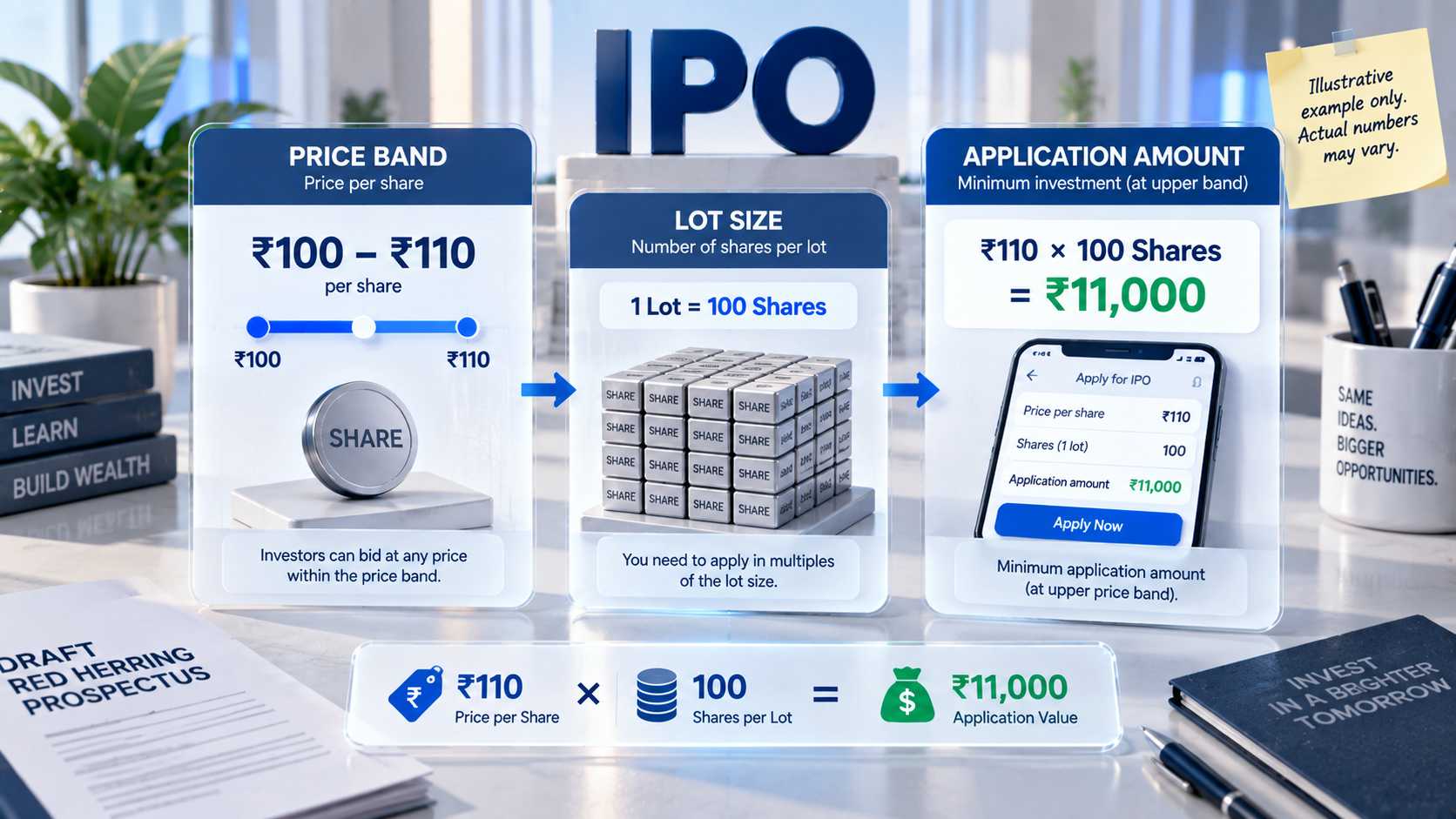
IPO
IPO Price Band and Lot Size Explained for Beginners
A simple guide explaining how IPO price bands and lot sizes work, why they matter for retail investors and what to check before applying for an IPO.
Sachin Gadekar
·
23 Sep 2026

IPO
What Is IPO GMP and Why It Can Be Misleading?
A simple guide explaining IPO GMP, grey market premium, expected listing price, common misconceptions, risks and what investors should check before applying for an IPO.
Sachin Gadekar
·
22 Sep 2026

IPO
Fresh Issue vs OFS in IPO: What Investors Should Know
A simple guide explaining fresh issue, offer for sale, IPO proceeds, dilution, promoter selling and what retail investors should review before investing in an IPO.
Sachin Gadekar
·
21 Sep 2026