NSE H1 FY26 Results: The Real Cost of SEBI’s F&O Crackdown
21 November 2025
Beyond the headline profits: how regulatory changes are reshaping India’s largest derivatives exchange.
What Really Happened: The Breakdown
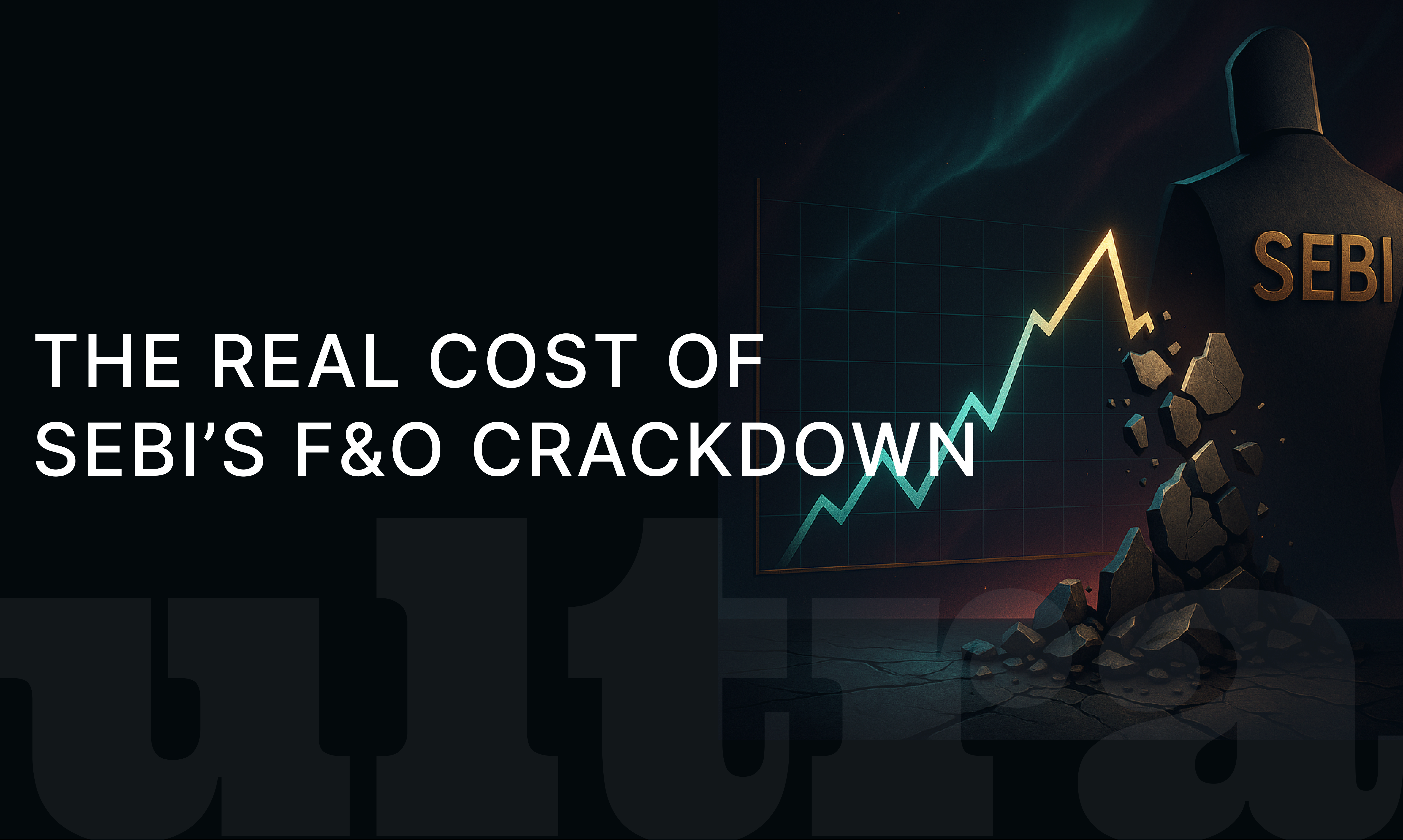
When a leading player in India’s financial markets posts a 15 % drop in revenue and an 11 % decline in normalized profit, it becomes more than just numbers—it becomes a signal. In its first half of fiscal 2026, the National Stock Exchange of India (NSE) reported revenues of ₹7,709 crore (down 15 % year‑on‑year) and a profit after tax of ₹5,022 crore (down 12 %). But dig deeper and you find this: the core business was hit—limiting the narrative of everything being rosy. The cause? The regulatory crackdown by the Securities and Exchange Board of India (SEBI) on derivatives trading.
To understand the story, we must look beyond the surface numbers. The company disclosed two one‑time items: a SEBI settlement provision of ₹1,297 crore, and a ₹1,201 crore profit from the sale of its stake in NSDL. When you exclude both, the normalized PAT stands at approximately ₹5,092 crore—a real drop of about 11% from the prior year. That decline isn’t just accounting—it reflects the real impact of lower transaction volumes and regulatory constraints.
Why Volumes Fell: The Derivatives Hit
Transactional revenue at NSE fell by roughly 18%, with transaction charges dipping to ₹5,935 crore. The main causes were the recent regulatory changes:
Larger contract sizes in derivatives
Elimination of multiple weekly expiries in equity F&O
Higher margin requirements and stricter position limits
What these mean: less speculative trading, fewer contracts, lower turnover. And since derivatives trading forms the bulk of the Exchange’s revenue in India, the drop was felt immediately.
Margin Strength and Market Position: The Silver Linings
Despite the volume headwinds, NSE’s operating margin improved to about 77% in H1 FY26—from 72% a year ago. This was driven by steep cost reduction: expenses (excluding one‑time items) fell by 26%. Regulatory fees dropped significantly, thanks to lower volumes. The takeaway: while business growth slowed, the underlying franchise remains strong. NSE continues to dominate:
Cash Market: ~92.3% market share
Equity Futures: ~99.8%
Equity Options: ~75.6% by premiums
Currency Derivatives: 100%
In other words, despite the regulatory drag, NSE still holds near‑monopoly status across key segments.
What This Means for Unlisted Investors
For those holding or considering NSE unlisted shares, the implications are two‑fold. On the positive side: high margins, dominant market position, and a structural growth story tied to India’s financial markets. On the caution side: the core business is under pressure—especially the derivatives part—and recovery will depend on regulatory adjustments and increased trading activity.
At current implied valuations (with shares trading around ₹1,900 per piece), the multiple works out to nearly 47.5× earnings (based on annualised EPS ~₹41‑42). That valuation assumes a volume recovery within 12‑18 months, SEBI settlement resolution, and no further regulation that will choke margins. For long‑term believers in India’s capital markets, this may still be viable—but it requires patience and conviction.
Medium and Long‑Term Outlook
Short Term (6 – 12 months)
Expect muted earnings, continued regulatory belt‑tightening, and weak trading volumes. Margin stability will rely on cost cutting more than revenue growth.
Medium Term (12 – 24 months)
We may see volumes stabilise at a “new normal”, possibly lower than pre‑regulation levels. Non‑transaction revenues—such as listing fees, data services, index licensing—will become more important for growth. The outcome of the SEBI settlement will also matter.
Long Term (3 + years)
Structural growth drivers remain intact: a rising population of equity investors, wealth creation, digital adoption of trading platforms, and deeper market penetration. If NSE retains its dominance and executes well, the long‑term story remains compelling.
Key Risks to Monitor
Regulatory risk: Future tightening of derivatives rules or further SEBI actions could further dent the business.
Volume risk: If derivative activity fails to recover or stabilise, the revenue base remains under threat.
Competitive risk: While NSE dominates now, changes in regulation or platform play could enable others to gain share.
Valuation risk: Given the high implied multiple, expectations are already aggressive.
Final Thoughts
NSE’s H1 FY26 results tell a nuanced story. They are not a red flag—far from it—but a moment of recalibration. The Exchange is facing regulatory headwinds in its core derivatives business, yet it retains structural advantages that few others can match. For investors in unlisted shares, the thesis remains sound—but only if you’re comfortable with timing, execution risk, and patience. The turnaround won’t be fast. The recovery needs to be real.
FAQs
1. Why did NSE’s revenue fall in H1 FY26?
NSE’s revenue decline was primarily driven by reduced transaction volumes in derivatives, resulting from SEBI’s regulatory changes that increased contract sizes, limited expiries, and raised margins.
2. Does the margin improvement matter if volumes fell?
Yes. Even though revenue dropped, NSE’s ability to improve operating margin (to ~77%) shows operational resilience and cost discipline, which is a positive sign.
3. How does this affect unlisted NSE share investors?
Investors need to weigh the franchise strength (dominance + margins) against execution risk and earnings pressure. Timing and value matter—valuation implies a strong recovery.
4. What is the outlook for NSE’s IPO?
The IPO remains on the horizon but is contingent on resolution of regulatory matters (such as the SEBI settlement) and clear volume recovery. A clear timeline has not yet been announced.
5. Is NSE still dominant despite the revenue drop?
Yes. Market share data shows NSE continues to dominate across cash, futures, options, and currency segments, indicating its structural position is intact.
Recent articles
View all
finance
RBI Repo Rate Hike: October 2026 Policy Update, Impact on Loans, EMIs, Deposits & Markets
A simple guide to the October 2026 RBI repo rate hike, what it means for borrowers, depositors, investors, banks and the broader economy.
Sachin Gadekar
·
08 Oct 2026

IPO
Reliance Jio IPO: Date, Price, GMP, Valuation, Review & Details
A complete guide to Reliance Jio IPO 2026, covering Jio Platforms IPO details, issue size, expected date, price band status, GMP context, shareholder quota, company profile, financials, valuation and risks.
Sachin Gadekar
·
07 Oct 2026

IPO
HD Fire Protect IPO Details: Date, Price, GMP, Review & How to Apply
A complete guide to HD Fire Protect IPO 2026, covering issue size, OFS structure, price band, lot size, GMP context, company profile, financials, risks, valuation and application process.
Sachin Gadekar
·
07 Oct 2026

IPO
Nityas Gems & Jewellery IPO Details: Date, Price, GMP, Review & How to Apply
A complete guide to Nityas Gems & Jewellery IPO 2026, covering issue size, GMP context, price band, lot size, company profile, financials, risks, valuation and application process.
Sachin Gadekar
·
05 Oct 2026