PPFAS Opens Its GIFT City Gateway
22 November 2025
How PPFAS is using GIFT City to scale internationally and serve NRIs, global investors, and Indian clients alike.

A Strategic Leap into Global Asset Management
Parag Parikh Financial Advisory Services (PPFAS) has long been known for its disciplined, value-driven investing philosophy. Its flagship Flexi Cap Fund is popular precisely because it offers global exposure — investing in major U.S. tech firms like Amazon, Microsoft, Meta, and Alphabet — while being domiciled in India. But until now, this global access was tied to the constraints of India’s mutual fund regulatory environment. That is beginning to change dramatically.
PPFAS has established a wholly owned subsidiary, PPFAS Alternate Asset Managers IFSC Pvt. Ltd., based in GIFT City, Gujarat. This move is not just symbolic: it represents a second, parallel business engine under a different regulatory umbrella, this time governed by the International Financial Services Centres Authority (IFSCA). Through this GIFT City arm, PPFAS plans to launch a new set of products — both global outbound funds and inbound feeder funds, as well as potentially Portfolio Management Services (PMS).
There is a clear logic behind PPFAS’s decision. While its existing SEBI-regulated mutual fund business continues to run the Flexi Cap Fund, the IFSC entity gives PPFAS freedom from many of the constraints imposed on domestic funds. For instance, the GIFT City-based funds can be denominated in U.S. dollars, which offers several advantages: dollar-based investments mean that both investments and redemptions happen in USD. This is very attractive for non-resident Indians (NRIs) and international investors, because it removes the need for complicated currency conversion and helps avoid the friction and costs associated with foreign exchange.
What’s more, from GIFT City, PPFAS intends to launch outbound fund-of-funds that invest directly in global indices — notably the S&P 500 and Nasdaq-100. These passive FoFs will provide investors an efficient, low-cost route to global equity exposure, without relying on individual stock-picking or foreign brokerage. By using a fund-of-funds structure, PPFAS can leverage globally diversified index funds to attract investors looking for an internationally competitive strategy.
On the flip side, PPFAS also wants to serve international and NRI investors who want exposure to Indian equities. To do this, it is planning an inbound feeder fund: a GIFT City-based USD-denominated fund that will feed into its existing Flexi Cap Fund. The structure is extremely investor-friendly for non-residents: it removes many bureaucratic roadblocks — there’s no need for a PAN card, no requirement to open NRO/NRE accounts, and investors don’t need to register as FPIs. This simplification, combined with dollar-based investments, could make PPFAS’s India equity strategy more accessible to a global audience.
Another pillar of this GIFT City strategy could be the launch of PMS offerings. From its IFSC base, PPFAS plans to offer Portfolio Management Services tailored for high-net-worth clients. These PMS solutions may combine global and Indian assets, giving wealthy individuals, family offices, and institutions a structured way to invest across geographies, while remaining under a regulated, professionally managed roof.
Why is GIFT City such a powerful platform for PPFAS? There are a few compelling reasons. First, the regulatory freedom provided by IFSCA allows for products that are difficult or inefficient to run under Indian mutual fund rules, especially when it comes to global exposure. Second, dollar-based products remove currency and conversion friction, making the offering smoother for NRIs and foreign investors. Third, this gives PPFAS a new revenue stream — it no longer has to rely solely on its Indian mutual fund business. By offering global FoFs, PMS, and inbound funds, PPFAS is diversifying how it earns money, serving a broader mix of clients.
From a business perspective, this expansion is transformative. PPFAS is no longer just an Indian mutual fund house: it is building a global asset management platform, capable of managing cross-border money and catering to multiple investor types. This could significantly scale up its operations, as well as enhance its global profile and credibility.
On a broader scale, PPFAS’s move into GIFT City also underscores the rising importance of GIFT City as a global financial hub. More fund houses are now viewing GIFT IFSC not only as a regulatory advantage but as a strategic base to operate cross-border products. With its tax benefits, international currency operations, and robust regulatory infrastructure, GIFT City is becoming increasingly attractive compared to traditional offshore centres.
For investors, both Indian and foreign, PPFAS’s GIFT City launch offers real opportunities. Indian investors who want exposure to U.S. markets now have a regulated, domestic alternative: passive FoFs that track major U.S. indices, managed from India but under the IFSC regime. At the same time, NRIs and international investors gain a route to invest in Indian equities through a feeder fund that simplifies many of the prior complexities.
Ultra views this development as a milestone in the evolution of the Indian asset management landscape. It signifies that Indian AMCs are no longer content with serving just domestic investors — they want to build truly global platforms. For investors tracking unlisted asset managers, cross-border strategies, or international mutual fund innovation, PPFAS’s GIFT City expansion is a key trend to watch.
What This Means for PPFAS’s Business and Growth
With a separate IFSC-regulated entity, PPFAS can generate new high-margin business lines: global FoFs, inbound feeder funds, and PMS. Each of these has different cost structures and demand drivers. Global FoFs are largely passive and scalable; inbound feeder funds target NRIs and foreign institutions; PMS serves high-net-worth clients. Together, these lines could materially increase the firm’s assets under management (AUM) and improve profitability.
The strategy also allows PPFAS to scale without the regulatory bottlenecks that have traditionally constrained Indian AMCs. For example, outbound investing from Indian mutual funds has limits imposed by RBI and SEBI. The IFSC model bypasses many of these, enabling more efficient deployment of capital into global markets.
Furthermore, by operating in USD, PPFAS reduces currency mismatch risk for NRI investors. This can also improve customer experience — investment and redemption happen in the same currency, simplifying cash flows and potentially making the investment more attractive to global clients.
From a talent and operations standpoint, setting up in GIFT City also helps. The IFSC base enables PPFAS to hire specialized teams that focus on global equities, cross-border compliance, and fund management under the IFSC regulatory regime. This team can think and operate differently from the onshore SEBI-regulated AMC, giving PPFAS a strategic center of excellence for cross-border products.
Long term, this could transform PPFAS’s brand and business model. What began as a mutual fund house known for its value investing could become a full-spectrum global investment manager — an AMC that competes with international peers and serves both domestic and global investors.
Risks & Challenges
Of course, this path is not without risks. Managing funds under IFSC regulations involves navigating a different regulatory landscape. Although IFSCA offers more flexibility, running cross-border products also brings operational complexity: currency risk, compliance risk, cross-border taxation, and investor servicing challenges.
Investor adoption is another key risk. While NRIs and global clients may welcome the dollar-denominated feeder fund, PPFAS will need to build awareness and trust in this new offering. Convincing Indian investors to allocate to passive FoFs rather than individual stocks or ETFs may also take time, even with a strong brand.
There is also a potential cost burden in building this business: office setup, hiring teams, technology infrastructure, compliance systems, and fund administration are non-trivial investments. The success of this strategy will depend on PPFAS scaling efficiently and achieving enough AUM to justify these costs.
Furthermore, competition in the GIFT City fund space is likely to intensify. As more AMCs and asset managers recognize the potential of IFSC-based products, PPFAS will need to differentiate itself not just on fund performance, but on operational excellence, product innovation, and investor experience.
ultra’s Perspective & Investor Take
At ultra, we view PPFAS’s GIFT City expansion as a transformative step. It signals a shift in how Indian asset managers think about growth: not just building domestic mutual fund AUM, but becoming cross-border platforms. This move aligns with the broader globalization of Indian capital markets and increasing participation of India-linked capital in global investing.
For investors, this opens up interesting possibilities. If you are an NRI or a foreign investor, PPFAS’s inbound feeder fund could be an efficient, regulated entry into Indian equities. If you are based in India and want exposure to U.S. markets, the S&P 500 and Nasdaq FoFs from PPFAS IFSC might be a compelling, low-cost alternative to offshore ETFs or foreign brokerages.
However, as always, potential investors should carefully review the fund structure, risk factors, and track record before committing capital. Currency risk, product liquidity, and regulatory dynamics are all relevant. ultra’s research team will continue monitoring this development closely — tracking product launches, investor uptake, and performance over time.
If you want to stay updated on cross-border funds, IFSC-based strategies, and new investment platforms,ltra is the place to be for curated analysis, insightful commentary, and actionable research.
FAQs
1. What is PPFAS doing in GIFT City?
PPFAS has established a subsidiary (PPFAS Alternate Asset Managers IFSC) in GIFT City, regulated by IFSCA. This unit will run USD-denominated global fund-of-funds, inbound India equity feeder funds, and possibly PMS.
2. Why is GIFT City important for PPFAS?
GIFT City allows PPFAS to launch products without the same regulatory caps as domestic mutual funds, operate in U.S. dollars, and target both global and NRI investors, thereby diversifying its business.
3. Which funds will PPFAS launch from its GIFT City arm?
The firm plans to launch passive FoFs tracking the S&P 500 and Nasdaq 100, as well as an inbound feeder fund into its flagship Flexi Cap Fund. There’s also potential for PMS offerings.
4. How does the feeder fund benefit NRIs and international investors?
It simplifies access to Indian equities: investors can invest in U.S. dollars, avoid PAN or FPI registration, and possibly enjoy tax and repatriation efficiencies.
5. What are the major risks associated with this strategy?
Key risks include cross-border regulatory complexity, currency risk, building scale, investor adoption, and competition within the GIFT IFSC fund space.
Recent articles
View all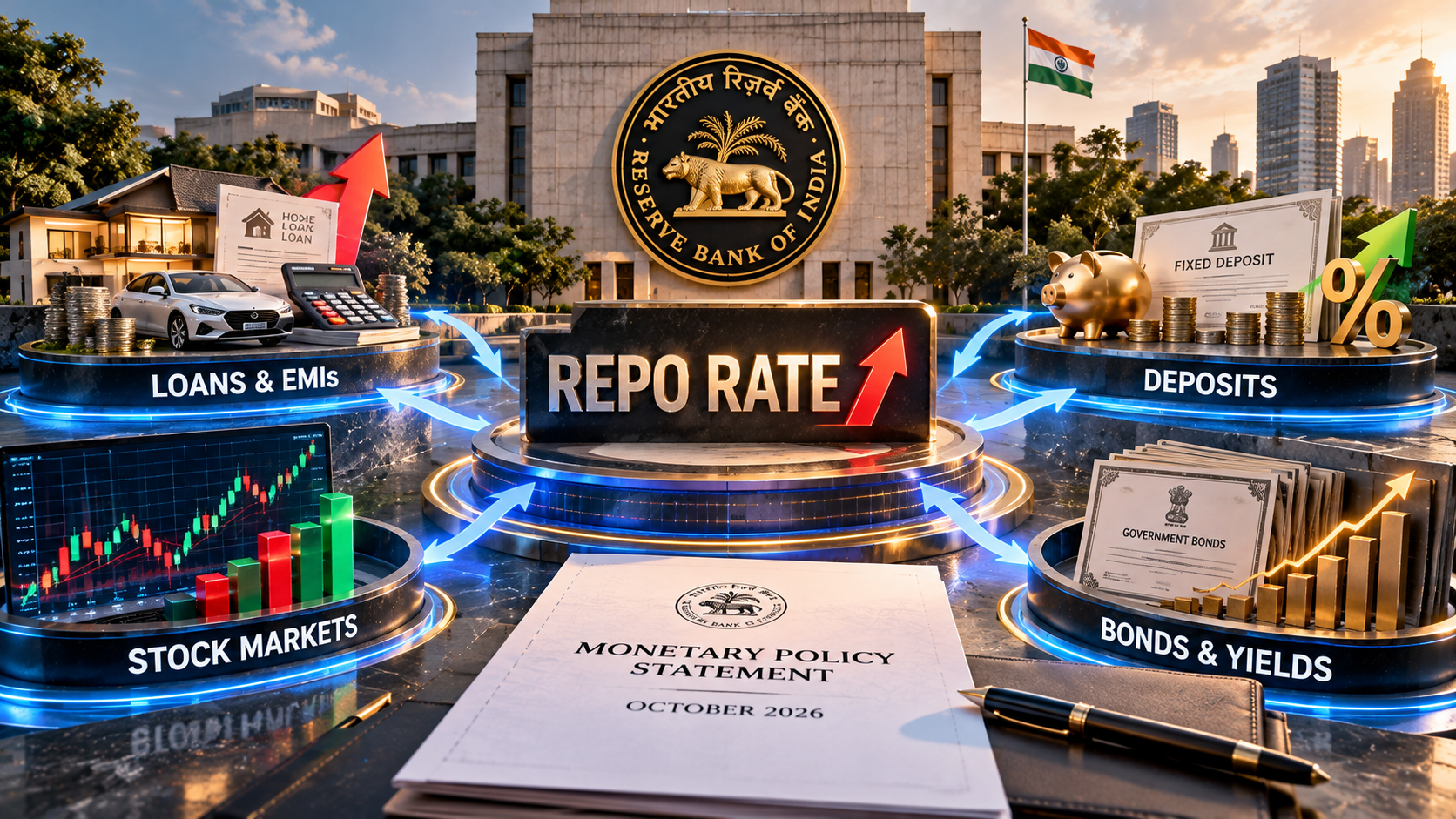
finance
RBI Repo Rate Hike: October 2026 Policy Update, Impact on Loans, EMIs, Deposits & Markets
A simple guide to the October 2026 RBI repo rate hike, what it means for borrowers, depositors, investors, banks and the broader economy.
Sachin Gadekar
·
08 Oct 2026

IPO
Reliance Jio IPO: Date, Price, GMP, Valuation, Review & Details
A complete guide to Reliance Jio IPO 2026, covering Jio Platforms IPO details, issue size, expected date, price band status, GMP context, shareholder quota, company profile, financials, valuation and risks.
Sachin Gadekar
·
07 Oct 2026

IPO
HD Fire Protect IPO Details: Date, Price, GMP, Review & How to Apply
A complete guide to HD Fire Protect IPO 2026, covering issue size, OFS structure, price band, lot size, GMP context, company profile, financials, risks, valuation and application process.
Sachin Gadekar
·
07 Oct 2026

IPO
Nityas Gems & Jewellery IPO Details: Date, Price, GMP, Review & How to Apply
A complete guide to Nityas Gems & Jewellery IPO 2026, covering issue size, GMP context, price band, lot size, company profile, financials, risks, valuation and application process.
Sachin Gadekar
·
05 Oct 2026