PPFAS: How a Boutique AMC Is Scaling Into the Big League
20 November 2025
Inside the remarkable rise of Parag Parikh Financial Advisory Services and why its unlisted valuation is catching investors’ eyes.

The Business Model: Fee Income and Treasury Gains
A decade ago, Parag Parikh Financial Advisory Services (PPFAS) was a small, value-driven mutual fund house with just a handful of schemes. Today, it stands out as a powerful player in India’s asset management space — managing more than ₹1.3 lakh crore in assets and commanding serious attention in the unlisted equity market. This rise isn’t just about size; it’s about business discipline, operating leverage, and a long-term franchise that resonates with value investors.
PPFAS’s financial strength comes primarily from its two-pronged business model:
AUM-Driven Revenue: The AMC runs a focused set of schemes — including flexi-cap, ELSS, liquid, and dynamic allocation funds. As the assets under management (AUM) grow, the fee income scales up. This provides a stable and predictable income base, especially as retail investors continue to pour in via SIPs.
Treasury Income: Beyond managing client money, PPFAS also earns interest on its own cash reserves and recognizes gains from its proprietary investments. This secondary revenue stream adds depth to its business and contributes to its profitability.
The result is an asset-light business with high operating leverage. As AUM expands, profit margins can grow significantly, provided the company keeps costs under control.
Financial Momentum: H1 FY26 Performance
In the first half of FY26, PPFAS delivered strong top-line growth. Consolidated revenue surged to approximately ₹289 crore — up nearly 35% from the same period a year ago. What makes the growth even more compelling is that this rise in revenue didn’t come at the cost of high expenses. Operating costs remained largely flat. As a result, profit before tax jumped to around ₹251 crore, and profit after tax landed at about ₹190 crore, marking a robust 43% year-on-year increase.
Operational cash flow tells a similar story. In H1 FY26, cash flow from operations stood at roughly ₹159 crore, up significantly from ₹83 crore in H1 FY25. The healthy conversion of profit into cash reflects strong working-capital discipline and a business that’s not just profitable on paper — it’s generating real cash.
Valuation Perspective: What ₹13,045 Crore Implied Valuation Means
PPFAS’s unlisted valuation is implied to be around ₹13,045 crore. When we annualize the first-half PAT, it comes out to about ₹380 crore for FY26. At that level, the estimated P/E multiple is around 34–36x. Meanwhile, with an AUM of ₹1,36,757 crore (as of September 2025), the valuation relative to AUM works out to roughly 10% of AUM.
That places PPFAS in an interesting spot: it’s neither a bargain basement name nor an overhyped growth play. Instead, it’s being valued as a fast-growing boutique AMC with strong fundamentals, rather than a levered or speculative lever.
How PPFAS Stacks Up Against Larger AMCs
When compared with listed giants:
HDFC AMC trades at a higher P/E and a higher market-cap-to-AUM ratio.
Nippon Life India AMC also commands a premium valuation given its scale.
PPFAS, by contrast, offers compelling metrics: slightly lower P/E and a relatively conservative Mcap/AUM ratio — especially considering its strong earnings growth and lean operations. For an investor in unlisted equity, PPFAS presents a distinctive proposition: boutique feel with institutional potential.
What Makes PPFAS Unique: Key Differentiators
Focused Product Line
Instead of chasing every category, PPFAS runs a tight set of high-conviction schemes. Its flagship flexi-cap fund is widely respected for combining value investing with global exposure.
Retail-Centric and SIP-Driven
A large component of AUM comes from SIPs, especially from retail investors who buy into its core philosophy. This kind of money tends to stick around during market corrections, providing stability.
Owner‑Operator Culture
PPFAS retains a lean, principled management structure rooted in its founding philosophy. That discipline has helped it grow without over-leveraging or diluting its culture.
High Operating Leverage
With limited capital expenditures and a growing AUM base, PPFAS is positioned to benefit disproportionately as it scales. The first-half results already reflect that.
Broader Growth Engines & Strategic Moves
PPFAS isn’t just focusing on asset management. It has recently expanded in several strategic ways:
Wealth Management: The company has launched a client-first advisory business. Unlike traditional models, PPFAS has deliberately avoided aggressive sales targets in favor of transparent advice, building trust instead of pushing products.
GIFT City Expansion: PPFAS has established a subsidiary in GIFT City to capture global flows. This hub is expected to launch fund vehicles targeting NRIs and global investors, leveraging international investing and cross-border asset opportunities.
Risks to Consider
While the story is compelling, there are several risks to keep in mind:
AUM Growth Risk: Scaling further from its current base will require consistent inflows and retention.
Fee Pressure: Regulatory scrutiny around expense ratios and fees could compress margins.
Competition: Large AMCs like HDFC and Nippon have scale and resources. Maintaining differentiation will be challenging.
Liquidity Risk (for Unlisted Shares): Investors in unlisted PPFAS equity should be prepared for limited liquidity and a long holding horizon.
Macro Sensitivity: AUM growth is tied to markets and investor flows, which can be volatile.
Why PPFAS Is an Attractive Long-Term Play (for Select Investors)
PPFAS’s evolution makes it a standout in the unlisted universe:
It offers a compounding business model that scales with assets.
Profits are real and backed by cash generation, not just accounting entries.
Its leadership and philosophy align with long-term, value-driven investing — a contrast to many trend-chasing players.
Expansion into wealth management and GIFT City signals ambition and diversification beyond pure AMC.
For patient, quality-focused investors, this is not a flash-in-the-pan play. It’s a compounding franchise with structural advantages.
FAQs
1. What is PPFAS and why is its unlisted business drawing attention?
PPFAS is a boutique asset manager that has grown AUM to over ₹1.3 lakh crore. Its unlisted share value is rising because of strong profitability and disciplined growth.
2. How does PPFAS make money?
It earns primarily through AMC fees based on AUM. In addition, it generates income from its surplus cash and proprietary investments.
3. Is PPFAS profitable and cash-generative?
Yes. In H1 FY26, it grew PAT by 43% YoY, while cash flow from operations more than doubled — showing real cash conversion.
4. How is PPFAS valued in the unlisted market?
At a valuation of around ₹13,045 crore, its implied P/E is approximately 34–36x based on annualized earnings, and it’s valued at about 10% of AUM.
5. What risks should unlisted investors watch for?
Key risks include AUM slowdown, fee compression, competition from larger AMCs, and limited liquidity in its unlisted shares.
Recent articles
View all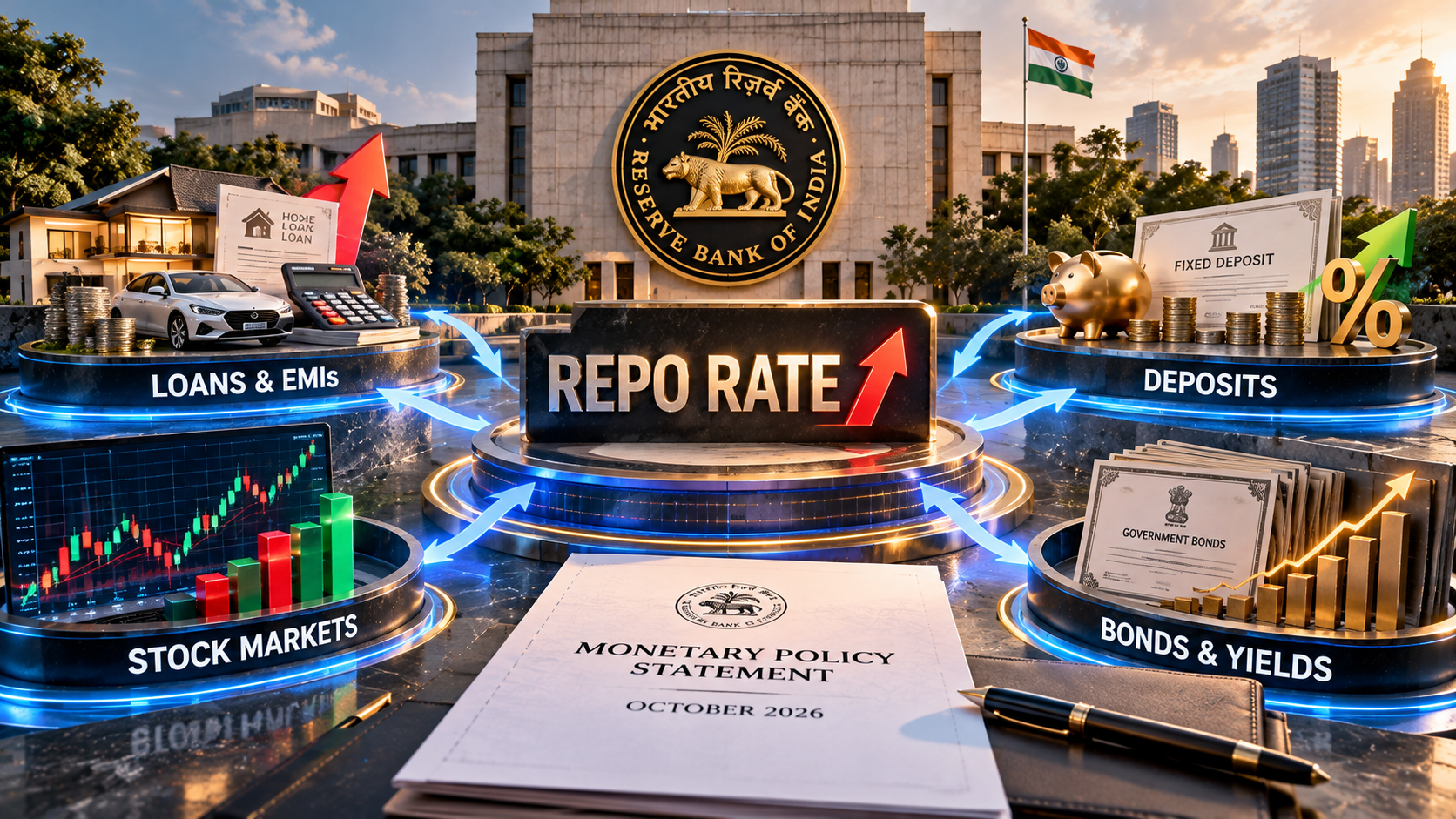
finance
RBI Repo Rate Hike: October 2026 Policy Update, Impact on Loans, EMIs, Deposits & Markets
A simple guide to the October 2026 RBI repo rate hike, what it means for borrowers, depositors, investors, banks and the broader economy.
Sachin Gadekar
·
08 Oct 2026

IPO
Reliance Jio IPO: Date, Price, GMP, Valuation, Review & Details
A complete guide to Reliance Jio IPO 2026, covering Jio Platforms IPO details, issue size, expected date, price band status, GMP context, shareholder quota, company profile, financials, valuation and risks.
Sachin Gadekar
·
07 Oct 2026

IPO
HD Fire Protect IPO Details: Date, Price, GMP, Review & How to Apply
A complete guide to HD Fire Protect IPO 2026, covering issue size, OFS structure, price band, lot size, GMP context, company profile, financials, risks, valuation and application process.
Sachin Gadekar
·
07 Oct 2026

IPO
Nityas Gems & Jewellery IPO Details: Date, Price, GMP, Review & How to Apply
A complete guide to Nityas Gems & Jewellery IPO 2026, covering issue size, GMP context, price band, lot size, company profile, financials, risks, valuation and application process.
Sachin Gadekar
·
05 Oct 2026