NSE Unlisted Share Price Today: Is the Pre-IPO Valuation Justified After the DRHP?
02 July 2026 · Sankarshan B
The National Stock Exchange of India (NSE) has taken a significant step towards its long-awaited public listing by filing its Draft Red Herring Prospectus (DRHP) with the Securities and Exchange Board of India (SEBI) on June 17, 2026. After nearly a decade of regulatory delays and governance-related hurdles, the filing marks the beginning of what could become one of India's most closely watched IPOs.

The development has also renewed investor interest in the unlisted market. NSE shares are currently trading in the private market at around ₹2,100–₹2,200 per share, implying a market capitalisation of approximately ₹5.23 lakh crore. At this valuation, investors are asking an important question: does the current price fairly reflect the company's long-term fundamentals, or has the market already priced in most of the future upside?
While the excitement surrounding the IPO is understandable, evaluating an unlisted company requires looking beyond market sentiment. Investors need to assess the company's financial performance, valuation multiples, regulatory developments, competitive positioning, and the structural aspects of the proposed public issue before making an investment decision.
In this article, we examine the key highlights from the DRHP, analyse NSE's financial performance, compare its valuation with listed peers, and discuss the factors investors should consider before investing in NSE's unlisted shares.
Why the NSE DRHP Filing Matters
The DRHP filing represents a major milestone in NSE's listing journey. More importantly, it provides investors with a comprehensive view of the company's financial statements, business operations, risk factors, litigation, and shareholding structure.
For years, investors in the unlisted market relied largely on limited disclosures and market information. The DRHP significantly improves transparency by making audited financials and regulatory disclosures publicly available, allowing investors to evaluate the company using objective financial metrics rather than speculation.
The filing also indicates that the company has progressed through several regulatory milestones necessary for an eventual IPO. Although the listing is still subject to SEBI's review and final approvals, the filing itself marks the transition from uncertainty to a formal public issue process.
The NSE IPO Timeline: A Decade in the Making
NSE's journey towards a public listing has been considerably longer than that of most Indian companies.
The exchange first attempted to list in December 2016, but the process was delayed following regulatory scrutiny and governance issues, including the widely discussed co-location matter. As a result, the IPO remained on hold for several years while the exchange worked through various regulatory requirements.
The process resumed after SEBI issued its No Objection Certificate (NOC) on January 30, 2026, allowing the company's board to approve the filing of the DRHP shortly thereafter. Based on typical timelines for large and complex IPOs, SEBI's review process may take several months, with the observation letter expected around September or October 2026. Subject to regulatory approvals and market conditions, the IPO could potentially be launched between September and December 2026.
An important structural aspect of the IPO is that NSE cannot list its shares on its own exchange. Under existing regulations governing market infrastructure institutions, the exchange's equity shares are expected to be listed on the Bombay Stock Exchange (BSE) instead.
Evaluating NSE's Financial Performance
One of the biggest advantages of the DRHP filing is that investors now have access to audited financial information, making it easier to evaluate whether the current unlisted market valuation is supported by the company's fundamentals.
At an indicative unlisted share price of ₹2,115, NSE commands an implied market capitalisation of approximately ₹5.23 lakh crore. Based on its FY26 consolidated Profit After Tax (PAT) of ₹10,302 crore, the exchange is currently valued at a trailing Price-to-Earnings (P/E) ratio of around 51x.
A P/E multiple of this magnitude is not unusual for a market infrastructure institution with a dominant competitive position. However, valuation alone does not tell the complete story. Investors also need to understand how the business has performed over the last financial year and whether current earnings can support future growth.
FY26: A Year of Moderation Rather Than Weakness
Although NSE continues to be India's largest stock exchange, FY26 reflected a slowdown in earnings compared to the previous year.
Revenue from operations declined by approximately 3%, falling from ₹17,141 crore in FY25 to ₹16,601 crore in FY26. During the same period, consolidated net profit declined by 15.5%, from ₹12,188 crore to ₹10,302 crore, while EBITDA reduced by nearly 12% to ₹11,098 crore.
These numbers may initially appear concerning, but the decline was driven largely by external regulatory changes rather than deterioration in the exchange's competitive position.
SEBI introduced several measures aimed at moderating speculative activity in the derivatives market, including changes to weekly options expiries and tighter margin requirements. Since derivatives contribute a significant portion of NSE's transaction revenue, these measures had a direct impact on trading volumes and overall income. According to the DRHP, Futures & Options (F&O) transaction charges contribute nearly ₹13,057 crore to the exchange's revenue, making the business naturally sensitive to changes in derivatives activity.
In addition, profitability was affected by higher legal and regulatory expenses. During FY26, the exchange incurred approximately ₹1,432 crore towards SEBI settlement-related costs, compared to ₹670 crore in the previous year. These one-time expenses also contributed to the decline in reported earnings.
Despite these headwinds, NSE remains one of the most profitable financial infrastructure companies in India, supported by strong cash generation, high operating margins, and an entrenched market position.
Financial Snapshot
| Metric | FY25 | FY26 | Change |
|---|---|---|---|
| Revenue from Operations | ₹17,141 Crore | ₹16,601 Crore | -3% |
| Profit After Tax (PAT) | ₹12,188 Crore | ₹10,302 Crore | -15.5% |
| EBITDA | ₹12,612 Crore | ₹11,098 Crore | -12% |
| Indicative Market Capitalisation | - | ₹5.23 Lakh Crore | Based on ₹2,115/share |
| Trailing P/E | - | ~51x | Based on FY26 PAT |
NSE vs BSE: A Valuation Comparison
Valuation becomes more meaningful when viewed alongside comparable businesses.
In India's listed exchange ecosystem, the Bombay Stock Exchange (BSE) provides the closest benchmark for comparison. While the two exchanges differ significantly in scale, comparing their financial metrics helps investors understand whether NSE's current private market valuation appears reasonable.
Despite operating at a lower valuation multiple, NSE remains the dominant exchange across multiple business segments. It controls approximately 99% of the derivatives market and nearly 93% of the cash equity market, giving it a significant competitive advantage in terms of market share and transaction volumes.
BSE, on the other hand, trades at a substantially higher earnings multiple despite its relatively smaller operating scale. This suggests that the current valuation of NSE, while not inexpensive, is not materially out of line with comparable listed exchange businesses.
| Metric | NSE | BSE |
|---|---|---|
| Indicative Share Price | ₹2,115 (Unlisted) | Market Price |
| FY26 Revenue | ₹16,601 Crore | Approx. ₹1,600–2,000 Crore |
| Trailing P/E | ~51x | ~69.6x |
| Return on Equity (ROE) | 33% | 36% |
| Derivatives Market Share | ~99% | ~1% |
While valuation should never be judged solely on relative multiples, this comparison indicates that investors are paying a lower earnings multiple for the country's largest exchange operator than for its listed peer. That said, future returns will depend on the company's ability to sustain earnings growth, navigate regulatory changes, and successfully complete its public listing.
Understanding the Six-Month Lock-in Period
One of the most important aspects of investing in pre-IPO shares is the statutory lock-in period.
Under the SEBI (Issue of Capital and Disclosure Requirements) Regulations (ICDR), investors who acquire shares in the unlisted market before the IPO are generally subject to a six-month lock-in from the date of listing.
This means that even if the stock lists at a premium, pre-IPO investors cannot immediately sell their holdings.
The implication is straightforward:
Your investment remains illiquid for six months after listing.
Short-term listing gains cannot be realized immediately.
Portfolio allocation should therefore be made with a longer investment horizon in mind.
For investors evaluating NSE's pre-IPO opportunity, liquidity planning is just as important as valuation.
Governance and Regulatory Considerations
Although the DRHP represents a significant milestone in NSE's listing journey, investors should also pay attention to the regulatory disclosures included in the document.
The prospectus continues to reference the long-running co-location matter in the auditors' emphasis-of-matter sections. While the exchange has proposed a settlement amounting to approximately ₹1,491 crore, the matter had not reached complete legal closure at the time of the DRHP filing.
This does not necessarily alter the company's long-term business fundamentals, but it remains a factor that investors should consider while assessing regulatory and governance risks.
Ultra's Perspective
The NSE IPO represents a rare opportunity to invest in one of India's most important financial market institutions before it becomes publicly traded.
That said, pre-IPO investing should not be approached solely with the expectation of listing gains. Investors should evaluate the opportunity based on business quality, valuation, liquidity constraints, and portfolio diversification.
At Ultra, we believe pre-IPO investments are best viewed as a long-term allocation within a diversified portfolio. While they can offer meaningful upside, they should be balanced alongside income-generating investments such as fixed income, private credit, and other alternative assets to maintain liquidity and reduce concentration risk.
FAQs
What is the current NSE unlisted share price?
The NSE unlisted share price has been trading in the private market around ₹2,100–₹2,115 per share, although prices may vary depending on transaction size, liquidity, and market demand.
When did NSE file its DRHP?
NSE filed its Draft Red Herring Prospectus (DRHP) with SEBI on June 17, 2026, formally initiating the IPO process.
When is the NSE IPO expected to list?
Based on the typical SEBI review process, the IPO is expected to be launched between September and December 2026, subject to regulatory approvals and market conditions.
Can pre-IPO investors sell their shares on the listing day?
No. Under current SEBI ICDR regulations, pre-IPO investors are generally subject to a six-month lock-in period from the date of listing and cannot sell their shares immediately after the IPO.
Is the NSE valuation expensive?
At an indicative unlisted share price of around ₹2,115, NSE trades at approximately 51x FY26 earnings. While this is a premium valuation, it remains below the earnings multiple of listed peer BSE, making valuation one of the key factors investors should assess alongside business fundamentals.
Recent articles
View all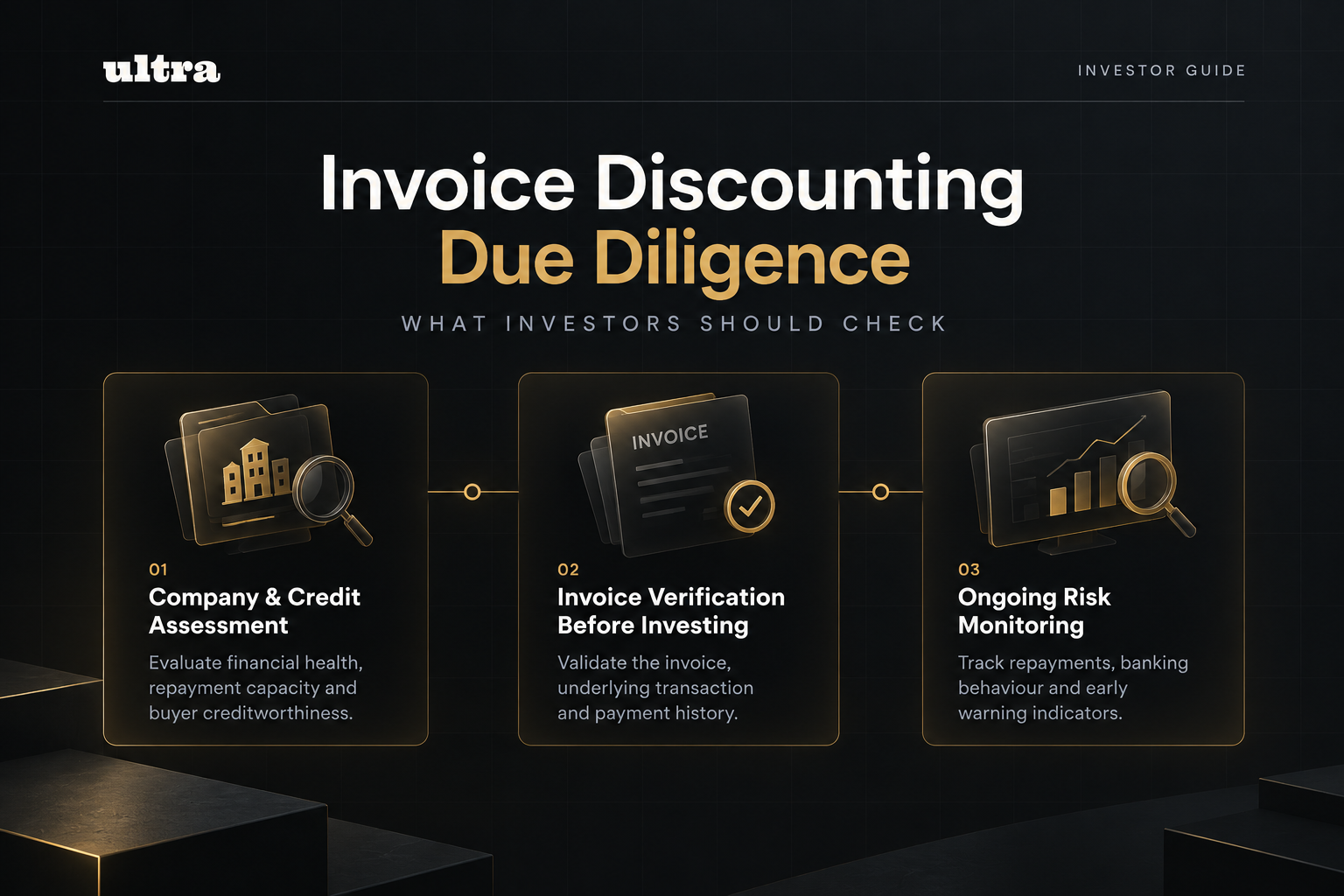
invoice discounting
Invoice Discounting Due Diligence: What Investors Should Check Before Investing
A complete guide to invoice discounting due diligence, covering what to check before you invest and how ultra reviews every business before listing its invoices
Prerna Bhardwaj
·
26 Oct 2026
invoice discounting
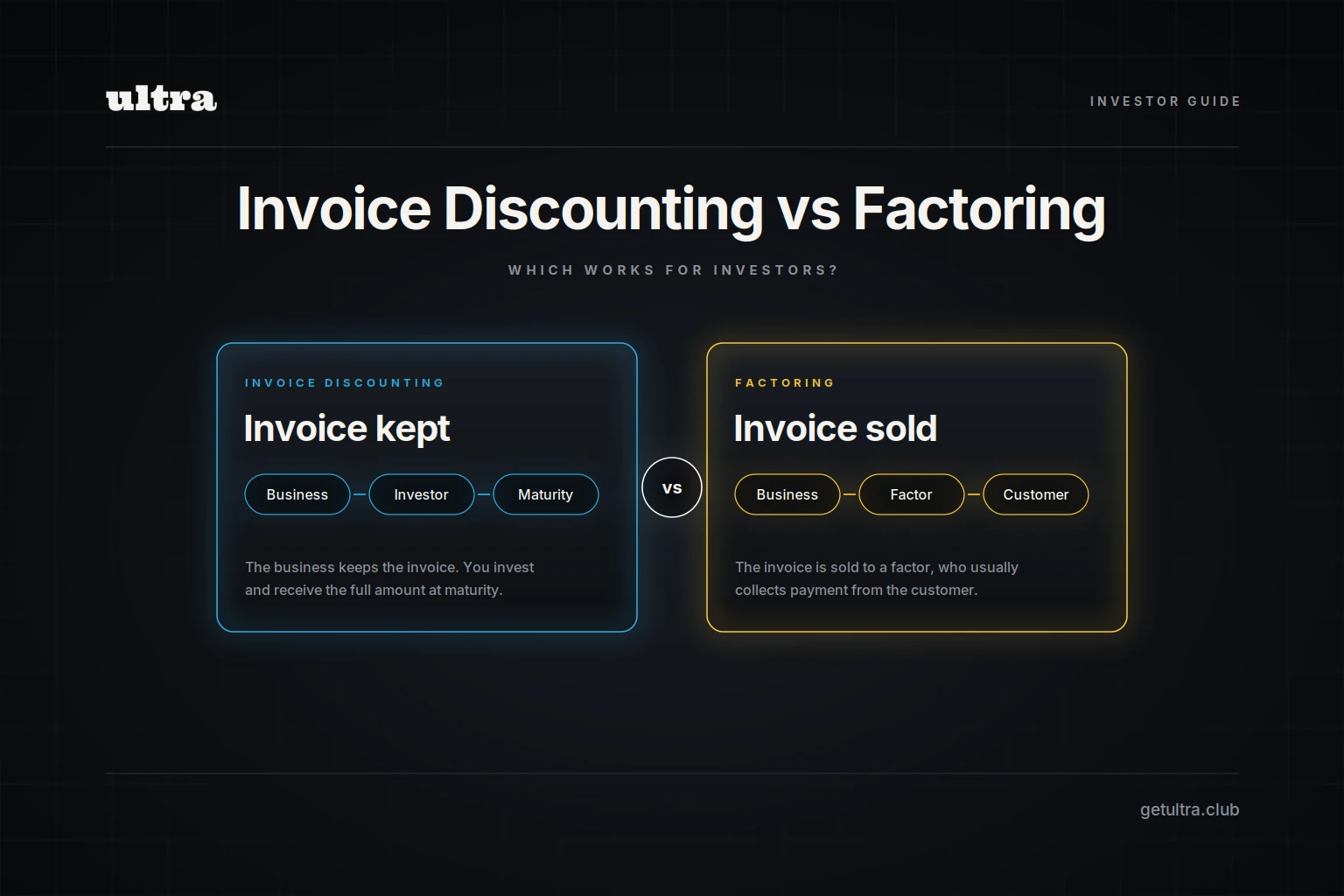
Invoice Discounting vs Factoring: Which Works for Investors?
A complete guide to invoice discounting vs factoring, covering how each works, the key differences between them and why investors choose invoice discounting on ultra.
Prerna Bhardwaj
·
22 Oct 2026
invoice discounting
Invoice Discounting Investment in India: How It Works
A complete guide to invoice discounting investment in India, covering how it works, why experienced investors consider it, where it fits in a portfolio and how to invest with ultra.
Prerna Bhardwaj
·
21 Oct 2026

IPO
Reliance Jio IPO: Date, Price, GMP, Valuation, Review & Details
A complete guide to Reliance Jio IPO 2026, covering Jio Platforms IPO details, issue size, expected date, price band status, GMP context, shareholder quota, company profile, financials, valuation and risks.
Sachin Gadekar
·
19 Oct 2026