Fractional Ownership: Real Estate Investment in India
20 May 2025 · Sachin Gadekar
Unlock premium property investments with small capital through the power of fractional ownership in India.

Introduction
India's real estate landscape is undergoing a significant transformation. With soaring property prices and increasing demand for premium assets, traditional investment methods are becoming less accessible to the average investor. Enter fractional ownership—a model that democratizes real estate investment by allowing multiple investors to co-own high-value properties.
What is Fractional Ownership?
Fractional ownership refers to a system where several investors collectively own a property, each holding a specific share. This model enables individuals to invest in premium real estate assets without bearing the entire financial burden. Typically, a legal entity like a Limited Liability Company (LLC) or partnership is formed, wherein each investor's share corresponds to their ownership percentage.
Key Features
Shared Ownership: Investors own a fraction of the property, entitling them to proportional benefits.
Income Distribution: Rental income and property appreciation are divided based on ownership shares.
Managed Services: Professional property management handles maintenance, tenant acquisition, and other operational aspects.
Advantages of Fractional Ownership
1. Accessibility: Enables investment in premium properties with a lower capital requirement. 2. Diversification: Allows investors to spread risk across multiple assets. 3. Professional Management: Reduces the hassle of property maintenance and tenant management. 4. Liquidity: Some platforms offer secondary markets for selling ownership shares. 5. Passive Income: Regular rental income provides a steady cash flow.
The Growing Trend in India
Fractional ownership is rapidly gaining traction in India, driven by several factors:
Market Size: Valued at $5.4 billion in 2020, projected to reach $8.9 billion by 2025 with a CAGR of 10.5%.
Diversification: Investors are exploring assets beyond traditional real estate, including art and yachts.
Regulatory Support: SEBI's introduction of Small & Medium REITs enhances transparency and investor protection.
Driving Factors:
Urbanization: Rising demand for premium properties in metropolitan areas.
Affordability: Fractional ownership lowers the entry barrier for high-value assets.
Technological Advancements: Digital platforms facilitate seamless investment processes.
Challenges and Considerations
While fractional ownership offers numerous benefits, potential investors should be aware of certain challenges:
Liquidity Constraints: Selling ownership shares might not be as straightforward as selling entire properties.
Limited Control: Decision-making is shared among co-owners, potentially leading to conflicts.
Market Risks: Property values can fluctuate based on market conditions.
Regulatory Hurdles: The evolving legal framework requires careful navigation.
Conclusion
Fractional ownership is redefining real estate investment in India, making it more inclusive and accessible. By allowing multiple investors to co-own high-value properties, this model offers a balanced approach to wealth creation and asset diversification. As the market matures and regulatory frameworks solidify, fractional ownership is poised to become a mainstream investment avenue.
Recent articles
View all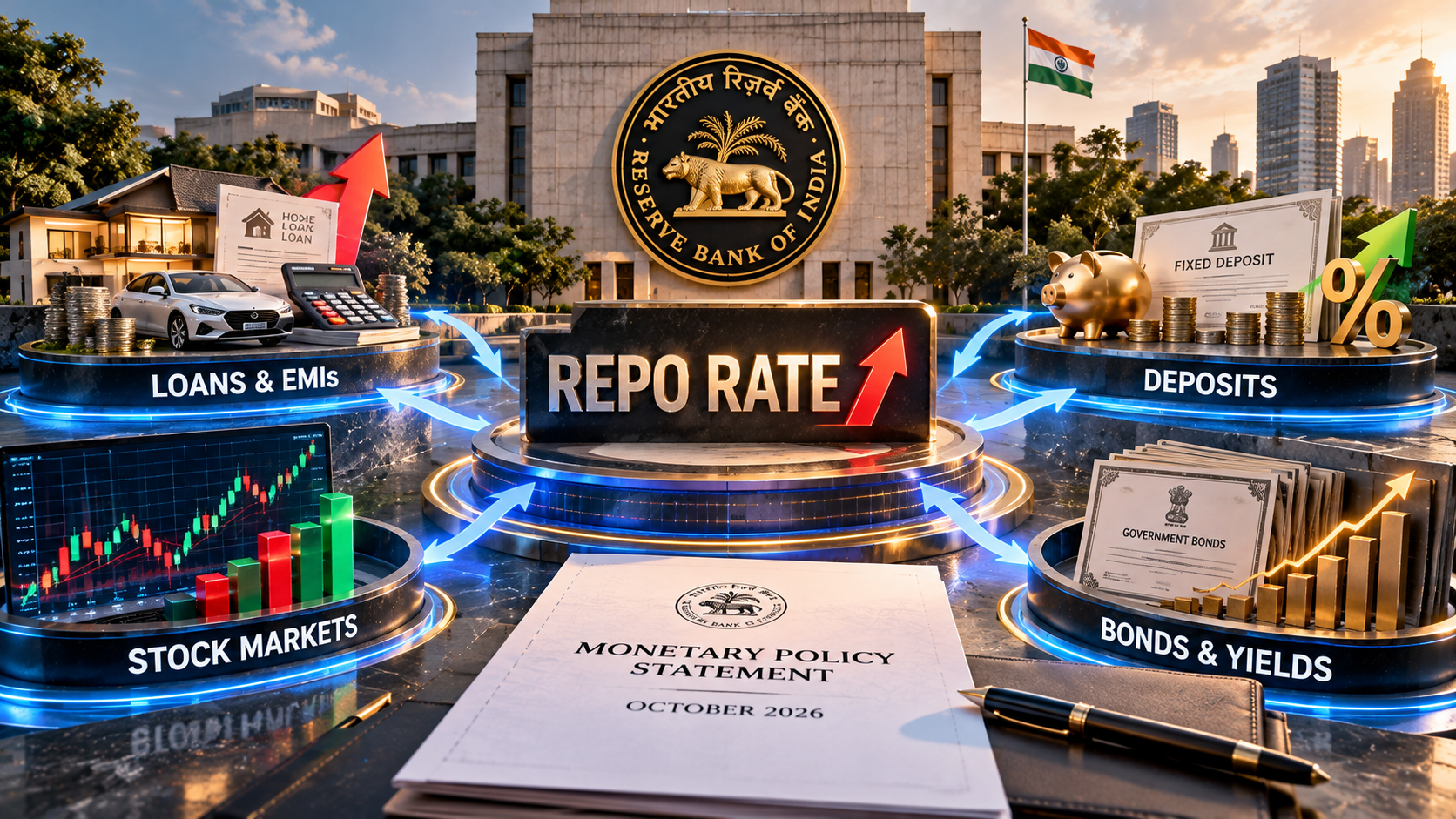
finance
RBI Repo Rate Hike: October 2026 Policy Update, Impact on Loans, EMIs, Deposits & Markets
A simple guide to the October 2026 RBI repo rate hike, what it means for borrowers, depositors, investors, banks and the broader economy.
Sachin Gadekar
·
08 Oct 2026

IPO
Reliance Jio IPO: Date, Price, GMP, Valuation, Review & Details
A complete guide to Reliance Jio IPO 2026, covering Jio Platforms IPO details, issue size, expected date, price band status, GMP context, shareholder quota, company profile, financials, valuation and risks.
Sachin Gadekar
·
07 Oct 2026

IPO
HD Fire Protect IPO Details: Date, Price, GMP, Review & How to Apply
A complete guide to HD Fire Protect IPO 2026, covering issue size, OFS structure, price band, lot size, GMP context, company profile, financials, risks, valuation and application process.
Sachin Gadekar
·
07 Oct 2026

IPO
Nityas Gems & Jewellery IPO Details: Date, Price, GMP, Review & How to Apply
A complete guide to Nityas Gems & Jewellery IPO 2026, covering issue size, GMP context, price band, lot size, company profile, financials, risks, valuation and application process.
Sachin Gadekar
·
05 Oct 2026