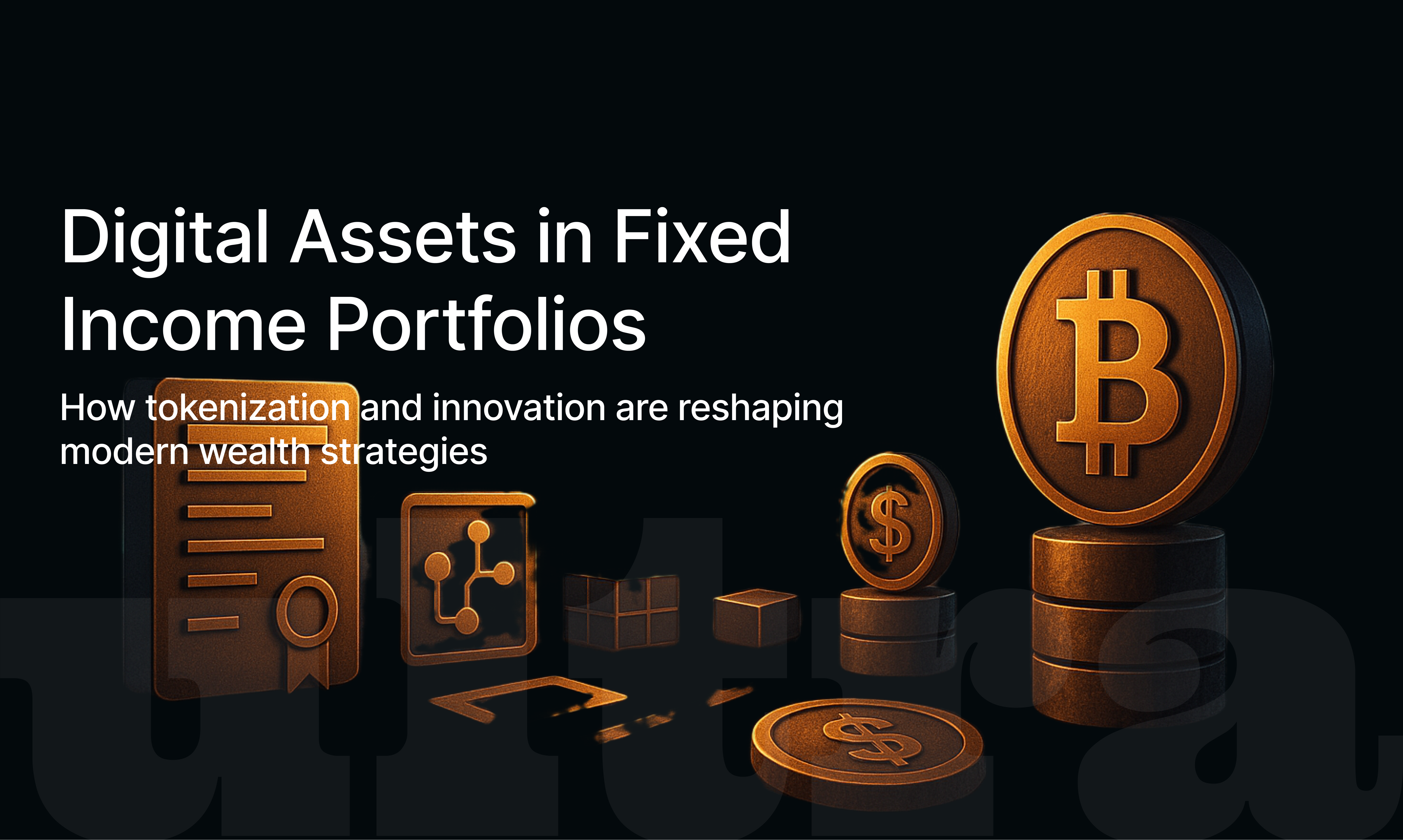
The Rise of Digital Assets and Their Role in Fixed Income Portfolios
02 November 2025
Understanding how tokenized bonds and blockchain-based instruments are reshaping fixed income investing for modern HNIs.
Understanding Digital Assets in the Fixed Income Context
Over the last decade, digital assets have evolved from niche technological experiments to mainstream investment instruments. Initially, they were synonymous with cryptocurrencies like Bitcoin and Ethereum. Today, however, the scope of digital assets extends well beyond crypto—encompassing tokenized bonds, blockchain-based securities, and decentralized finance (DeFi) products that mirror traditional fixed income structures.
For High Net-Worth Individuals (HNIs), these innovations open new doors for diversification, liquidity, and accessibility—particularly in fixed income portfolios. As platforms like ultra help investors explore diverse income-generating assets, understanding how digital assets fit into the equation becomes essential.
In traditional finance, fixed income instruments—like bonds, debentures, and treasury bills—offer predictable returns through periodic interest payments. Digital assets, powered by blockchain technology, are now replicating this structure in a tokenized, transparent, and efficient format.
A tokenized bond, for example, represents a traditional debt instrument that has been digitized on a blockchain network. Investors can buy fractional ownership of these bonds, receive interest directly through smart contracts, and even trade them seamlessly on digital platforms.
This evolution is giving rise to a new hybrid market, where traditional fixed income strategies are enhanced through digital efficiency and global accessibility.
Why Digital Assets Are Gaining Traction Among HNIs
HNIs are increasingly exploring digital assets as part of their broader portfolio strategy for several reasons:
1. Liquidity and Accessibility
Traditional fixed income investments—especially private debt and bonds—can have limited secondary markets. Tokenization enables fractional ownership and near-instant settlement, significantly improving liquidity and accessibility for investors.
2. Portfolio Diversification
Digital assets are often less correlated with traditional equity or bond markets. This makes them a valuable tool for diversification, helping reduce overall portfolio volatility.
3. Transparency and Security
Blockchain ensures a tamper-proof, auditable record of transactions. Investors can track ownership, interest payments, and maturity in real-time—reducing counterparty risk.
4. Global Investment Access
Tokenized securities can be traded globally, breaking barriers that traditionally restricted investments by geography or regulatory constraints.
5. Enhanced Yield Opportunities
DeFi platforms and blockchain-based fixed income products often offer higher yields compared to traditional FDs or bonds, driven by efficiency, reduced intermediaries, and innovative risk-sharing models.
How Digital Assets Are Integrating into Fixed Income Portfolios
HNIs are not replacing traditional bonds entirely but rather augmenting their portfolios with digital alternatives. Here’s how digital assets fit in:
1. Tokenized Bonds
Several institutions are issuing tokenized government and corporate bonds. These allow investors to gain exposure to familiar fixed income products but with the added benefits of digital settlement and fractional ownership.
2. Stablecoin Lending
HNIs can earn interest by lending stablecoins—cryptocurrencies pegged to fiat currencies like the USD—on regulated DeFi platforms. These yields often range between 5–10%, offering attractive risk-adjusted returns.
3. Real-World Asset (RWA) Tokenization
Companies are now tokenizing real-world assets like real estate debt, corporate loans, and infrastructure projects. These digital tokens represent fractional ownership, providing exposure to income-generating assets through a secure digital channel.
4. Hybrid Investment Platforms
Digital wealth platforms like ultra are bridging traditional and alternative investments by offering fixed income products such as bonds, asset leasing, and invoice discounting—all of which may soon integrate tokenization and blockchain-led efficiency.
Benefits of Including Digital Assets in Fixed Income Portfolios
| Key Benefit | Impact for HNIs |
|---|---|
| Increased Liquidity | Faster settlements and fractional ownership enable quicker exits. |
| Diversification | Reduces concentration risk in traditional debt instruments. |
| Enhanced Returns | Access to higher yields through digital and DeFi markets. |
| Transparency | Blockchain-based verification improves trust and compliance. |
| Efficiency | Lower transaction costs and reduced intermediary dependence. |
Risks to Consider Before Investing
While the opportunities are vast, digital fixed income assets also come with unique risks:
Regulatory Uncertainty: Global frameworks for digital securities are still evolving.
Market Volatility: Despite being less correlated, digital assets can face price fluctuations.
Technology Risks: Smart contract vulnerabilities and cyber threats remain potential concerns.
Liquidity Limitations: Certain tokens or projects may have restricted trading volumes.
For this reason, it’s advisable for HNIs to allocate a small, calculated portion of their portfolio (typically 5–10%) toward digital fixed income assets, focusing on regulated and verified platforms.
The Future of Fixed Income Investing
The rise of digital assets marks a transformative phase in the investment world. As HNIs demand greater transparency, liquidity, and yield, digital technologies are redefining how fixed income products are structured and distributed.
While the traditional debt market continues to form the backbone of wealth preservation, digital innovation is making it smarter, faster, and more inclusive. Forward-looking investors who embrace this evolution early are likely to benefit from superior returns and portfolio resilience.
Conclusion
Digital assets are no longer just speculative instruments—they represent the future of efficient, accessible, and transparent investing. For HNIs, integrating tokenized bonds and blockchain-based fixed income assets into their portfolios can unlock new levels of diversification and yield potential.
Platforms like ultra are leading this transition by offering access to innovative fixed income opportunities while maintaining a strong foundation of security, compliance, and transparency.
In a world where technology meets tradition, digital assets are set to become an integral component of the next-generation fixed income portfolio.
FAQs
1. What are digital assets in fixed income?
Digital assets in fixed income include tokenized bonds, digital securities, and blockchain-based instruments that offer interest or yield similar to traditional debt.
2. How do digital assets differ from cryptocurrencies?
While cryptocurrencies like Bitcoin are speculative, digital fixed income assets are structured financial instruments offering predictable returns and backed by tangible assets or debt.
3. Are digital fixed income assets safe for HNIs?
They carry moderate risk but can be safer when invested through regulated and verified platforms offering transparency and due diligence.
4. Can I invest in digital fixed income through ultra?
ultra offers curated access to a range of fixed income products and may expand into tokenized opportunities as regulations evolve.
5. What percentage of my portfolio should I allocate to digital fixed income assets?
HNIs can start by allocating 5–10% of their portfolio to digital assets, focusing on risk-managed, yield-based products.
Recent articles
View all
finance
RBI Repo Rate Hike: October 2026 Policy Update, Impact on Loans, EMIs, Deposits & Markets
A simple guide to the October 2026 RBI repo rate hike, what it means for borrowers, depositors, investors, banks and the broader economy.
Sachin Gadekar
·
08 Oct 2026

IPO
Reliance Jio IPO: Date, Price, GMP, Valuation, Review & Details
A complete guide to Reliance Jio IPO 2026, covering Jio Platforms IPO details, issue size, expected date, price band status, GMP context, shareholder quota, company profile, financials, valuation and risks.
Sachin Gadekar
·
07 Oct 2026

IPO
HD Fire Protect IPO Details: Date, Price, GMP, Review & How to Apply
A complete guide to HD Fire Protect IPO 2026, covering issue size, OFS structure, price band, lot size, GMP context, company profile, financials, risks, valuation and application process.
Sachin Gadekar
·
07 Oct 2026

IPO
Nityas Gems & Jewellery IPO Details: Date, Price, GMP, Review & How to Apply
A complete guide to Nityas Gems & Jewellery IPO 2026, covering issue size, GMP context, price band, lot size, company profile, financials, risks, valuation and application process.
Sachin Gadekar
·
05 Oct 2026