Navigating Beyond Credit Cards: Evaluating Credit Cards Against FDs
06 January 2026
How Credit Cards Against Fixed Deposits Work and When They Make Sense
Introduction
Credit cards remain a staple in personal finance, offering convenience, rewards, and emergency access to funds. However, not all consumers qualify easily for premium credit cards due to credit history or income requirements. For such users, the credit card against FD concept provides a compelling alternative — allowing cardholders to secure a credit card by pledging a fixed deposit (FD) as collateral.
In this article, we’ll break down how an FD against credit card works, compare it with traditional credit cards, and help you decide when this strategy makes sense.
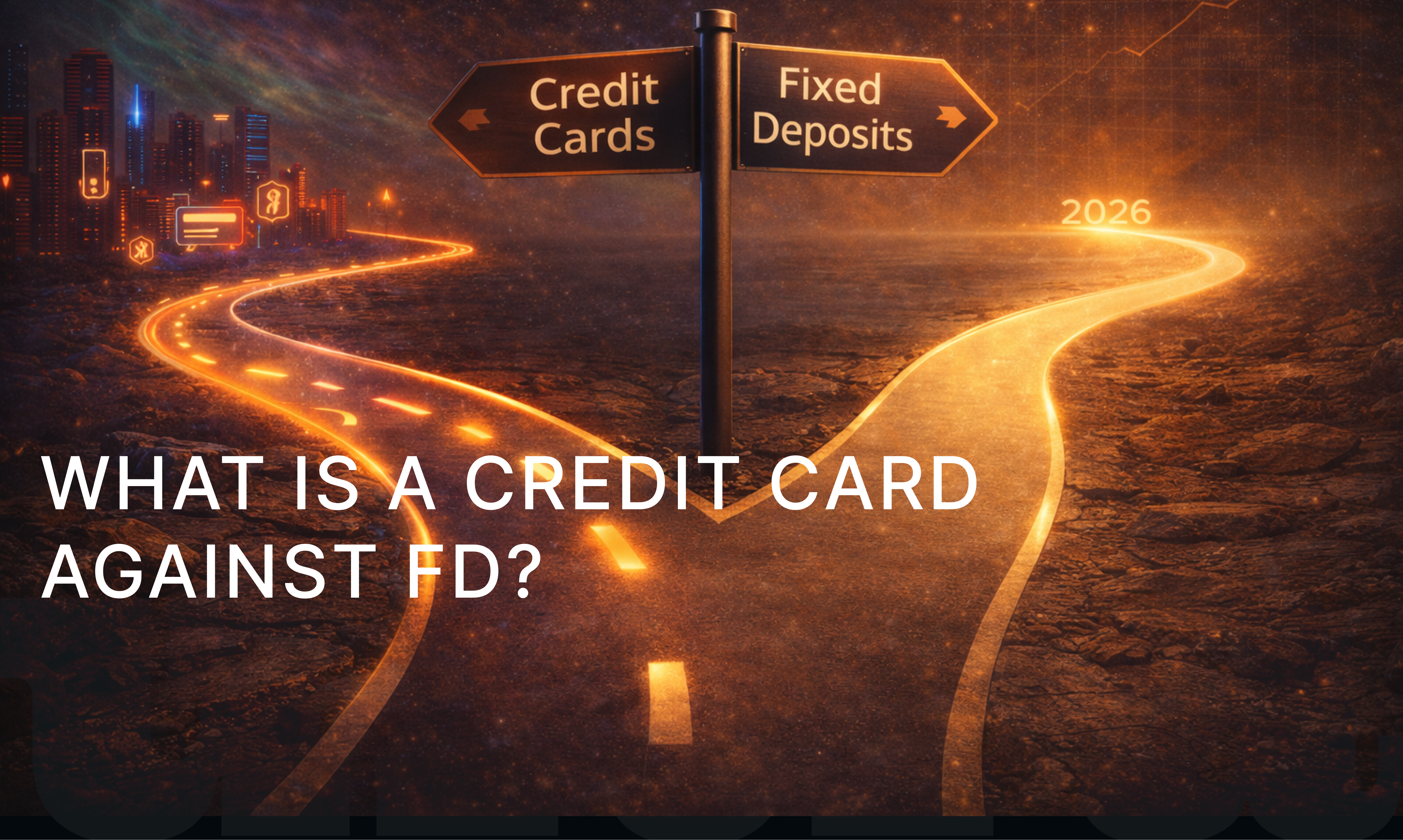
What Is a Credit Card Against FD?
A credit card against FD is a secured credit card where your own fixed deposit acts as collateral. Instead of undergoing a credit check or demonstrating a high income, you pledge an FD — typically held in the same bank — to secure your credit line.
This arrangement reduces risk for the bank and allows individuals with limited or poor credit history to access a credit card facility. In many cases, the credit limit is set as a percentage of the FD amount.
Example:
You place a ₹1,00,000 fixed deposit. Based on the bank’s policy, you may receive a credit card with a ₹90,000 limit, where the FD acts as security.
How Does an FD Against Credit Card Work?
The mechanics of a credit card against FD arrangement are straightforward:
You open a fixed deposit (FD) with your bank.
You apply for a secured credit card using that FD as collateral.
The bank approves the application and sets a credit limit — typically a percentage of the FD (e.g., 80%–100%).
You use the credit card as usual, with purchases billed monthly.
If you default on payments, the bank may use the FD to cover outstanding dues.
Your FD continues to earn interest throughout, albeit locked for the card/security purpose.
This setup reduces the bank’s risk — because the FD can cover unpaid bills — and enables easier approval compared to unsecured credit cards.
Eligibility and Requirements
Eligibility for a credit card against FD generally includes:
Holding a fixed deposit with the bank
Minimum age (usually 18 years and above)
Proof of identity and address (KYC documents)
No stringent income proof requirement
Because the FD secures the card, banks often relax credit score requirements, making this an option for young professionals, students, or individuals with limited credit history.
Benefits of a Credit Card Against FD
Secured credit cards built on fixed deposits offer several advantages:
Easier Approval
Since the card is backed by your FD, banks are more willing to approve applications even for applicants with limited credit history.
Potentially Higher Credit Limits
Many banks offer credit limits equal to or close to the value of the FD — sometimes up to 100%.
Builds Credit History
Using the card responsibly and paying on time can help build or improve your credit score over time.
Reduced Risk for the Bank
The bank’s risk is cushioned by the FD collateral, which can be adjusted against dues if needed.
Regular FD Interest Continues
Your FD continues earning interest at its original rate while pledged against the card.
Comparing FD Credit Card vs Traditional Credit Card
| Feature | FD Against Credit Card | Traditional Credit Card |
|---|---|---|
| Security Required | Yes (FD as collateral) | No |
| Approval Difficulty | Easier | Depends on credit and income |
| Credit Limit | Up to FD value | Based on credit score & income |
| Interest on FD | Continues | N/A |
| Builds Credit Score | Yes | Yes |
| Rewards and Benefits | May be limited | Often richer (cashback, points) |
| Risk for Bank | Lower | Higher |
Key Features to Consider
When considering a credit card against FD offer, pay attention to:
Credit limit vs FD amount: How much of your FD is converted into credit limit?
Interest rate on outstanding amounts: Secured cards may have lower APR.
Renewal and FD release terms: When and how the FD is released on closure.
Annual fees and charges: Some secured cards have annual charges.
Rewards and perks: Determine if there are any point systems or benefits.
Interest, Fees, and Charges
Even secured cards carry fees and charges to be aware of:
Interest on Revolving Balances
If you carry a balance month to month, interest accrues until the outstanding is cleared.
Annual Fees
Some secured cards may charge an annual fee, though these can sometimes be waived.
Late Payment Charges
Penalty fees apply if you miss payment due dates.
FD Surrender Risk
If you default repeatedly, the bank may use your FD to cover dues, reducing your fixed deposit principal.
When Should You Choose a Credit Card Against FD?
A credit card against FD might make sense if:
You’re building or rebuilding credit history
You don’t have a strong credit score
You want a higher credit limit backed by a secured deposit
You prefer predictable access to credit without stringent underwriting
You plan to maintain low utilization and pay on time
This option can be a stepping stone before qualifying for unsecured credit cards with richer rewards.
Risks and Limitations
Despite the benefits, there are trade-offs:
Lower rewards compared to premium unsecured cards
Opportunity cost: FD money is locked and cannot be used elsewhere
Fees and interest: You still pay interest on revolving balances
Credit utilization risk: Just because it’s secured doesn’t mean it should be overused
For those comfortable with a traditional credit score and income proof, exploring regular credit card options may offer better rewards.
Alternatives to Credit Cards Against FDs
If you’re evaluating options beyond an FD credit card, consider:
Secured cards backed by savings accounts
Prepaid business credit lines
Low-limit unsecured credit cards for beginners
Personal loans with predictable EMI structure
Buy-Now-Pay-Later (BNPL) options, where appropriate
Practical Tips Before Applying
Before applying for a credit card against FD, consider:
Review Your FD Terms
Ensure your deposit does not carry penalties for pledging.
Compare Across Banks
Different banks offer different credit limit percentages and fee structures.
Check Your Budget
Know your ability to repay monthly to avoid interest accumulation.
Understand Impact on Liquidity
FD collateral affects liquidity; don’t tie up funds you may need urgently.
Conclusion
Secured credit cards against fixed deposits are a powerful tool for credit building and responsible access to credit, especially for first-time card users or individuals with limited credit profiles. While they may lack the rewards programs of premium unsecured cards, they offer accessibility and credit history growth, making them a valuable addition to a balanced financial strategy.
These products sit at the intersection of credit and savings, and when used wisely, can enhance both your financial flexibility and creditworthiness — without compromising on predictability and safety.
Recent articles
View all
finance
RBI Repo Rate Hike: October 2026 Policy Update, Impact on Loans, EMIs, Deposits & Markets
A simple guide to the October 2026 RBI repo rate hike, what it means for borrowers, depositors, investors, banks and the broader economy.
Sachin Gadekar
·
08 Oct 2026

IPO
Reliance Jio IPO: Date, Price, GMP, Valuation, Review & Details
A complete guide to Reliance Jio IPO 2026, covering Jio Platforms IPO details, issue size, expected date, price band status, GMP context, shareholder quota, company profile, financials, valuation and risks.
Sachin Gadekar
·
07 Oct 2026

IPO
HD Fire Protect IPO Details: Date, Price, GMP, Review & How to Apply
A complete guide to HD Fire Protect IPO 2026, covering issue size, OFS structure, price band, lot size, GMP context, company profile, financials, risks, valuation and application process.
Sachin Gadekar
·
07 Oct 2026

IPO
Nityas Gems & Jewellery IPO Details: Date, Price, GMP, Review & How to Apply
A complete guide to Nityas Gems & Jewellery IPO 2026, covering issue size, GMP context, price band, lot size, company profile, financials, risks, valuation and application process.
Sachin Gadekar
·
05 Oct 2026