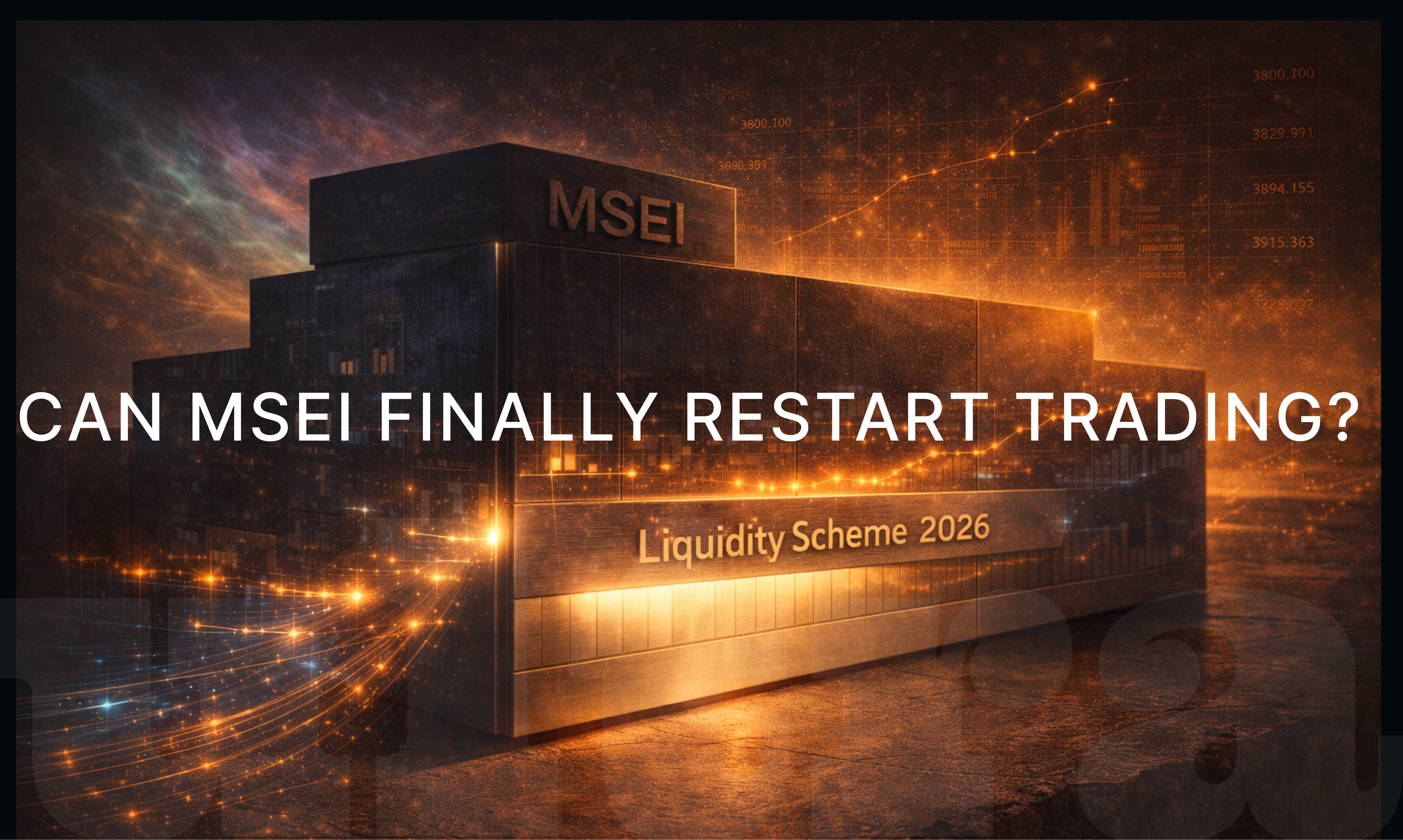
Can MSEI Finally Restart Trading? Liquidity Scheme Insights 2026
12 January 2026
A deep dive into whether MSEI’s liquidity initiatives can revive trading activity and restore confidence in India’s third national stock exchange
Background: MSEI’s Liquidity Struggle
The Metropolitan Stock Exchange of India (MSEI) has long been challenged by inactive markets and minimal trading volumes, frustrating investors who hoped the exchange would eventually revive. On 8 January 2026, MSEI announced a new initiative called the Liquidity Enhancement Scheme (LES), intended to address its core issues and give trading activity a boost.
The Core Challenge Facing MSEI
MSEI’s difficulties stem from a lack of liquidity — not a lack of listed companies. While there may be stocks available on the exchange’s platform, investors have historically struggled to buy or sell shares due to:
Thin or absent order books Wide bid-ask spreads Limited confidence among retail and institutional participants Poor execution certainty This cycle discouraged participation: low liquidity led investors and brokers to stay away, which in turn kept trading volumes depressed.
What Is the Liquidity Enhancement Scheme (LES)?
The Liquidity Enhancement Scheme (LES) is MSEI’s most concrete attempt yet to institutionalise liquidity. Rather than merely promoting the exchange, LES focuses on functional market structure: paying professional market makers to continuously place both buy and sell quotes so that liquidity is visible at all times. This approach mirrors mechanisms used by established exchanges globally and acknowledges that liquidity must be engineered, not expected.
Mandatory Two-Way Market Making
A major shift in LES is the requirement that market makers post two-way quotes — meaning both bid and ask prices — for the majority of the trading day. Key points include: Market makers must provide quotes for at least 85–90% of market hours One-sided quotes are not sufficient Investors can enter and exit positions with more predictability This structural change makes trading more reliable, eliminating situations where investors are stuck holding shares with no visible exit path.
Deeper Order Book Requirements
LES goes beyond top-level quotes by requiring market makers to quote across multiple levels of the order book. This ensures real depth — not superficial liquidity — so that larger orders do not distort prices and volatility is naturally reduced. This design aligns with how major exchanges safeguard market stability during sudden buying or selling pressure.
Bid-Ask Spread Caps
One of the hidden costs of illiquid markets is wide bid-ask spreads, which erode investor value during entries and exits. LES introduces caps on spreads, including: Tight spreads (as low as 5 basis points) at the best quote Gradually wider spreads at deeper layers These limits promote efficient pricing and tighter arbitrage, reducing transaction costs for all participants.
Financial Incentives for Market Makers
To ensure participation, MSEI has put significant incentives on the table:
₹40 lakh per month per market maker
Zero exchange transaction fees for trades under the scheme
Monthly payouts tied to compliance and performance
These incentives are designed to make continuous market making economically viable and attract serious liquidity providers, not casual participants.
Focus on High-Quality Stocks
LES applies to around 130 widely followed stocks, including large banks, PSUs, and major sectors like IT, consumer goods, metals, and autos — plus new-age companies. By starting with familiar names, MSEI aims to build confidence where investors are comfortable comparing prices with other exchanges.
If liquidity appears and prices align with other markets, confidence may begin to grow organically.
What LES Means for Investors
For long-term holders of MSEI shares, LES is significant not because it guarantees immediate success, but because it shifts focus to market fundamentals — liquidity, depth, spread management, and execution certainty — rather than marketing or one-off announcements.
Investors looking for a restart have waited years; this marks the first time MSEI has taken structural action.
Will This Restart MSEI Fully?
In the short term, LES is unlikely to completely revive trading on its own. It can:
Improve visible liquidity
Encourage broker participation
Make basic execution more reliable
However, a full revival requires sustained engagement from participants beyond the incentive phase. Liquidity bought today must be supported by trust tomorrow.
What Comes Next for MSEI?
Beyond LES, MSEI still needs:
Continuous regulatory support
Broader broker and investor participation
Expansion of tradable instruments
Product innovation and ecosystem growth
Liquidity can be injected through incentives, but long-term confidence hinges on consistent activity and deeper structural adoption.
Final Takeaway
The Liquidity Enhancement Scheme is not a quick fix, nor a promise of instant success. It is, however, the clearest operational signal yet that MSEI recognizes its longstanding weakness and is attempting a data-driven, incentive-aligned strategy to address it.
For shareholders and unlisted investors, LES may not guarantee returns, but it is a pivotal step toward rebuilding market credibility — provided execution is consistent and participation sustains beyond initial incentives.
Recent articles
View all
IPO
Paras Healthcare IPO Details: Date, Price, GMP, Review & How to Apply
A complete guide to Paras Healthcare IPO 2026, covering the issue structure, price band, lot size, GMP, hospital network, financial performance, valuation and key risks.
Sachin Gadekar
·
15 Oct 2026
IPO
Zetwerk IPO Details: Date, Price, GMP, Review & How to Apply
A complete guide to Zetwerk Manufacturing Business IPO 2026, covering issue size, price band, lot size, GMP context, company profile, financials, valuation, risks and application process.
Sachin Gadekar
·
14 Oct 2026

IPO
Sahajanand Medical Technologies IPO Details: Date, Price, GMP, Review & How to Apply
A complete guide to Sahajanand Medical Technologies IPO 2026, covering issue size, OFS structure, price band, lot size, company profile, financials, valuation, risks and application process.
Sachin Gadekar
·
13 Oct 2026

IPO
Fusion CX IPO Details: Date, Price, GMP, Review & How to Apply
A complete guide to Fusion CX IPO 2026, covering issue size, price band, lot size, GMP context, company profile, financials, valuation, risks and application process.
Sachin Gadekar
·
12 Oct 2026