Best Invoice Discounting Platforms in India: Where to Invest in Invoice Discounting
16 March 2026
A detailed guide to the top invoice discounting platforms in India, how invoice discounting works, and how investors can generate returns from this growing asset class.
Introduction
In recent years, invoice discounting has emerged as a popular alternative investment option for investors seeking stable short-term returns. Traditionally used by businesses to improve cash flow, invoice discounting is now accessible to individual investors through digital platforms.
With the rise of fintech platforms in India, investors can now invest in invoice discounting opportunities that were previously limited to banks and financial institutions.
This article explores the best invoice discounting platforms in India, how invoice discounting works, and how investors can benefit from this fixed-income investment option.
What is Invoice Discounting?
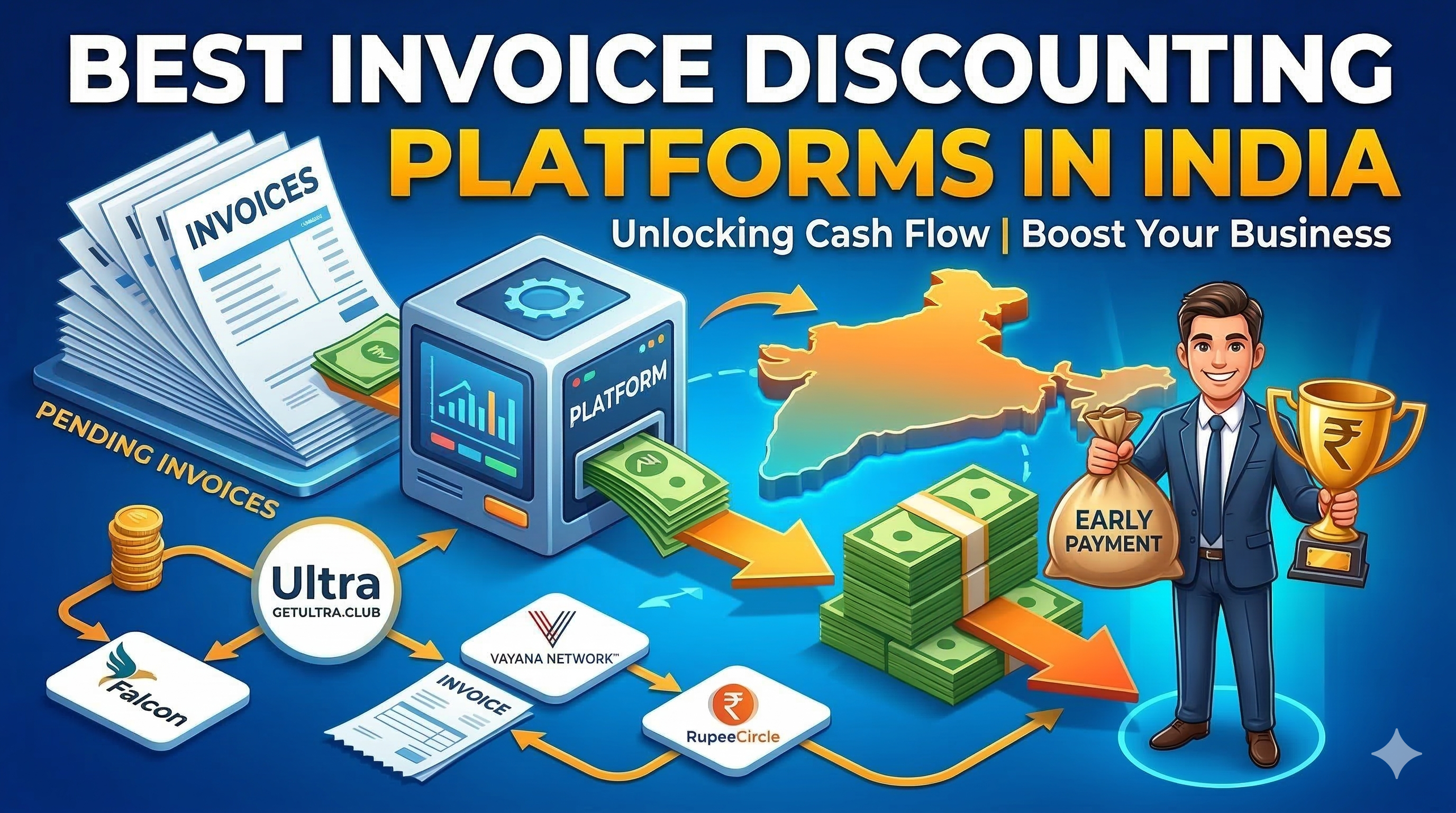
Invoice discounting is a financial process where businesses sell their unpaid invoices to investors at a discount in exchange for immediate cash.
When a company sells goods or services to another business, it typically issues an invoice with payment terms of 30 to 90 days. Instead of waiting for payment, the seller can raise funds by selling that invoice to investors.
Investors purchase the invoice at a discount and receive the full invoice amount when the buyer settles the payment.
Example
A company issues an invoice of ₹10,00,000 payable in 60 days.
An investor purchases the invoice for ₹9,80,000.
When the buyer pays the invoice after 60 days, the investor receives ₹10,00,000, earning a profit of ₹20,000.
This profit represents the return earned through invoice discounting.
How Invoice Discounting Works
The process of investing in invoice discounting typically involves three parties:
Seller (Supplier)
The company that issued the invoice.
Buyer (Corporate Debtor)
The company responsible for paying the invoice.
Investor
The individual or institution that purchases the invoice.
Basic Workflow
A supplier issues an invoice to a large buyer.
The supplier uploads the invoice on an invoice discounting platform.
Investors fund the invoice at a discounted value.
The buyer pays the full invoice amount on the due date.
Investors receive the principal plus returns.
Because payments usually come from established businesses, invoice discounting can provide relatively predictable returns.
Why Investors Are Turning to Invoice Discounting
There are several reasons why investors are increasingly exploring invoice discounting investments.
Short Investment Tenures
Invoice discounting investments typically range from 30 to 90 days, making them attractive for investors seeking liquidity.
Predictable Returns
Since the invoice amount and payment timeline are known in advance, returns can be estimated before investing.
Diversification
Invoice discounting offers diversification beyond traditional assets such as equities, mutual funds, or fixed deposits.
Access to Institutional Opportunities
Retail investors can now access financing opportunities that were once limited to banks and large financial institutions.
Key Factors to Consider Before Choosing an Invoice Discounting Platform
Before selecting a platform to invest in invoice discounting, investors should evaluate several factors.
Creditworthiness of Buyers
The reliability of the company responsible for paying the invoice is critical.
Transparency
A good platform should provide clear information about invoices, buyers, and payment timelines.
Track Record
Platforms with a proven history of successful transactions and repayments offer greater confidence.
Minimum Investment
Different platforms have different minimum investment requirements.
Risk Management
Platforms should conduct proper due diligence and verification before listing invoices.
Best Invoice Discounting Platforms in India
Several fintech platforms have emerged in India offering invoice discounting investment opportunities.
Below are some well-known platforms in the market.
1. ultra
ultra is a modern platform that enables investors to invest in invoice discounting opportunities with carefully curated deals.
The platform focuses on providing transparent access to invoice-based investments with structured deal details, clear returns, and defined investment timelines.
ultra’s ecosystem aims to simplify alternative investing while maintaining strong due diligence standards.
2. KredX
KredX is one of the earliest invoice discounting platforms in India.
It allows businesses to raise funds by selling their invoices and provides investors with access to short-term credit opportunities backed by corporate receivables.
3. TradeCred
TradeCred focuses on supply chain financing and invoice discounting opportunities for investors.
The platform offers curated invoice financing opportunities with varying tenures.
4. M1xchange
M1xchange operates as a TReDS platform regulated by the Reserve Bank of India.
It facilitates invoice financing between MSMEs, corporates, and financial institutions.
5. Invoicemart
Invoicemart is another TReDS platform designed to help businesses access working capital through invoice discounting.
While primarily serving institutions, it plays an important role in India’s invoice financing ecosystem.
How to Invest in Invoice Discounting in India
Investors interested in invoice discounting investments can follow a simple process.
Step 1: Choose a Platform
Select a reputable invoice discounting platform.
Step 2: Complete KYC
Register and complete identity verification.
Step 3: Explore Deals
Browse available invoices listed on the platform.
Step 4: Invest
Choose an invoice and invest the required amount.
Step 5: Receive Returns
Once the invoice is paid, the investor receives principal plus returns.
Many platforms provide dashboards that track investments and payment timelines.
Risks in Invoice Discounting Investments
While invoice discounting offers attractive returns, it also involves certain risks.
Payment Delay
If the buyer delays payment, returns may be affected.
Credit Risk
If the buyer defaults, investors may face losses.
Platform Risk
Investors rely on the platform for due diligence and transaction management.
Liquidity Risk
Investments typically remain locked until the invoice is paid.
Proper diversification and platform selection can help manage these risks.
Who Should Invest in Invoice Discounting
Invoice discounting can be suitable for several types of investors.
Income-Focused Investors
Those seeking short-term income opportunities may find invoice discounting attractive.
Diversified Investors
Investors looking to diversify beyond traditional assets may consider invoice discounting.
Experienced Investors
Investors comfortable with alternative investments may benefit from invoice financing opportunities.
Future of Invoice Discounting in India
The invoice discounting market in India is expected to grow significantly due to several factors.
Growth of MSMEs
India has millions of MSMEs that require working capital financing.
Digital Lending Platforms
Fintech platforms are making invoice financing more accessible.
Supply Chain Financing Demand
Large corporates increasingly rely on supply chain financing solutions.
Regulatory Support
Initiatives such as TReDS platforms have strengthened the invoice financing ecosystem.
As fintech innovation continues, invoice discounting is likely to become a mainstream investment category.
Conclusion
Invoice discounting is rapidly gaining traction as an alternative investment opportunity in India. With short tenures, defined returns, and access to corporate receivables, it offers an attractive option for investors seeking fixed-income alternatives.
Several platforms now allow individuals to invest in invoice discounting, making it easier to access this asset class.
However, investors should evaluate platforms carefully, assess the creditworthiness of buyers, and diversify their investments to manage risks effectively.
As the ecosystem evolves, invoice discounting platforms in India are expected to play a key role in bridging the financing gap for businesses while providing new opportunities for investors.
Disclaimer
This article is intended for informational purposes only and does not constitute financial advice or investment recommendations. Investors should conduct independent research and consult financial advisors before making investment decisions.
Recent articles
View all
IPO
LCC Projects IPO Details: Date, Price Band, Review & How to Apply
A complete guide to LCC Projects IPO 2026, covering issue size, price band, lot size, important dates, company profile, turnover, financials, risks and application process.
Sachin Gadekar
·
09 Sep 2026
IPO
Karamtara Engineering IPO GMP: Date, Price Band, Review & How to Apply
A complete guide to Karamtara Engineering IPO 2026, covering issue size, price band, lot size, important IPO dates, GMP context, company profile, financials, risks and application process.
Sachin Gadekar
·
09 Sep 2026

IPO
Prasol Chemicals IPO GMP: Date, Price Band, Review & How to Apply
A complete guide to Prasol Chemicals IPO 2026, covering GMP context, issue size, price band, lot size, IPO dates, allotment, scheduled listing, company profile, financials, review, risks and how to apply
Sachin Gadekar
·
08 Sep 2026

IPO
Pranav Constructions IPO GMP: Date, Price Band, Review & How to Apply
A complete guide to Pranav Constructions IPO 2026, covering GMP context, issue size, price band, lot size, IPO dates, allotment, scheduled listing, company profile, financials, review, risks and how to apply.
Sachin Gadekar
·
07 Sep 2026