AU Small Finance Bank FD Interest Rates 2026: Updated Rate Card
21 July 2026 · Sankarshan B
Complete and updated AU Small Finance Bank FD interest rates for 2026 -tenure-wise rate table effective June 10, 2026, senior citizen rates, Green FD and Tax Saver FD details, the universal bank transition context, post-tax return calculations, and how AU Bank FD rates compare to peers and higher-yield alternatives.
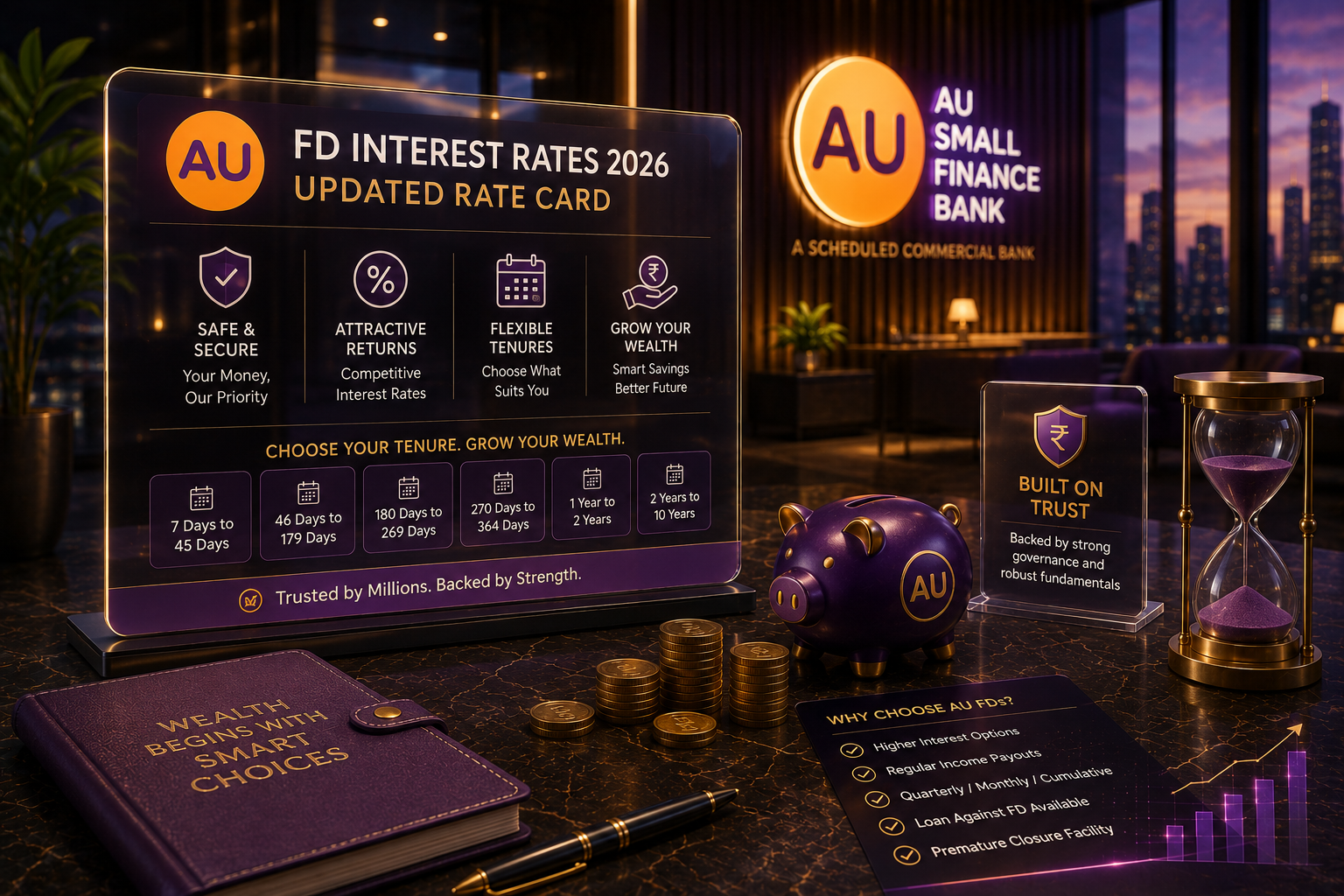
AU Small Finance Bank (AU Bank) is India's largest Small Finance Bank by assets under management and total business. Founded in 1996 as a vehicle finance company and converted to a Small Finance Bank in 2017, AU Bank has built one of the most innovative product suites in the Indian banking sector -including India's first Video Banking facility, a robust mobile banking app (AU 0101), and a range of fixed deposit products that consistently rank among the most competitive in the SFB segment.
In 2026, AU Small Finance Bank is in active transition toward becoming a Universal Bank -a regulatory upgrade from its current SFB licence that would place it in the same category as HDFC Bank, ICICI Bank, and Axis Bank. This transition is underway with the RBI, and makes AU Bank's 2026 fixed deposit rates particularly relevant for depositors who want the yield advantage of an SFB while investing in an institution moving toward universal bank status.
AU Small Finance Bank FD interest rates were revised effective June 10, 2026 -with the current rate card offering up to 7.40% for general citizens and 7.90% for senior citizens, making it one of the more competitive offers in the SFB segment following the RBI's 2025 rate cutting cycle.
This article provides the complete, updated AU Small Finance Bank FD interest rates for 2026 -all tenures, senior citizen rates, Green FD and Tax Saver FD details, the DICGC coverage context, and a clear post-tax analysis.
AU Small Finance Bank FD Interest Rates 2026: General Public (Below ₹3 Crore)
The following AU Small Finance Bank FD interest rates for 2026 apply to regular (non-senior) depositors on amounts below ₹3 crore, effective from June 10, 2026.
| Tenure | AU Bank FD Interest Rate 2026 (p.a.) | Interest Payout Options |
|---|---|---|
| 7 days to 1 month 15 days | 3.50% | At maturity |
| 1 month 16 days to 3 months | 4.50% | At maturity |
| 3 months 1 day to 6 months | 5.50% | At maturity |
| 6 months 1 day to 12 months | 6.50% | Monthly / Quarterly / At maturity |
| 12 months 1 day to 18 months | 7.25% | Monthly / Quarterly / At maturity |
| 18 months 1 day to 24 months | 7.00% | Monthly / Quarterly / At maturity |
| 24 months 1 day to 36 months | 7.10% | Monthly / Quarterly / At maturity |
| 36 months 1 day to 60 months | 7.00% | Monthly / Quarterly / At maturity |
| 60 months 1 day to 120 months | 7.00% | Monthly / Quarterly / At maturity |
Note: AU Small Finance Bank FD interest rates 2026 are subject to revision at the bank's discretion. Always verify current rates at AU Bank's official website (au.bank.in) or on the AU 0101 app before booking a deposit.
Key highlights of AU Small Finance Bank FD interest rates in 2026: The peak AU Bank FD interest rate for general citizens in 2026 is 7.40% -applicable to select special tenures (see below). On the standard rate card, the highest rate is 7.25% for the 12-month to 18-month tenure band
AU Bank FD interest rates were revised effective June 10, 2026 -an upward revision that increased the peak rate from 7.10% to 7.40% despite the RBI's easing cycle, reflecting AU Bank's focus on maintaining deposit competitiveness ahead of the universal bank transition
The 2-3 year tenure band offers 7.10% -slightly higher than the 1.5-2 year and 3-5 year bands (7.00%) -a modest premium for the mid-tenure commitment
Short-tenure rates (below 6 months) are meaningfully lower at 3.50%–5.50% -making short-tenure AU Bank FDs uncompetitive versus PSU and private bank peers
AU Small Finance Bank FD Interest Rates 2026: Senior Citizens (60+ Years)
| Tenure | General Rate | Senior Citizen Premium | AU Bank FD Rate for Senior Citizens 2026 |
|---|---|---|---|
| 6 months 1 day to 12 months | 6.50% | +0.50% | 7.00% |
| 12 months 1 day to 18 months | 7.25% | +0.50% | 7.75% |
| 18 months 1 day to 24 months | 7.00% | +0.50% | 7.50% |
| 24 months 1 day to 36 months | 7.10% | +0.50% | 7.60% |
| 36 months 1 day to 60 months | 7.00% | +0.50% | 7.50% |
| 60 months 1 day to 120 months | 7.00% | +0.50% | 7.50% |
The AU Small Finance Bank FD interest rate for senior citizens reaches 7.75% on the 12-month to 18-month tenure band on the standard card, and 7.90% on special tenures -among the highest rates for senior citizens available in the SFB segment in 2026 following the June 10 revision.
AU Small Finance Bank Special FD Products 2026 Drag
AU Bank runs special tenure-based FD schemes that offer rates above its standard rate card. Based on the June 10, 2026 revision and the official press release confirming the peak rate of 7.40% for general citizens and 7.90% for senior citizens:
| Scheme | General Rate | Senior Citizen Rate | Premium Over Standard | Notes |
|---|---|---|---|---|
| Select special tenure (peak, June 2026) | 7.40% | 7.90% | +0.15% to +0.30% over standard | AU Bank's peak rates of 7.40% (general) and 7.90% (senior) are available on specific special tenures. Verify exact tenure at au.bank.in or via AU 0101 app before booking |
Verify before booking: AU Bank updates its special scheme tenures periodically. The peak rates of 7.40% and 7.90% confirmed in the June 10, 2026 press release apply to select tenures -confirm the specific days/months eligible for the peak rate directly with AU Bank before investing.
AU Small Finance Bank Green FD (Planet First)
AU Small Finance Bank's Planet First FD (Green FD) is a differentiated product that channels investor deposits into environmentally sustainable lending -specifically, renewable energy projects, electric vehicle financing, green infrastructure, and similar ESG-aligned borrowers.
Key features:
Tenure: 7 days to 10 years
Interest rates: Aligned with the standard AU Bank FD rate card for the chosen tenure
ESG mandate: AU Bank commits to deploying funds from Planet First FDs into green and sustainable lending categories
Minimum deposit: ₹1,000
Digital onboarding: Available via AU 0101 app and NetBanking
Why this matters for HNI investors: Planet First is the first green FD product from an SFB in India. For HNI investors with ESG mandates or impact investing goals -or institutional investors with green allocation requirements -this allows fixed deposit capital to be directed toward measurable environmental outcomes without sacrificing the AU Bank FD interest rate for the chosen tenure.
The honest assessment: Planet First FDs do not offer a premium rate above AU Bank's standard card -they are a purpose-directed vehicle at the same rates. If your primary goal is yield maximisation, the standard FD is equivalent. If ESG mandate compliance matters (corporate treasury allocations, family office impact reporting), Planet First provides a documented green deployment structure.
AU Small Finance Bank Tax Saver FD 2026
AU Small Finance Bank offers a 5-year tax-saving fixed deposit qualifying for deduction under Section 80C of the Income Tax Act.
Key features:
Tenure: Exactly 5 years
Interest rate 2026: 6.75% for general public; 7.25% for senior citizens -slightly below the standard 5-year rate due to the lock-in structure
80C deduction: Up to ₹1.5 lakh per financial year under the old tax regime
Minimum deposit: ₹1,000; Maximum: ₹1.5 lakh per financial year
Premature withdrawal: Not permitted
Opening channels: Video Banking, AU 0101 App, NetBanking, or branch visit
HNI tax planning perspective: At 6.75% gross, AU Bank Tax Saver FD delivers approximately 4.65% post-tax at 30% bracket -identical to most bank tax saver FDs. PPF at 7.1% (fully EEE -exempt-exempt-exempt) and ELSS mutual funds (3-year lock-in, equity returns, 12.5% LTCG above ₹1.25 lakh threshold) remain structurally superior for HNIs maximising 80C. The tax saver FD suits investors who want sovereign-equivalent safety on their 80C deployment without market risk.
The Universal Bank Transition: What It Means for AU Bank FD Investors
This is the most important 2026-specific context for AU Small Finance Bank depositors.
AU Small Finance Bank is in active transition toward becoming a Universal Bank -a regulatory upgrade requiring RBI approval that would remove the SFB-specific restrictions (CRR/SLR requirements, priority sector lending mandates, geographical restrictions) and place AU Bank alongside HDFC Bank, ICICI Bank, and Axis Bank as a full-service commercial bank.
What this transition means for existing AU Bank FD holders:
1. Continuity of deposits: Existing FDs are fully valid and continue to earn contracted rates regardless of the bank's regulatory category. The universal bank transition does not alter or break any existing FD contract.
2. Potential rate changes post-transition: Universal banks typically access cheaper funding through CASA (current and savings account) deposits, interbank borrowing, and bond issuances -reducing their dependence on high-rate retail FDs. Post-transition, AU Bank's FD rates may moderate toward private bank rates (6.45-6.85%) from current SFB-level rates (7.40%). For investors who want to lock in current AU Bank FD rates before the transition is complete, the window may be time-limited.
3. Governance and regulatory improvement: Universal bank status implies stricter regulatory oversight, higher capital requirements, and broader RBI scrutiny -generally positive for depositor confidence and institutional credibility.
4. No impact on DICGC coverage: DICGC insurance (₹5 lakhs per depositor) remains unchanged through the regulatory transition -the protection is based on RBI-regulated bank status, which AU Bank maintains throughout.
5. The universal bank opportunity: If AU Bank successfully completes the transition, it may eventually offer products (credit cards, home loans at scale, foreign exchange) that generate CASA deposits more cheaply -potentially improving its overall financial profile and credit quality. This is a long-term positive for depositor confidence, even if short-term FD rates may moderate.
DICGC Coverage: The Key Risk Context for SFB FDs
Before investing in any SFB FD, the single most important structural fact to understand is the DICGC insurance limit:
DICGC (Deposit Insurance and Credit Guarantee Corporation) insures all deposits -savings accounts, FDs, recurring deposits -up to ₹5 lakhs per depositor per bank. This insurance applies to AU Small Finance Bank exactly as it does to SBI, HDFC Bank, or Canara Bank.
The critical implication for HNI investors: The ₹5 lakh DICGC cap means that AU Bank FDs are fully insured only for the first ₹5 lakhs per depositor. A deposit of ₹50 lakhs at AU Bank has only ₹5 lakhs insured and ₹45 lakhs at uninsured risk -dependent entirely on AU Bank's financial health for recovery in a failure scenario.
This is not a theoretical concern. Several cooperative banks and small financial institutions have failed in India over the past decade, with depositors above the ₹5 lakh DICGC limit facing extended recovery timelines and potential losses. The DICGC ₹5 lakh cap is the structural difference between SFB FDs and PSU bank FDs for large depositors.
The practical recommendation for HNI investors using AU Bank FDs:
Maximum of ₹5 lakhs per AU Bank account for the DICGC-protected layer
If deploying above ₹5 lakhs in SFBs, spread across multiple SFBs (₹5 lakhs each) to maintain full DICGC coverage on each position
For amounts above ₹15-20 lakhs in the "guaranteed, DICGC-covered" layer, PSU banks (Canara Bank at 6.85%, BOI at 6.80%) are structurally safer despite slightly lower rates
Post-Tax Returns on AU Small Finance Bank FD: What You Actually Earn
AU Small Finance Bank FD interest is taxed as income at the investor's applicable slab rate -identical to any bank FD.
| Annual Income | Effective Tax Rate | AU Bank FD Gross Rate | Tax Deducted | Post-Tax Return | Real Return vs 4.5% Inflation |
|---|---|---|---|---|---|
| Up to ₹7 Lakhs (new regime zero tax) | 0% | 7.25% | 0% | 7.25% | +2.75% |
| ₹7–12 Lakhs | ~10% | 7.25% | 0.73% | 6.53% | +2.03% |
| ₹12–24 Lakhs (20% slab) | ~20% | 7.25% | 1.45% | 5.80% | +1.30% |
| ₹24–50 Lakhs (30% slab) | 31.2% | 7.25% | 2.26% | 4.99% | +0.49% |
| ₹50L–₹1 Crore | 34.32% | 7.25% | 2.49% | 4.76% | +0.26% |
| ₹1–2 Crore | 35.88% | 7.25% | 2.60% | 4.65% | +0.15% |
The key insight: At 30%+ tax bracket, AU Bank FD at 7.25% gross delivers 4.65-4.99% post-tax -marginally better than PSU bank FDs (4.47-4.71% on 6.5-6.85% gross), but still delivering near-zero or barely positive real returns against 4.5%+ CPI inflation.
The AU Bank FD rate advantage over PSU banks is approximately 40-75 basis points post-tax at the 30% bracket. This is real, but modest -and comes at the cost of the DICGC concentration limit. For HNIs with large FD allocations, the right approach is to use AU Bank for the ₹5L DICGC-maximising slice while deploying the majority of surplus into higher-yielding alternatives.
How to Open an AU Small Finance Bank FD in 2026
Online (AU 0101 App / NetBanking):
Log in to the AU 0101 mobile app or AU Bank NetBanking
Navigate to "Deposits" → "Open FD"
Select FD type (Regular Cumulative / Interest Payout / Planet First Green FD / Tax Saver FD / Flexi FD)
Enter tenure and amount; review the applicable AU Bank FD interest rate
Confirm -funds debited from linked savings account; FD receipt generated digitally
Video Banking (AU Bank's flagship digital channel):
Initiate a Video Banking session via the AU 0101 app
Complete real-time video KYC with an AU Bank representative
Open FD or Tax Saver FD entirely through the video channel -no branch visit required
Offline (Branch):
Visit nearest AU Small Finance Bank branch
Carry PAN, Aadhaar, and existing account details
Fill FD application form and submit
Non-AU Bank customers: AU Bank allows FD opening via Video Banking and the AU 0101 app for new customers -no prior AU Bank account required for certain FD products.
Minimum deposit: ₹1,000 for most schemes Maximum deposit: No upper limit for regular FDs below ₹3 crore; bulk deposit rates apply above ₹3 crore
Premature Withdrawal and Loan Against FD
Premature withdrawal: AU Small Finance Bank allows premature withdrawal on all regular FDs with a 1% penalty on the applicable interest rate for the actual holding period. No interest is paid on premature withdrawal within the first 7 days.
Exception: Tax Saver FDs (5-year lock-in) cannot be withdrawn before maturity under any circumstances.
Loan against AU Bank FD:
Loans available up to 90% of the FD value as overdraft/demand loan against the FD
Interest rate: typically FD rate + 1-2%
Useful for short-term liquidity needs without breaking the FD and losing the interest rate
Available on regular FDs; not available on Tax Saver FDs
AU Bank FD vs Other SFBs and PSU Banks: Rate Comparison
| Bank | Category | Peak General Rate | Peak Senior Citizen Rate | DICGC Cap | Key Differentiator |
|---|---|---|---|---|---|
| Suryoday Small Finance Bank | Small Finance Bank | 8.10% | 8.60% | ₹5L per depositor | Highest peak rate in SFB segment; 5-year tenure |
| Utkarsh Small Finance Bank | Small Finance Bank | 8.10% | 8.60% | ₹5L per depositor | Matches Suryoday on peak rate; strong MFI heritage |
| Unity Small Finance Bank | Small Finance Bank | 7.80% (501-day scheme, June 2026) | 8.30% | ₹5L per depositor | Recently revised upward; competitive special tenure scheme |
| AU Small Finance Bank | Small Finance Bank (Universal Bank transition) | 7.40% (special tenure) | 7.90% | ₹5L per depositor | India's largest SFB; universal bank transition underway; Video Banking; Green FD |
| Canara Bank | PSU Bank | 6.85% (standard 1-3 year) / 7.25% (444-day scheme) | 7.35% / 7.90% (444-day, super senior) | ₹5L per depositor | No ₹5L cap concern for large deposits; PSU safety |
| Bank of India (BOI) | PSU Bank | 6.80% / 7.25% (Star Dhan Vriddhi, 333-day) | 7.30% / 7.90% (super senior) | ₹5L per depositor | Strong PSU special scheme; same DICGC cap but government-backed institution |
Key takeaway from the comparison: AU Small Finance Bank's peak rate of 7.40% is competitive but not the highest in the SFB segment -Suryoday and Utkarsh both offer 8.10% general / 8.60% senior. However, AU Bank's differentiation comes from its product depth (Video Banking, Green FD, Flexi FD, Planet First), its universal bank transition trajectory, and its scale as India's largest SFB.
For investors specifically seeking the maximum DICGC-insured rate on their ₹5 lakh SFB allocation, Suryoday or Utkarsh at 8.10% offers a 70 basis point advantage over AU Bank's 7.40%. For investors who also value institutional quality, innovation, and a bank actively building toward universal bank status, AU Bank at 7.40% may be the preferred choice.
AU Bank FD vs Higher-Yield Alternatives
| Instrument | Gross Yield | Post-Tax (30%) | vs AU Bank FD Advantage | Key Trade-off |
|---|---|---|---|---|
| AU Bank FD (peak 7.40%, baseline) | 7.40% | 5.09% | — | Baseline -DICGC ₹5L cap; liquid with 1% penalty |
| AA Corporate NCD (monthly payout, 10.5%) | 10.5% | 7.24% | +2.15% | Issuer credit risk; listed exchange liquidity; no DICGC |
| Invoice Discounting (Tier 1-2 buyers, 12%) | 12% | 8.26% | +3.17% | 30–90 day lock-in per deal; buyer credit risk on large corporates/PSUs |
| Asset Leasing (solar/EV, 13%) | 13% | 8.97% | +3.88% | 24–60 month lock-in; lessee + physical asset risk |
| RBI Floating Rate Savings Bond (8.05%) | 8.05% | 5.55% | +0.46% | 7-year lock-in; sovereign safe; non-transferable; inflation-linked |
| Suryoday SFB FD (8.10%, max DICGC rate) | 8.10% | 5.57% | +0.48% | Same DICGC ₹5L cap; higher rate than AU Bank but smaller, less diversified institution |
The honest hierarchy: For the ₹5L DICGC-insured emergency buffer layer, AU Bank at 7.40% beats PSU banks (6.85%) meaningfully -but Suryoday/Utkarsh at 8.10% beats AU Bank by 70bps on the same DICGC-insured structure. For the surplus beyond the ₹5L insured buffer -invoice discounting (8.26% post-tax) and asset leasing (8.97% post-tax) deliver materially better returns without the DICGC ceiling constraint.
Explore high-yield alternatives to AU Bank FDs at www.getultra.club -curated invoice discounting and asset leasing delivering 10–15% gross returns for investors ready to move surplus beyond FD rates.
FAQs
Q1. What are the current AU Small Finance Bank FD interest rates in 2026?
AU Small Finance Bank FD interest rates effective June 10, 2026: Peak rate for general citizens is 7.40% (on special tenures); standard card peak is 7.25% (12-month to 18-month tenure). For senior citizens: peak 7.90% (special tenures); standard card peak 7.75% (12-18 months). Short-tenure rates range from 3.50% to 6.50%. Rates revised upward on June 10, 2026.
Q2. What is the highest AU Small Finance Bank FD rate for senior citizens in 2026?
The highest AU Small Finance Bank FD rate for senior citizens in 2026 is 7.90% -available on select special tenures per the June 10, 2026 revision. On the standard rate card, senior citizens earn up to 7.75% on the 12-month to 18-month tenure. The 0.50% senior citizen premium applies uniformly across all tenures.
Q3. Is AU Small Finance Bank safe for FDs?
AU Small Finance Bank is RBI-regulated and DICGC-insured up to ₹5 lakhs per depositor -the same insurance level as any PSU or private bank. The key consideration is the ₹5 lakh DICGC cap: deposits above ₹5 lakhs per depositor are not insured and rely on the bank's financial health for recovery. For amounts within ₹5 lakhs per account, AU Bank is as safe as any scheduled commercial bank. For larger amounts, spread across multiple banks to maintain full DICGC coverage on each position.
Q4. What is AU Small Finance Bank's universal bank transition?
AU Small Finance Bank is in active transition toward becoming a Universal Bank -a regulatory upgrade from its SFB licence that would place it alongside HDFC Bank, ICICI Bank, and Axis Bank as a full-service commercial bank. This requires RBI approval and is currently underway. Existing FDs are unaffected by the transition. Post-transition, AU Bank's FD rates may moderate toward private bank levels as cheaper CASA funding reduces dependence on high-rate retail deposits.
Q5. How does AU Bank FD compare to Suryoday and Utkarsh SFB?
Suryoday and Utkarsh Small Finance Banks offer higher peak rates (8.10% general / 8.60% senior) versus AU Bank's 7.40% general / 7.90% senior -a 70 basis point difference on the peak rate, with the same DICGC ₹5 lakh coverage. AU Bank's advantages are its larger scale (India's largest SFB), product depth (Video Banking, Green FD, Flexi FD), and universal bank transition trajectory. For maximum DICGC-insured rate on ₹5 lakhs, Suryoday/Utkarsh offer better rates. For broader relationship banking and institutional quality, AU Bank may be preferred.
Q6. What is the AU Small Finance Bank Green FD (Planet First)?
AU Bank's Planet First FD is a green fixed deposit that channels investor funds into environmentally sustainable lending -renewable energy, EV financing, green infrastructure. It offers the same interest rates as the standard AU Bank FD rate card for the chosen tenure, but with a stated ESG deployment mandate. It is suitable for investors with green allocation requirements (corporate treasury, family offices with impact mandates) without sacrificing yield versus standard FDs.
Q7. What is the post-tax return on AU Bank FD for a 30% taxpayer?
On the peak 7.40% special tenure AU Bank FD, a taxpayer in the 31.2% effective bracket (income ₹24-50 lakhs) earns approximately 5.09% post-tax -a +0.59% real return above the 4.5% CPI inflation rate. This is better than PSU banks (4.47-4.71% post-tax) but still modest in real terms. At 30%+ brackets, AU Bank FDs are most appropriate for the DICGC-covered ₹5 lakh emergency buffer, with surplus capital better deployed in invoice discounting (8.26% post-tax) or asset leasing (8.97% post-tax).
Recent articles
View all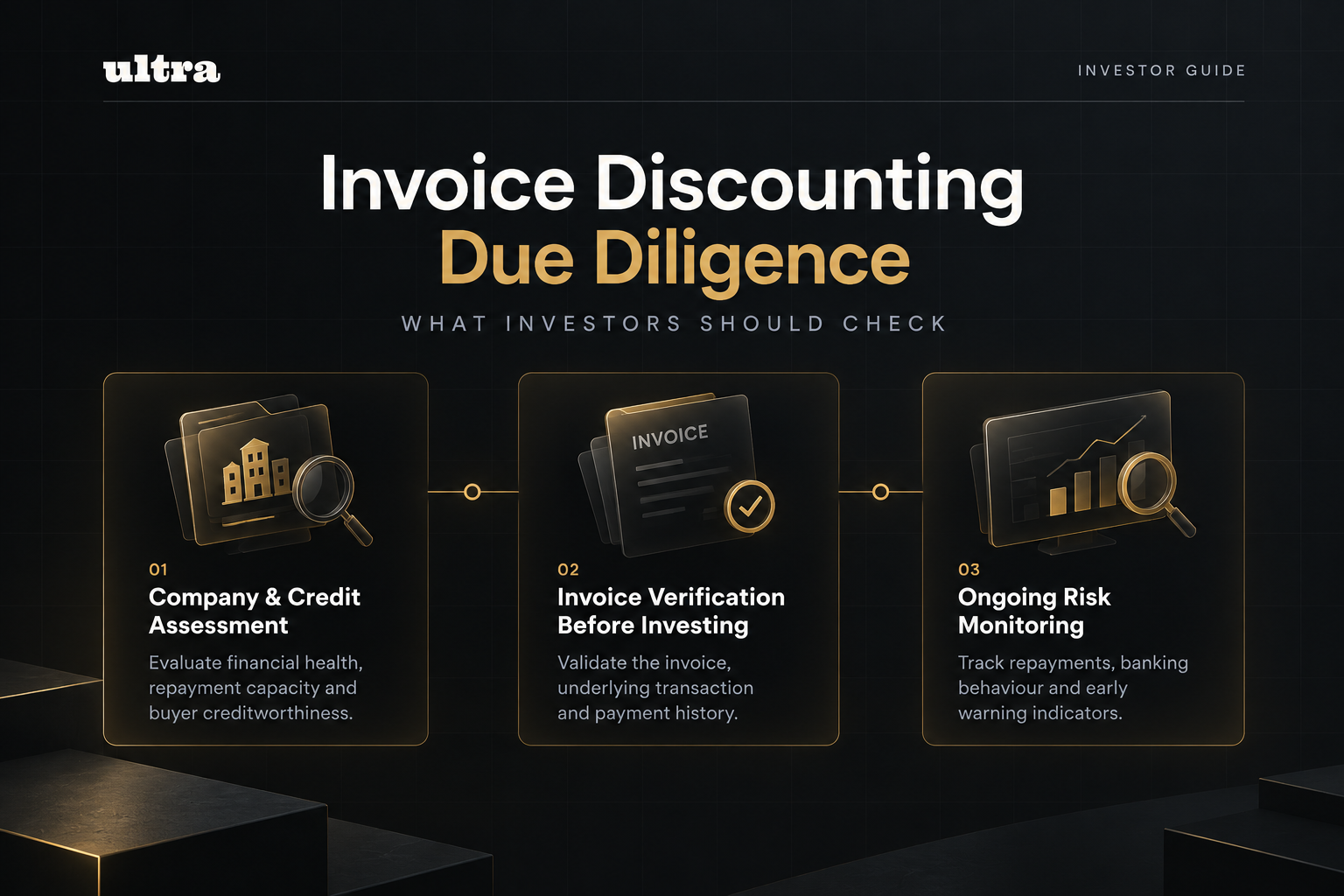
invoice discounting
Invoice Discounting Due Diligence: What Investors Should Check Before Investing
A complete guide to invoice discounting due diligence, covering what to check before you invest and how ultra reviews every business before listing its invoices
Prerna Bhardwaj
·
26 Oct 2026
invoice discounting
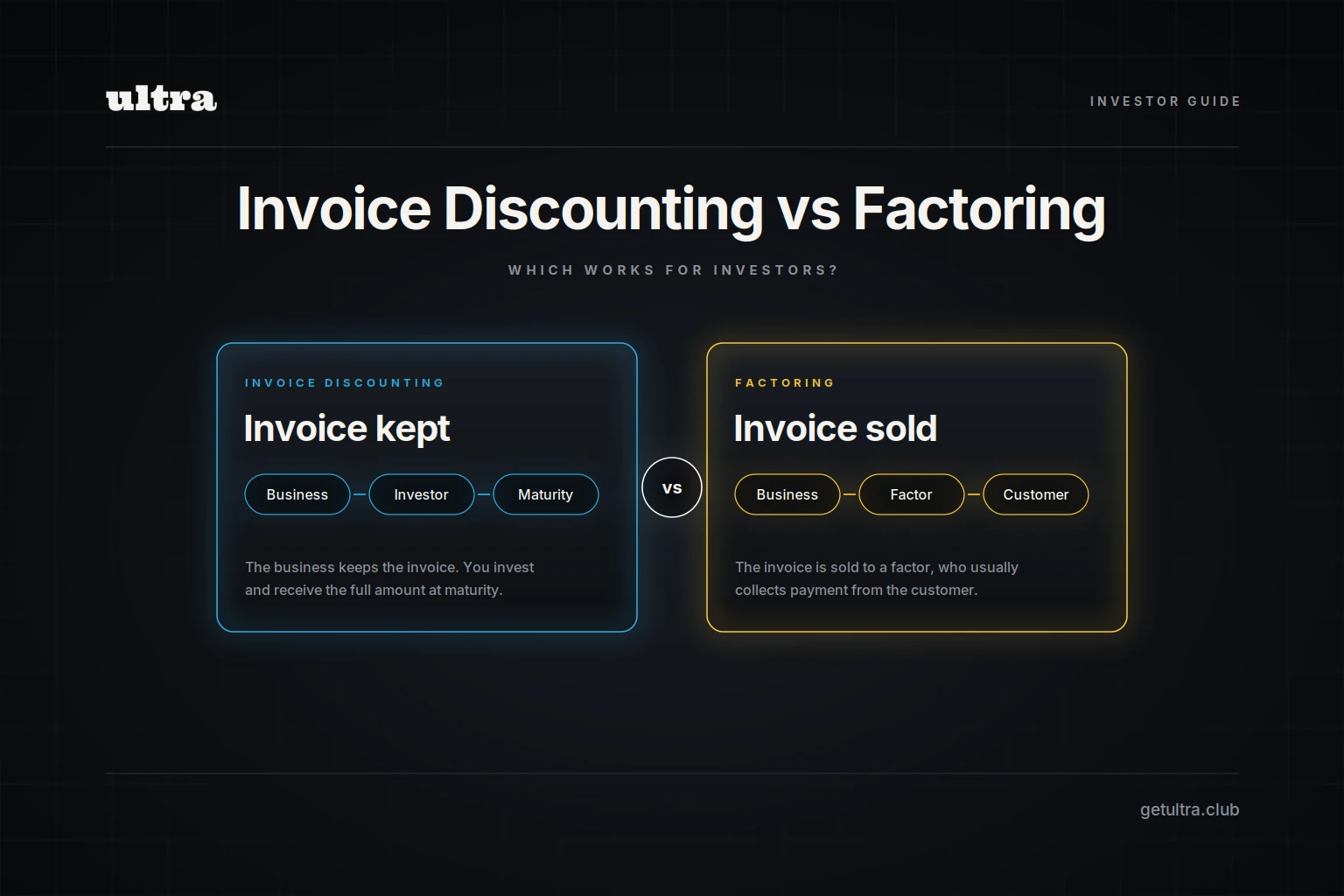
Invoice Discounting vs Factoring: Which Works for Investors?
A complete guide to invoice discounting vs factoring, covering how each works, the key differences between them and why investors choose invoice discounting on ultra.
Prerna Bhardwaj
·
22 Oct 2026
invoice discounting
Invoice Discounting Investment in India: How It Works
A complete guide to invoice discounting investment in India, covering how it works, why experienced investors consider it, where it fits in a portfolio and how to invest with ultra.
Prerna Bhardwaj
·
21 Oct 2026

IPO
Reliance Jio IPO: Date, Price, GMP, Valuation, Review & Details
A complete guide to Reliance Jio IPO 2026, covering Jio Platforms IPO details, issue size, expected date, price band status, GMP context, shareholder quota, company profile, financials, valuation and risks.
Sachin Gadekar
·
19 Oct 2026